


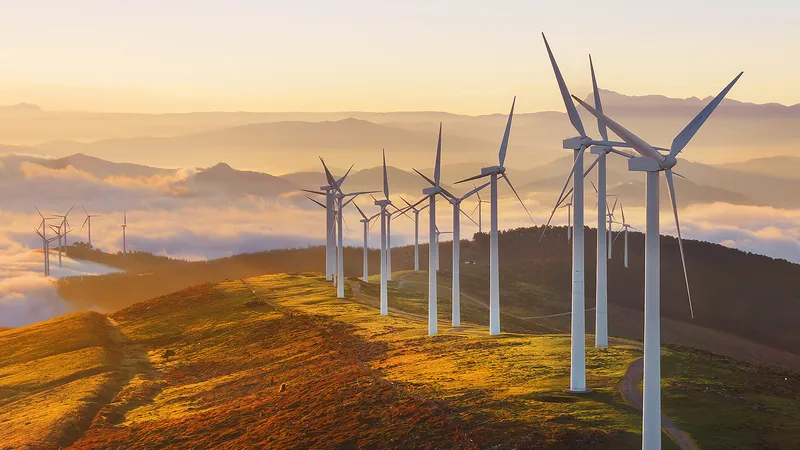
Ireland stands at a pivotal moment in its energy transition, with ambitious targets to decarbonise its economy and significantly increase its reliance on renewable energy sources. The Climate Action and Low Carbon Development Act 2021 sets a legally binding target of 80% renewable electricity by 2030, a monumental shift from the 40.7% achieved in 2023 (primarily from wind). This aggressive target, coupled with a national goal of 5 GW offshore wind by 2030 and 8 GW from solar power, presents unparalleled opportunities for developers, investors, and innovators in the renewable energy sector. However, navigating this complex landscape – from regulatory frameworks and grid constraints to evolving technologies and financial viability – demands rigorous market research, comprehensive feasibility studies, and robust business planning.

Understanding the intricacies of the Irish renewable energy market is the first step towards successful project development. Market research provides the essential data and insights to identify opportunities, assess risks, and formulate effective strategies. The market size in terms of installed base is expected to grow from 8.07 gigawatts in 2025 to 22.46 gigawatts by 2030, at an impressive CAGR of 22.72%.
Policy and Regulatory Landscape: Ireland's commitment to renewable energy is strong, evidenced by policies like the Climate Action Plan 2023 and support schemes such as the Renewable Energy Support Scheme (RESS) and the Small-Scale Renewable Electricity Support Scheme (SRESS). Understanding these frameworks, including planning approval processes, grid connection requirements, and auction mechanisms, is paramount. Research needs to track ongoing policy developments, such as the delineation of new offshore wind zones and grid upgrade plans.
Technology Trends and Potential: While wind energy currently dominates Ireland's renewable electricity generation (58.6% share in 2024), solar photovoltaics (PV) is projected for rapid expansion with a 34.4% CAGR to 2030. Hydropower, pumped storage, and bioenergy (biomethane production) also play significant roles. Emerging tidal and wave prototypes offer long-term potential. Market research should assess the viability and cost-effectiveness of various technologies in specific Irish climatic and geographical conditions.
Competitive Landscape and Key Players: The Irish renewable energy market features moderate concentration, with international utilities like Statkraft and Mainstream Renewable Power (now part of Aker Horizons) being significant players. Research needs to identify key developers, their installed capacities, ongoing projects, and strategic partnerships. Understanding the diversification of investor bases, including pension capital through funds like Legal & General NTR Clean Power Fund, is also important.
Grid Infrastructure and Constraints: While ambitious targets are in place, challenges exist. Grid congestion in certain coastal nodes (e.g., South-West & West) can curb full exploitation of wind resources. Research should assess existing grid capacity, planned upgrades (like the €1 billion grid upgrade for the South Coast Designated Maritime Area Plan), and the implications for project viability and connection timelines.
End-User Demand and Market Segments: The utility segment held 73% of the renewable energy market size in 2024, reflecting a historical focus on grid-connected projects. However, residential installations are showing significant growth (37.5% CAGR). Research should analyse demand drivers from data centres (21% of total metered consumption in 2023, accelerating renewable project commitments), commercial enterprises, industrial users, and residential consumers, including their preferences for on-site generation vs. off-site power purchase agreements (PPAs).
Funding and Investment Opportunities: Rising CAPEX due to local content requirements and inflationary pressures can be a concern, but the market is attracting diverse investment. Research should identify available grants, incentives, private equity, and debt financing options, as well as opportunities for community-led projects which may avail of specific supports from SEAI.
A feasibility study for a renewable energy project in Ireland is a rigorous assessment that evaluates the viability of a proposed project from multiple perspectives. It's an indispensable tool for de-risking investments and attracting financing.
Technical Feasibility: This involves a detailed analysis of the specific site's resources (e.g., wind speed, solar irradiance, water flow), existing infrastructure, and geological conditions. It assesses the suitability of chosen technology (e.g., specific wind turbine models, PV panel types), energy generation potential, and operational requirements. Grid connection studies are crucial to assess the technical challenges and costs associated with connecting to the national grid. For offshore wind, marine surveys and environmental impact assessments are paramount.
Financial Feasibility: This is a comprehensive financial modelling exercise. It includes detailed cost estimations for development, construction (CAPEX), operation and maintenance (OPEX), and decommissioning. Revenue projections are based on electricity generation forecasts, prevailing market prices, and potential support scheme tariffs (e.g., RESS auction outcomes, corporate PPA rates). Key financial metrics such as Net Present Value (NPV), Internal Rate of Return (IRR), Payback Period, and Levelised Cost of Energy (LCOE) are calculated. Analysis of funding sources, debt-to-equity ratios, and hedging strategies for price volatility are also vital.
Environmental and Social Feasibility: This critical component assesses the project's impact on the environment (biodiversity, habitats, landscapes) and local communities. It includes baseline environmental surveys, impact assessments, and development of mitigation strategies. Social impact assessments consider community acceptance, potential job creation, and any displacement effects. Public consultation and engagement strategies are often a key part of this.
Regulatory and Permitting Feasibility: This involves a thorough review of all relevant planning, environmental, and grid connection permits required. It assesses the likelihood of obtaining these permits, potential delays, and associated costs. Compliance with EU directives and national legislation, including the Climate Action and Low Carbon Development Act, is scrutinised.
Operational and Management Feasibility: This section outlines the long-term operational plan, including maintenance schedules, staffing requirements, and performance monitoring. It also assesses the capabilities of the project management team and potential operational risks.
Risk Assessment and Mitigation: Identification of all potential risks – technical (e.g., equipment failure), financial (e.g., price fluctuations, interest rate changes), regulatory (e.g., policy changes, permitting delays), environmental, and social. Development of detailed mitigation strategies for each identified risk.
Following a positive feasibility study, a robust business plan translates the technical and financial data into a compelling narrative for investors, lenders, and stakeholders. It’s the blueprint for execution and growth.
Executive Summary: A powerful overview of the entire project, highlighting the opportunity, the technology, the market, the financial projections, and the unique selling proposition. It should clearly state the funding required and the expected returns.
Company Description: Introduce the project entity, its mission, vision, and values. Detail the team's expertise and experience in renewable energy development and project management.
Project Description: Provide a detailed explanation of the renewable energy project, including its technology (e.g., onshore wind farm, utility-scale solar PV array, battery energy storage system), capacity, location, and key technical specifications.
Market Analysis: Present the in-depth findings from your market research, demonstrating a clear understanding of the Irish renewable energy landscape, target off-takers (e.g., data centres, industrial facilities, residential customers), and competitive advantages. Detail current market size, growth projections, and demand drivers.
Marketing and Sales Strategy: Outline how the generated electricity will be sold (e.g., long-term Power Purchase Agreements with corporate clients, participation in RESS auctions, direct sales to grid). Explain the pricing strategy and any value-added services.
Operations Plan: Detail the construction timeline, procurement strategy (e.g., turbine suppliers, EPC contractors), and long-term operational and maintenance strategy. This includes staffing, asset management, and performance monitoring.
Management Team: Introduce the key individuals involved in the project, highlighting their relevant experience in renewable energy development, engineering, finance, and project management. Include an organisational chart.
Financial Plan: This is arguably the most critical section for securing funding. It must include:
Risk Management Plan: A comprehensive section outlining identified risks (technical, financial, environmental, regulatory, social) and detailed mitigation strategies for each. This demonstrates foresight and preparedness.
Appendix (Supporting Documents): Include relevant permits, land agreements, off-take letters of intent, environmental impact reports, technical specifications, and team résumés.
The burgeoning renewable energy sector in Ireland offers immense potential, but unlocking it requires specialised expertise and meticulous planning. Aviaan stands as a leading consultancy, offering end-to-end services in market research, feasibility studies, and business plan development, precisely tailored for the Irish renewable energy landscape.
Aviaan's Specialised Support for Your Renewable Energy Project:
These hypothetical case studies illustrate how Aviaan's services can be instrumental in the success of renewable energy projects in Ireland.
Background: A consortium of international investors identified a promising site in County Clare for an onshore wind farm project. While the area had good wind resources, they faced challenges in securing grid connection capacity, navigating local planning permissions, and demonstrating robust financial returns in a competitive market. They needed to secure significant project financing from European development banks.
The Challenge: The investors had initial wind resource data but required a comprehensive feasibility study to validate the project's technical and financial viability, especially concerning grid integration and the complex Irish planning process. They also needed a compelling business plan to attract senior debt and equity investors. Local community engagement was identified as a potential hurdle.
How Aviaan Helped: Aviaan conducted a detailed technical feasibility study, refining the wind resource assessment and advising on optimal turbine selection for the specific site conditions. Crucially, we undertook an exhaustive grid connection study, identifying potential bottlenecks and proposing a phased connection strategy in coordination with EirGrid. Our financial feasibility analysis modelled various RESS auction scenarios, providing conservative and optimistic revenue projections, and detailed CAPEX/OPEX breakdowns tailored to Irish construction costs and operational norms. We also advised on environmental impact assessments and developing a robust community benefit fund strategy to address local concerns, which was crucial for planning approval. The business plan crafted by Aviaan highlighted the project's strong environmental credentials, its alignment with Ireland's 2030 renewable targets, and presented a compelling financial case with clear IRR and NPV figures. It also included a detailed risk mitigation matrix for regulatory and grid challenges.
The Outcome: Armed with Aviaan’s comprehensive studies and business plan, the "Emerald Wind Farm" project secured necessary planning permission after addressing local concerns effectively. It successfully bid in a RESS auction, securing a favourable tariff, and subsequently closed significant project financing from leading European banks. The wind farm is now under construction, contributing substantially to Ireland's renewable electricity targets and demonstrating the successful navigation of complex project development in the Irish context.
Background: A major international data centre operator in South Dublin aimed to significantly decarbonise its operations and secure a stable, renewable energy supply. They wanted to explore the feasibility of a large-scale rooftop solar PV installation combined with a battery energy storage system (BESS) on their campus, aiming for energy independence and a reduced carbon footprint.
The Challenge: The operator needed to understand the optimal size and configuration of a solar PV and BESS system given their high energy consumption and intermittent renewable generation. They faced questions regarding the economic viability (payback period, LCOE), integration with existing grid connections, and potential for energy sales back to the grid. They also needed to ensure compliance with Irish building regulations and fire safety standards for BESS installations.
How Aviaan Helped: Aviaan performed a detailed site-specific solar resource analysis, assessing roof space, shading, and optimal panel orientation for maximum generation. Our technical feasibility study included modelling various PV and BESS configurations to match the data centre's load profile, considering peak demand and potential for load shifting. The financial feasibility analysis provided a granular breakdown of installation costs, operational savings, and revenue from potential grid services or export. We calculated a detailed LCOE for the on-site generation and performed a rigorous payback period analysis, highlighting the long-term cost benefits. Aviaan also provided expert advice on relevant Irish safety standards for large-scale battery storage and grid connection procedures for self-consumption and potential export. The business plan focused on the strategic advantages of energy resilience, reduced operating costs, and enhanced ESG (Environmental, Social, and Governance) credentials, making a strong case for internal investment approval.
The Outcome: Based on Aviaan’s robust feasibility study, the data centre operator proceeded with the recommended solar PV and BESS installation. The project is currently operational, significantly reducing their reliance on grid electricity, lowering their carbon emissions, and providing valuable energy resilience against grid fluctuations. The detailed financial analysis enabled the operator to justify the substantial upfront investment with a clear path to long-term savings and sustainability targets, making it a benchmark for decarbonisation within the Irish data centre industry.
Ireland's renewable energy sector is not just a burgeoning market; it is a national priority and a global opportunity. The ambitious targets for wind and solar, coupled with strong government backing, create fertile ground for new projects and investments. However, the complexities of regulatory compliance, grid integration, technological selection, and financial modelling require expert guidance.
Aviaan offers comprehensive services in market research, feasibility studies, and business plan development, providing the critical insights and strategic direction needed to navigate this vibrant sector successfully. By partnering with Aviaan, developers, investors, and corporations can ensure their renewable energy projects in Ireland are meticulously planned, financially viable, and strategically positioned to contribute to the nation’s green future while delivering significant returns. Let Aviaan be your partner in harnessing Ireland's abundant renewable resources for a sustainable and prosperous tomorrow.
Releted posts
Market Research and Feasibility Study for Renewable energy in Ireland
Market Research and Feasibility Study for Construction industry in Ireland
Market Research and Feasibility Study for Media in Ireland
Market Research and Feasibility Study for Cosmetics in Ireland
Market Research and Feasibility Study for Kids play area in Ireland
Market Research and Feasibility Study for Aesthetic clinic e in Ireland
Market Research and Feasibility Study for Fintech in Ireland
Market Research and Feasibility Study for startups and investors in Ireland
Market Research and Feasibility Study for University in Ireland
Market Research and Feasibility Study for Hospital in Ireland




