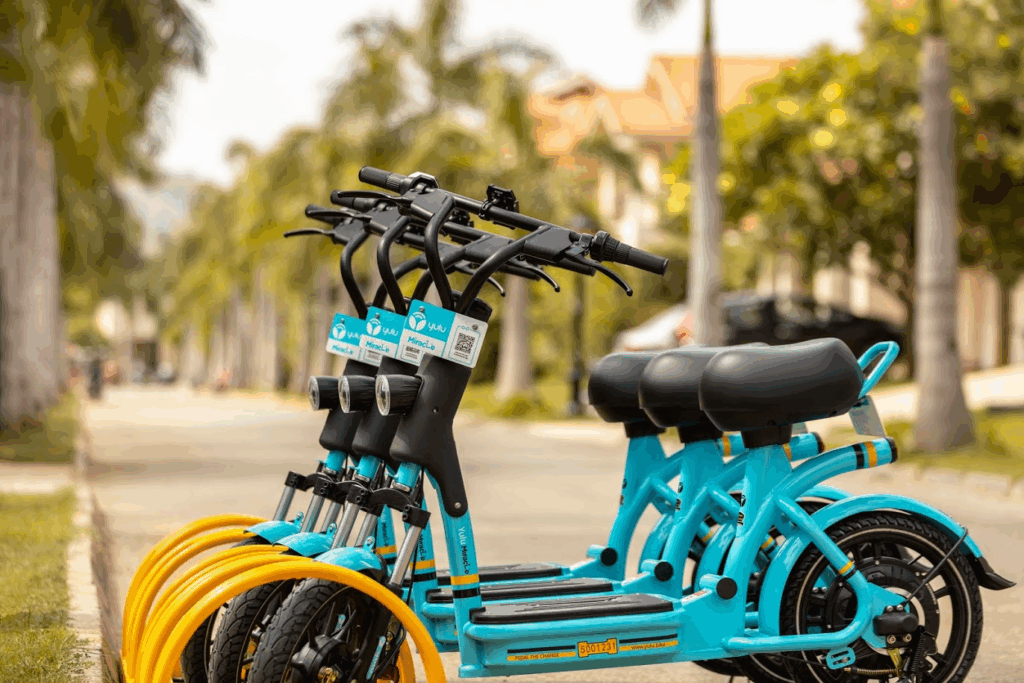
Market Research, Feasibility Study and Business Plan for Bike/Scooter Sharing in Turkey
Turkey’s Micromobility market, led by e-scooters, is exploding with a projected CAGR of nearly 38%, driven by severe traffic congestion in major cities like Istanbul. Success requires navigating a complex dual-tier regulatory framework involving the Ministry of Transport and local UKOME permits, demanding significant initial capital and a high-tech operational backbone. A robust feasibility study and strategic business plan are critical to overcome infrastructure gaps and compliance hurdles.
September 29, 2025
11 min read
COMMERCIAL EXCELLENCE
Loading...
Strategic guidance and institutional-grade solutions customized for your enterprise objectives.
Talk to a Financial Expert
Schedule a complimentary 30-minute discovery call to discuss your enterprise’s financial trajectory.
By submitting, you agree to our Privacy Policy.
Table of Contents
The Bike and Scooter Sharing (Micromobility) market in Turkey is one of the most dynamic and fastest-growing segments in urban transportation, presenting a high-reward, yet high-regulatory-barrier, opportunity. Driven by the critical need for first- and last-mile connectivity and the crippling traffic congestion in metropolitan hubs like Istanbul (ranked globally as one of the most congested cities), the market is projected to reach significant growth. E-scooters dominate this space, with demand fueled by a young, digitally native population seeking affordable and time-saving alternatives to traditional transport. Entering this market demands a precise Market Research to map hyper-local demand, a comprehensive Feasibility Study to prove operational and financial stability under strict compliance, and a strategic Business Plan to scale operations.
The Foundation: Market Research and Regulatory Scrutiny
For shared micromobility in Turkey, market research is dominated by the need to understand the complex regulatory landscape and the hyper-local dynamics of service demand.
Navigating the Dual-Tier Regulatory Framework
Turkey has a highly structured, dual-tier regulatory system for e-scooter sharing, which requires meticulous compliance from the outset:
Authorization Certificate (Ministry of Transport and Infrastructure): This is the national-level prerequisite, valid for five years. Key requirements include a minimum share capital of TRY 500,000, a minimum fleet of 250 e-scooters, localized servers in Turkey, and adherence to specific quality certifications (e.g., TS EN ISO standards). The research must confirm the ability to meet these high-barrier-to-entry criteria.
Shared E-Scooter Permit (UKOME/Local Municipality): The subsequent permit is issued by the local Metropolitan Municipality Transportation Coordination Centers (UKOME) and is valid for two years. The number of permits is strictly limited, often capped at a ratio to the district population (e.g., 1/200). Market research must analyze the competitor landscape to forecast the likelihood of securing an adequate fleet size permit in target zones (e.g., Kadıköy, Beşiktaş).
Demand Mapping and Competitive Analysis
First- and Last-Mile Dominance: Research confirms that most demand is for short trips connecting users from public transit hubs (Metro, Marmaray, Ferry ports) to their final destination. The service must be mapped onto these multi-modal transport nodes.
E-Scooters vs. E-Bikes: E-scooters are the largest and fastest-growing category, but e-bikes are also experiencing rapid growth. Market analysis must determine the optimal mix of vehicles based on infrastructure (e.g., more e-bikes in cities with established bike lanes like Eskişehir) and trip distance.
User Demographics and Pricing: The primary users are young, urban professionals and students. The research must test pricing sensitivity to ensure the cost per minute remains an attractive, cost-effective alternative to taxis or short bus rides.
The Feasibility Study: Operationalizing Scale and Compliance
The feasibility study for micromobility transcends typical business metrics; it focuses on the operational stability of a dockless system within a high-density, low-infrastructure environment.
Technical and Infrastructure Feasibility
Vehicle Technology and Maintenance: Assessing the long-term viability of the chosen vehicle fleet (scooter/bike model) in Turkey’s diverse road conditions. The study must detail the plan for reverse logistics (collection of discharged scooters), charging infrastructure (local charging stations vs. mobile charging vans), and a robust repair and maintenance lifecycle to achieve the required 70% minimum fleet utilization (with adjustments for seasonal lows).
Data and Software Compliance: The regulatory requirement for localized servers and the obligation to share operational data via the government's U-Net system is a critical technical hurdle. The study must confirm the software platform's capability to integrate with Turkish government systems while fully complying with data protection laws.
Parking and Safety: Since use is restricted on pedestrian ways and roads over 50 km/h, the study must validate that key routes have appropriate infrastructure. Furthermore, it must define the virtual parking zones within the app and the physical operations required to enforce proper parking and prevent sidewalk clutter, a major point of municipal contention.
Financial Viability and Capital Planning
Initial Capital Requirement: The financial model must capture the massive upfront investment in vehicles, the TRY 500,000 minimum capital requirement, and the investment in charging/warehouse facilities.
Unit Economics: Calculating the Cost Per Ride (CPR), factoring in the high cost of rebalancing, charging labor, and vehicle depreciation/damage, is essential. Given the reliance on variable Turkish Lira costs (e.g., electricity, labor), the financial model must use sophisticated sensitivity analysis to determine the sustained operating margin.
Risk Assessment: The primary financial risks are municipal fines for non-compliance (unlicensed areas, improper parking) and the high rate of theft and vandalism, which necessitates a significant reserve for fleet replacement and repair.
The Strategic Business Plan: Sustained Growth and Compliance
The final business plan is the blueprint for gaining Authorization Certificate and UKOME Permits. It must be a compliance-first document, detailing the company's commitment to public safety, quality service, and regulatory adherence. The plan details the Geo-fencing strategy, dynamic pricing model to encourage usage in high-demand zones, and the marketing strategy focused on first-time users and seamless integration with public transport.
How Aviaan Can Help Your Succeed in Turkey
The Bike/Scooter Sharing market in Turkey is a legal and logistical gauntlet that requires expert guidance to navigate. Aviaan, leveraging its extensive experience in complex regulatory environments and high-growth tech sectors, is uniquely positioned to ensure your success.
Streamlining the Dual-Tier Licensing Process
Aviaan manages the entire regulatory application, turning a multi-month bureaucratic hurdle into a strategic advantage:
Ministry of Transport Authorization: We assist in structuring the company to meet the TRY 500,000 capital requirement and compile the comprehensive documentation for the initial Authorization Certificate, including proof of quality standards and compliance with the 250-vehicle minimum.
UKOME Permit Strategy: We conduct targeted regulatory analysis for your chosen cities (Istanbul, Ankara, Izmir) and develop the UKOME application strategy. This includes preparing the detailed operational and safety plans required to secure the maximum permissible number of Shared E-Scooter Permits in high-value districts.
Data and Technical Compliance: We provide advisory support to ensure your technology platform meets all localization requirements, including the mandatory integration with the U-Net system for data sharing, securing your business from immediate administrative fines and license suspensions.
Customized Financial Modeling and Risk Mitigation
Aviaan delivers a bankable financial plan that is tailored to the highly volatile and capital-intensive micromobility sector in Turkey:
Unit Economics Analysis: We create a precise model to calculate the true Cost Per Ride and Return on Asset (ROA), factoring in the unique Turkish operational costs, high depreciation rates, and the impact of the seasonal utilization drop (40% fleet minimum in winter).
Capital Sourcing and Investment Pitch: We structure your CAPEX and OPEX budgets to present a clear, risk-adjusted proposal to investors, highlighting how Aviaan's compliance strategy mitigates the major risks of fines and license loss, thereby protecting capital investment.
Rebalancing and Charging Strategy: We evaluate the financial feasibility of various operational models—from internal fleet management to outsourcing charging and rebalancing—to identify the most cost-efficient and scalable system for Turkish labor and fuel costs.
End-to-End Business Plan Preparation
Aviaan's comprehensive business plan is the final tool for market entry. It includes a detailed Fleet Management Strategy, a Disaster Recovery and Loss Prevention Plan to combat theft/vandalism, and a clear Scalability Roadmap that aligns fleet expansion with secured UKOME permits, ensuring responsible and compliant growth across Turkey’s booming micromobility market.
Case Study: Scaling "Geo-Ride" - A Dockless E-Scooter Service in Izmir
A consortium of Turkish and European tech investors identified Izmir, with its progressive urban planning and long coastal promenades, as a prime, less-saturated market for shared e-scooter services compared to Istanbul. They aimed to launch "Geo-Ride," a dockless e-scooter company focused on high availability and excellent customer service. The primary challenge was the stringent and multi-layered Turkish regulatory environment, which demanded a higher degree of initial capital and operational planning than typical European launches. The investors engaged Aviaan to conduct the full feasibility and business planning cycle, with an explicit goal of securing the maximum possible UKOME permit allocation.
Aviaan's Research and Strategy Formulation
1. Regulatory Mapping and Pre-Compliance: Aviaan began with an in-depth analysis of the Turkish Electronic Scooters Regulation and Izmir Metropolitan Municipality’s UKOME decisions. This was critical for defining the scope of the project.
The Legal Ceiling: The research established that based on Izmir’s district populations, the total maximum number of e-scooter permits that could be issued in the target zones (Konak, Karşıyaka, Bornova) was approximately 10,000 units across all operators. The regulatory cap meant the business plan had to justify a disproportionately high allocation based on superior compliance and safety.
Capital Compliance: Aviaan guided the investors to immediately meet the TRY 500,000 minimum share capital requirement and secured all necessary documentation to apply for the initial Authorization Certificate from the Ministry of Transport and Infrastructure, significantly front-loading the legal process.
Technical Setup: The team ensured the proprietary mobile application and back-end servers were physically located in Turkey and compliant with data residency rules, preparing the system for the mandatory U-Net integration well before the official permit application.
2. Demand and Infrastructure Analysis for Izmir: The market research focused on Izmir’s specific urban features:
The Kordon (Promenade) Effect: Izmir’s flat, long coastal areas showed the highest usage potential, but also the highest regulatory scrutiny due to pedestrian traffic. Geo-Ride’s plan specifically designated these areas with reduced speed limits (12 km/h) via geo-fencing, a key feature to present to UKOME for safety compliance.
University Hubs: Demand was mapped around Ege University and Dokuz Eylül University. The operational strategy centered on dynamic rebalancing to prevent stockouts at campus gates and dormitory areas, maximizing rides during peak class hours.
Competitive Analysis: At the time of the study, three major local operators were already established. Geo-Ride’s competitive edge, as defined by the research, was a superior battery range (reducing rebalancing costs) and a customer service model featuring 24/7 localized support, directly addressing a common weakness identified in competitor reviews.
The Feasibility Study: Proving Operational Excellence
1. Operational Model and Cost Efficiency: The study validated the financial and technical feasibility of Geo-Ride’s ambitious fleet size.
Fleet and Charging Strategy: Geo-Ride planned an initial fleet of 2,000 e-scooters for the launch. The feasibility study designed a hybrid charging model: a primary, centralized warehouse (depo) for heavy maintenance and battery swapping, supported by a network of 5 micro-charging kiosks located strategically near the operational zones. This decentralized model reduced the high cost of a single, large warehouse and cut rebalancing time.
Labor and Logistics: The study precisely calculated the number of full-time and part-time "chargers" and "rebalancers" required per 100 scooters to maintain the mandated 70% utilization rate. This labor cost was rigorously modeled against projected revenue, revealing that the labor cost was the highest variable operational expense, requiring the implementation of AI-driven demand prediction software to optimize staff deployment.
2. Financial Modeling and Risk Management: Aviaan constructed a three-year financial projection model that factored in Izmir’s climate (seasonal slow-down) and currency volatility.
Initial CAPEX: The total CAPEX, including the purchase of 2,000 high-spec scooters, warehouse leasehold improvements, and software licensing, was determined to be TRY 30 Million (approx. $1 Million at the time), significantly exceeding the legal minimum but essential for a competitive, scalable launch.
Unit Economics & BEP: The model projected an Average Revenue Per Scooter Per Day (ARS/D) of TRY 150 (based on 5.5 rides per day). With a fully loaded Cost Per Ride (CPR) of TRY 50, the Gross Margin Per Ride was TRY 100. This robust margin enabled a projected Break-Even Point (BEP) for the initial fleet to be achieved in 14 months, assuming successful licensing and a 90% fleet utilization during peak summer months.
Vandalism and Repair Reserve: A critical financial risk was mitigated by dedicating an annual TRY 2.5 Million reserve for unexpected repairs, vandalism, and the replacement of a projected 10% of the fleet annually, a realistic figure based on market benchmarks.
Conclusion
The launch of the Bike/Scooter Sharing business in Turkey is a compelling example of a high-tech sector where meticulous adherence to a complex regulatory structure dictates market entry and long-term viability. The staggering growth forecast in Turkey's micromobility market—driven by a genuine need to solve urban congestion—presents a clear opportunity, but only for those who can navigate the dual challenge of national authorization and hyper-local municipal permitting.
Partner with Aviaan Advisory today to unlock your business’s full potential. Our team of experts is here to provide tailored solutions and guide you every step of the way.