Market Research, Feasibility Studies, and Business Plan Services for Theme Park Sector in Italy
October 23, 2025
12 min read
COMMERCIAL EXCELLENCE
Loading...
Strategic guidance and institutional-grade solutions customized for your enterprise objectives.
Talk to a Financial Expert
Schedule a complimentary 30-minute discovery call to discuss your enterprise’s financial trajectory.
By submitting, you agree to our Privacy Policy.
Table of Contents
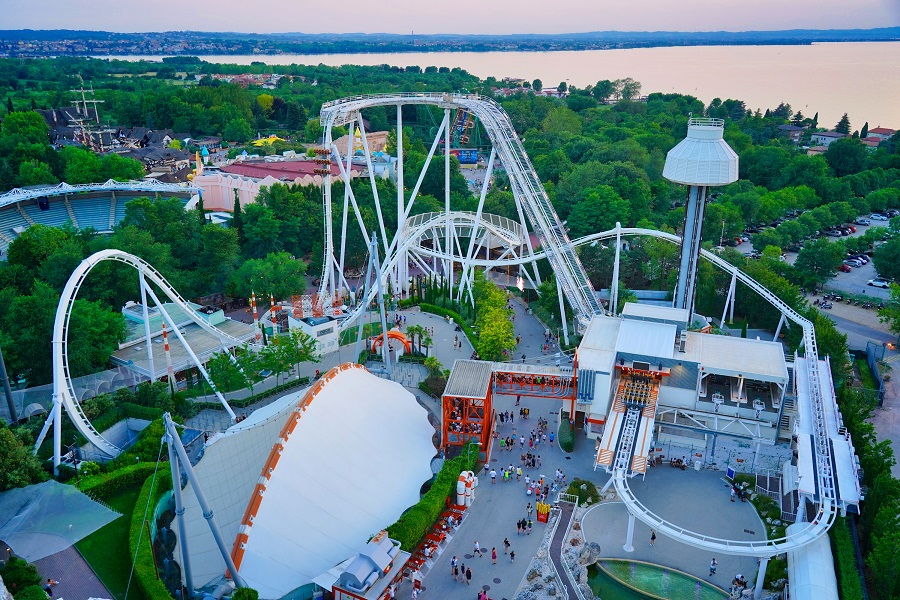
Italy, a nation synonymous with cultural heritage, art, and gastronomy, might not be the first country that comes to mind for a blockbuster theme park development. Yet, this perception is precisely where a monumental opportunity lies. Beyond the ancient ruins and Renaissance palaces, there is a vibrant, unmet demand for large-scale, family-oriented entertainment. The success of parks like Gardaland and Cinecittà World proves that the Italian market, and the millions of tourists it attracts, is ripe for the next great theme park venture.
However, the path to creating a successful theme park is arguably one of the most complex and capital-intensive endeavors in the hospitality and leisure industry. It requires a fusion of creative vision, intricate engineering, and ruthless financial discipline. A great idea for a ride or a land is not enough; it must be underpinned by a robust strategic foundation.
This comprehensive guide delves into the three critical pillars that can determine the fate of a theme park project in Italy: exhaustive Market Research, a definitive Feasibility Study, and a compelling, investor-ready Business Plan. We will explore how these disciplines work in concert to de-risk a multi-million euro investment and how partnering with an expert firm like Aviaan can transform an ambitious vision into a profitable, enduring legacy.
Part 1: Market Research – Mapping the Competitive and Consumer Landscape
Before a single piece of land is purchased or a ride concept is finalized, you must achieve a deep, data-driven understanding of the market. For a theme park in Italy, this means analyzing not just other parks, but the entire entertainment ecosystem and the evolving preferences of your potential guests.
Key Components of Theme Park Market Research in Italy:
Demand and Demographic Analysis:
Catchment Area Analysis: Defining your primary, secondary, and tertiary geographic markets is paramount. A park located in Northern Italy might draw from Southern Germany and Switzerland, while a park in Southern Italy would rely heavily on local populations and tourists already visiting destinations like Rome, Naples, or the Amalfi Coast. We model drive-times, airline routes, and public transport links to estimate the viable visitor base.
Target Audience Segmentation: Who are you building for? Families with young children, teenagers seeking thrill rides, or an international tourist market expecting a uniquely "Italian" theme? Each segment has different spending patterns, seasonal visitation habits, and expectations.
Competitive Benchmarking and Gap Analysis:
Direct Competitors: This includes major parks like Gardaland, Mirabilandia, and Cinecittà World. Analysis must go beyond ride count; it involves dissecting their thematic execution, ticket pricing strategy, food and beverage offerings, hotel partnerships, and guest satisfaction scores.
Indirect Competitors: These are any other leisure spending options: water parks, zoos, historical sites, museums, and even shopping centers. Understanding the full competitive set is crucial to positioning your park as a must-visit destination.
Gap Identification: This is the core of opportunity. Is there a lack of high-quality, IP-based (Intellectual Property) parks? Is there an unmet demand for a specific theme, such as Roman history, Renaissance art, or Italian folklore, executed with modern theme park technology?
Macro-Environmental Scanning (PESTLE Analysis):
Political: Navigating Italian zoning laws (piano regolatore), building permits, and environmental regulations is a monumental task. Understanding government attitudes towards large-scale tourism development and potential incentives is key.
Economic: Analyzing disposable income trends in the catchment area, inflation rates, and the economic resilience of the core tourist market. A theme park is a discretionary spend and can be highly sensitive to economic downturns.
Social: Identifying trends like the demand for immersive experiences, the importance of social media-worthy moments, growing expectations for sustainability, and the appeal of localized themes versus global IP.
Technological: Assessing the role of tech in the guest experience: cashless payments, virtual queueing apps, wearable tech for access and payments, and the integration of augmented reality (AR) in attractions.
Legal: Compliance with stringent EU and Italian safety standards for rides, employment law, and consumer protection regulations.
Environmental: Conducting Environmental Impact Assessments (EIA), planning for waste management on a massive scale, and incorporating green building practices can be both a regulatory requirement and a marketing advantage.
Site Selection Analysis: The location is a make-or-break decision. Criteria include:
Proximity to major motorways and/or high-speed rail lines.
Availability of affordable, developable land.
Distance from and synergy with other major tourist destinations (e.g., near Rome, Florence, or the Italian Lakes).
Climate and its impact on the operating season.
Part 2: The Feasibility Study – The Financial and Operational Litmus Test
A theme park concept must pass from "Can we build it?" to "Should we build it?". The Feasibility Study is the rigorous, objective process that answers this, translating the qualitative findings of market research into a quantitative financial model.
Core Elements of a Theme Park Feasibility Study:
Market Feasibility: This section quantifies the demand. It uses the catchment area analysis to project realistic attendance figures for Year 1 and a 5-10 year growth trajectory. It validates the proposed theme and ride mix against the identified market gaps.
Technical and Operational Feasibility:
Master Planning: Assessing the physical layout for guest flow, land use, and future expansion.
Ride and Attraction Sourcing: Evaluating the cost, reliability, and maintenance requirements of potential rides from manufacturers like B&M, Intamin, or Zamperla.
Infrastructure Requirements: Modeling the massive needs for power, water, sewage, and IT infrastructure.
Operational Workflow: Planning for staffing needs across operations, food & beverage, retail, security, and maintenance. This includes complex scheduling for seasonal fluctuations.
Financial Feasibility – The Core of the Project:
Revenue Projections:
Ticket Revenue: Modeling different pricing tiers (single-day, multi-day, season passes), factoring in estimated group sales and online discounts.
Per-Capita Spending: Projecting spending on in-park F&B, merchandise, games, and photo services. This is a critical lever for profitability.
Ancillary Revenue: Income from parking, on-site hotels, special events (e.g., Halloween horror nights, Christmas markets), and sponsorship deals.
Capital Expenditure (CAPEX) Budget: The single largest number. This includes land acquisition, design and development fees, ride and show installation, infrastructure, and theming. Contingency funds (typically 15-20%) are essential.
Operating Expense (OPEX) Forecast: A detailed projection of fixed and variable costs: staff salaries, utilities, maintenance, marketing, insurance, and cost of goods sold (for F&B and merch).
Investment Appraisal:
Profit & Loss Forecast: A 10-year projection is standard.
Cash Flow Analysis: Vital for understanding the timing of massive outflows (construction) versus inflows (ticket sales).
Return on Investment (ROI) and Payback Period: Given the huge upfront investment, the payback period can be long. Calculating the Internal Rate of Return (IRR) is crucial for investors.
Part 3: The Business Plan – The Strategic Blueprint for Investors and Execution
The Business Plan is the master document that synthesizes everything into a compelling narrative for financiers, partners, and your internal team. It’s the story of why your park will be a financial and cultural success.
Anatomy of a Theme Park Business Plan:
Executive Summary: The most critical section. It must captivatingly summarize the unique opportunity, the park's defining theme, the projected financial returns, and the expertise of the team, all on one page.
Company Description: The legal structure, mission statement, and the vision for the park's brand and place in the Italian tourism landscape.
Market Analysis Summary: A powerful, condensed version of the market research, highlighting the clear demand gap and your park's unique positioning.
The Park Experience: A detailed, evocative description of the themed lands, key attractions, live entertainment, and guest services. This is where you sell the sizzle.
Marketing and Sales Strategy: A phased plan for building hype.
Pre-Opening: Digital campaigns, partnership with Italian tourism boards, travel trade shows, and a robust PR strategy.
Grand Opening: A major media event.
Ongoing: Loyalty programs, seasonal event marketing, and partnerships with airlines and tour operators.
Management Team: Highlighting the proven experience of your leadership in theme park management, finance, and the Italian tourism sector.
Financial Projections: The clear, digestible output of the feasibility study, presenting the 5-10 year financial forecasts with clear assumptions.
Funding Request: The specific ask: the total capital required, the amount being sought from investors/debt, and the precise allocation of those funds.
How Aviaan Can Help You Realize Your Theme Park Vision in Italy
At Aviaan, we understand that a theme park is not just a project; it's an ecosystem. Our multidisciplinary approach combines tourism industry expertise, financial rigor, and strategic planning to guide our clients through every stage of development.
Our specialized services for theme park projects include:
Granular Market and Site Analysis: We use advanced geospatial and demographic tools to identify the optimal location and quantify the addressable market with precision.
Concept Validation and Financial Modeling: We stress-test your creative concepts against financial reality, building sophisticated models that project attendance, revenue, and profitability under multiple scenarios.
Operational Planning and Benchmarking: We leverage global best practices to help you design efficient operational structures, staffing plans, and revenue management strategies.
Investor-Grade Business Plan Development: We craft compelling, data-rich business plans that articulate a visionary story while providing the financial depth required to secure funding from private equity, banks, and strategic partners.
Case Studies: Aviaan in Action for Italian Leisure Projects
Case Study 1: "Mythologica" - A New Cultural Theme Park in Sicily
The Challenge: A development consortium with land holdings near a major archaeological site in Sicily envisioned a theme park based on Greek and Roman mythology. The concept was creative, but they lacked the strategic and financial analysis to secure €250 million in funding. Critics questioned whether the market could support such a park.
Aviaan's Solution: We conducted deep market research that revealed a powerful opportunity: the millions of annual tourists visiting the archaeological sites were primarily adults and lacked a dedicated, family-friendly attraction. Our analysis showed that by locating the park as a complementary experience, it could capture a significant portion of this captive audience. The feasibility study presented a phased development plan, starting with a core ride lineup and expanding with hotels in later phases, which improved the ROI profile.
The business plan positioned "Mythologica" not as a competitor to history, but as a dynamic gateway to it, with educational partnerships and immersive storytelling. The financial projections were conservative, based on a percentage of existing tourist traffic, which gave investors confidence.
The Result: The robust, data-driven plan was instrumental in securing the first €150 million in funding. The project received strong support from regional tourism authorities and broke ground last year, with Phase 1 on track to open in the next 24 months.
Case Study 2: "AquaVita" - A Major Water Park Expansion in the Italian Lakes
The Challenge: The owners of a successful but dated water park on Lake Garda wanted to undertake a €40 million expansion to become a premier, multi-day destination. They needed to convince their board and a banking partner that the investment would yield a sufficient return and not cannibalize their existing business.
Aviaan's Solution: Our feasibility study focused on a two-pronged analysis. First, we demonstrated that the expansion (adding thrill slides, a wave pool, and a dedicated toddler area) would actually increase the average length of stay and per-capita spending, moving the park from a day-trip to an overnight destination. Second, we modeled the competitive threat from newer, modern water parks in the region, showing that failure to invest would lead to a steady decline in market share.
The business plan outlined a clear branding and marketing strategy to reposition the expanded park, "AquaVita," as a must-visit attraction for the entire Lakes region, targeting international families from Germany and the UK.
The Result: The board unanimously approved the investment, and the bank provided a favorable loan package based on the clear ROI model. The expansion was completed, and in its first full season, "AquaVita" saw a 35% increase in total revenue and a 20% increase in average guest spending, fully validating the feasibility study's projections.
Conclusion: Build Your Legacy on a Foundation of Data and Strategy
The dream of building Italy's next great theme park is a bold and ambitious one. In a country renowned for its historical attractions, creating a new, world-class leisure destination requires a blend of imagination and impeccable strategic planning. By grounding your vision in exhaustive market research, validating it through a definitive feasibility study, and articulating it in a powerful business plan, you transform a high-risk gamble into a calculated, investable venture.
In the high-stakes world of theme park development, Aviaan acts as your strategic partner, providing the expertise to navigate the unique complexities of the Italian market and build a compelling case for success. Contact us today to begin the journey of turning your theme park vision into Italy's next iconic destination.
Partner with Aviaan Advisory today to unlock your business’s full potential. Our team of experts is here to provide tailored solutions and guide you every step of the way.