EV Charging Station Business Plan Writing Services In UAE
The Electric Vehicle (EV) market in the UAE is poised for explosive growth, driven by ambitious government mandates and sustainability initiatives. Establishing a profitable EV Charging Stations business requires a meticulously crafted Business Plan, navigating complex regulations, and securing prime locations. This comprehensive, over 1500-word guide details the necessary strategic components and highlights how a specialist advisory firm like Aviaan provides the critical expertise for market entry and sustained profitability in the UAE electric mobility sector.
November 8, 2025
15 min read
COMMERCIAL EXCELLENCE
Loading...
Strategic guidance and institutional-grade solutions customized for your enterprise objectives.
Talk to a Financial Expert
Schedule a complimentary 30-minute discovery call to discuss your enterprise’s financial trajectory.
By submitting, you agree to our Privacy Policy.
Table of Contents
Building an EV charging business is a capital-heavy, grid-dependent project. Chargers, transformers, civil works, software, site leases and approvals all have to be funded well before the first car plugs in. Utilisation, electricity costs and site partnerships then decide whether each charger pays back its investment.
A professional EV charging station business plan turns a charging idea into a clear operating and financial case. It sets out the emirate, site type, customer profile, charger mix, tariffs, utilisation, staffing, project cost and expected returns.
Banks, investors, landlords, fleet partners and equipment suppliers usually ask for a plan before committing to a charging project. Operators of an existing network can use one to add fast chargers, open a highway hub or sign fleet contracts.
Aviaan Accounting prepares plans for charge point operators, property owners, fleet companies, investors and developers of public, commercial and fleet charging sites across the UAE. Every plan connects the driver experience to a detailed financial model. Learn more about our business plan writing company in Dubai.
UAE's EV Charging Industry Overview: Driver Demand, Charger Types and Business Potential
EV charging sites serve private drivers, taxi and ride-hailing fleets, delivery vans, rental cars and visitors at malls, hotels and offices. Demand depends on local EV numbers, site visibility, charging speed, price and how reliably the chargers work.
No single official statistic measures the revenue of the UAE's EV charging segment on its own. An EV charging station business plan in UAE should combine official energy and transport data with clearly documented assumptions about the chosen sites and driver mix.
Market size: Dubai had more than 40,600 electric vehicles by the end of the first half of the latest reported year (Dubai Media Office release on DEWA data). Size your own opportunity by the EVs within reach of each site.
Market growth: DEWA's Green Charger network grew from over 1,270 to more than 1,860 charging points across Dubai within months (Dubai Media Office release on DEWA's 1,860 points). Growth also brings more competing sites.
Market forecasts: No government source forecasts an individual site's utilisation. Project sessions per charger, energy per session and price month by month, and test lower and higher cases.
Product segmentation: Sites range from AC destination chargers at homes, offices and malls to DC fast and ultra-fast chargers at highway hubs and fleet depots. Each type needs a different grid connection, capital cost and pricing model.
Geographic segmentation: Dubai's Green Building Regulations require 5% of parking spaces to be dedicated to green or low-emission vehicles (UAE Government portal on the National EV Policy). Compare malls, residential towers, offices, fuel stations and highway sites before choosing a location.
Driver demographics: DEWA's Green Charger service had 23,600 registered users (Dubai Media Office release on DEWA's 1,860 points). Private owners, taxi drivers and fleet operators each charge at different times and speeds.
Driver spending: DEWA has supplied more than 55,200 MWh to EVs since its charging initiative began (Dubai Media Office release on DEWA's 1,860 points). Base your energy and price assumptions on comparable sites, not national averages.
Competitor benchmarking: Study nearby public chargers for speed, price, uptime, waiting times, app experience and review scores. Find a position your network can own.
Industry trends: Fleet electrification, ultra-fast charging, app-based payment and solar-backed hubs are reshaping demand. The RTA plans to make Dubai's taxis 100% eco-friendly (UAE Government portal on the National EV Policy).
Driver preferences: Drivers look for working chargers, fast sessions, clear pricing, shade, safety, nearby amenities and easy app payment. The plan should explain how the network delivers these every day.
Demand drivers: The UAE aims for EVs to make up 50% of vehicles on its roads (UAE Government portal on the National EV Policy). Fleet contracts, new EV models and building rules also lift charging demand.
Distribution channels: Revenue comes from walk-up public charging, app subscriptions, fleet contracts, landlord partnerships, roaming agreements and charger installation services.
Regional opportunities: Dubai, Abu Dhabi, Sharjah, Ajman and Ras Al Khaimah have different EV numbers, regulators and highway traffic.
Industry challenges: High equipment and grid connection costs, slow early utilisation, electricity price changes, charger downtime and site lease terms can pressure returns.
International benchmarking: Global charging networks offer ideas on site design, pricing tiers and app features. Their tariffs and cost structures should not be applied in the UAE without local adjustment.
Business feasibility indicators: Key measures include capital cost per charger, sessions per charger per day, energy sold, price per kWh, electricity cost, uptime, operating margin, payback period and debt-service coverage.
A public EV charging business plan for four fast chargers at a Dubai mall will look very different from an EV charging hub business plan for twelve ultra-fast chargers on a highway near Ras Al Khaimah. Location, driver mix and charging speed should shape the plan from the very first page.
Why You Need a Professional EV Charging Company Business Plan
A professional EV charging company business plan helps first-time operators, property owners, fleet companies and investors adding a new network. Chargers and grid connections tie up large sums for years, so every assumption must hold up when a lender or partner checks it.
Five EV charging-specific issues make expert planning worthwhile.
Project finance: Banks and investors assess the project cost, promoter contribution, loan amount, repayment term and debt-service coverage. An EV charging investment plan presents all of this with supporting projections.
Licences and site partnerships: Regulators, landlords and fleet partners ask for a site study, charger plan, safety approach and financial forecast before signing. An electric vehicle charging business plan sets this out in a reviewable format.
Capital cost and phasing: Chargers, transformers, cabling, civil works and software create a heavy upfront bill. An EV charging station startup plan sets out which sites to build first and what can wait.
Utilisation and cash flow: Early months often run below capacity while fixed costs start on day one. An EV charging network business plan with month-by-month projections shows how much reserve the business needs.
EV charging-specific risks: Grid delays, charger faults, electricity cost changes, new competing sites and slower EV adoption can hit returns. Scenario testing shows how far the business can bend before it breaks.
Aviaan builds each plan around your sites, charger mix, driver profile and funding structure.
How to Write a Business Plan for EV Charging Station in UAE
If you are wondering how to write an EV charging business plan, work from site and concept to drivers, chargers, approvals and numbers, and write the summary last. The same seven steps apply to a commercial EV charging business plan and to any EV charging station business plan in UAE, whatever its size.
Assess the site and concept. Check traffic, visibility, parking access, grid capacity and lease terms, then choose between destination, fast-charging, fleet or highway models.
Define the driver profile. Decide who you are serving, such as private owners, taxi and ride-hailing fleets, delivery vans or visitors, and when they will charge.
Plan chargers, services and pricing. Set the number and type of chargers, power levels, app features, membership plans and price per kWh for peak and off-peak hours.
Line up suppliers and operations. Identify charger manufacturers, electrical contractors, software platforms, maintenance providers, payment partners and staffing needs.
Map approvals and licences. List the trade licence, charging operator licence from the relevant authority, grid connection approval, civil defence approval, VAT, corporate tax and labour registrations.
Build the financial model. Estimate equipment and installation cost, grid connection, utilisation, energy sold, electricity cost, maintenance, software fees, site rent, loan repayment and cash flow by month.
Write the executive summary last. Sum up the concept, market, project cost, funding plan, returns and payback period once the numbers are final.
How Aviaan Can Help You Launch and Secure Funding for Your EV Charging Business
Aviaan treats an EV charging plan as a long-term investment case. We link your sites, charger mix, utilisation and pricing to a financial model that shows lenders when and how the network repays.
Lender-ready documents: An EV charging business plan for bank loan applications, private investors, landlords, fleet partners and joint-venture partners.
Charger-level projections: Separate models for AC and DC chargers, each site and each customer group, with sessions and prices set month by month.
Capital and cash planning: Rollout phasing, grid connection costs, equipment finance, maintenance reserves, payback period and debt-service coverage.
Support across the UAE: Plans for EV charging businesses in any emirate, reflecting local regulators, tariffs and site types.
Our Simple 5-Step Process
Discovery call: We discuss your sites, concept, target drivers, chargers and how the plan will be used.
Information gathering: We collect site details, equipment quotes, grid connection estimates, approvals status, funding sources and operating ideas.
Plan and model preparation: We write the plan and build projections with every assumption clearly stated.
Review and changes: We walk you through the draft and adjust charger mix, pricing, phasing or costs as agreed.
Final delivery: You receive the finished plan and financial model in the format your lender or investor requires.
What Aviaan's EV Charging Station Business Plan Includes
An electric car charging business plan with financial projections has to explain how the network will draw drivers across the year, deliver reliable charging, control costs and repay its investment on schedule.
Aviaan adapts the following ten components to your project.
Executive summary: The concept, emirate, sites, charger count, project cost, funding plan and headline returns on one page.
Promoter profile and ownership: Promoters, legal structure, energy or mobility experience and management roles.
Market and driver analysis: EV numbers, driver segments, fleet demand, traffic patterns and nearby competition.
Chargers, services and pricing: AC and DC chargers, power levels, app features, memberships, fleet contracts and peak and off-peak pricing.
Supplier, landlord and partner arrangements: Charger manufacturers, contractors, software and payment partners, landlords, fleet operators and roaming partners.
Operations and staffing: Site monitoring, maintenance, customer support, field technicians and service-level standards.
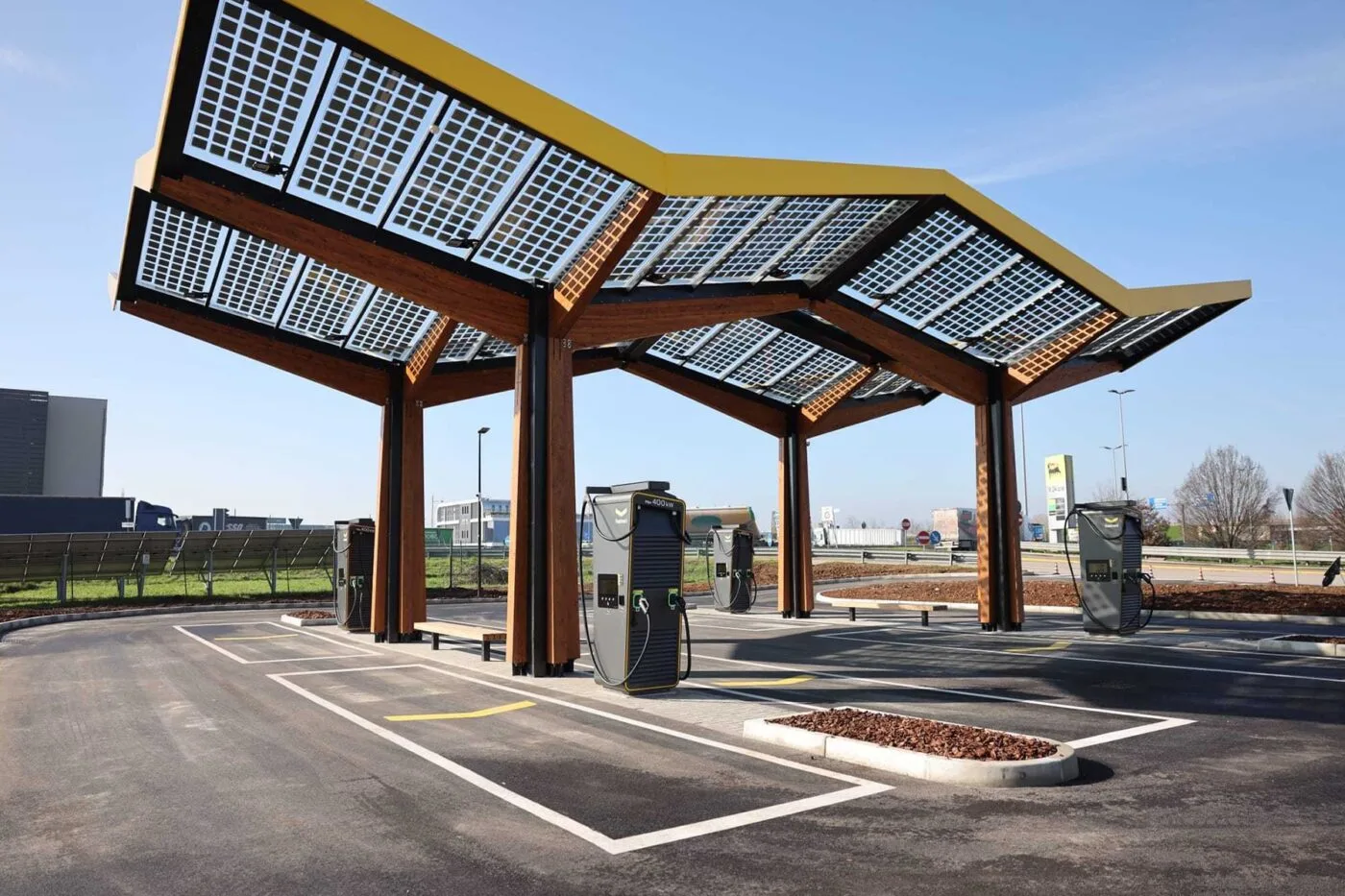
Site development and infrastructure: Grid connection, transformers, cabling, civil works, canopies, solar or battery options, parking layout and safety systems.
Approvals and compliance roadmap: Trade licence, charging operator licence, grid and civil defence approvals, technical standards, VAT, corporate tax and labour rules.
Financial projections: Project cost, funding mix, sessions, energy sold, price per kWh, electricity cost, operating costs, profit and loss, cash flow, balance sheet, payback and debt-service coverage. Ramp-up and mature months are modelled separately.
Risk and contingency planning: Low early utilisation, grid delays, charger faults, electricity price changes, new competitors and lease issues, each with a planned response.
The same framework supports an EV infrastructure business plan, an EV charging installation business plan, a destination charging plan, a fleet depot plan, a highway hub plan and a solar-backed charging plan. The emphasis shifts with site type, charger speed, driver mix and grid capacity. See also our energy business plan guide for installation companies.
Case Study: Business Plan for an EV Charging Network Expansion in Sharjah
Drawn from Aviaan's EV charging planning work. Client names and details changed to protect confidentiality.
Problem
The owner of a small network of eight AC chargers at residential towers in Sharjah planned to add six DC fast chargers at a community retail centre. His investor wanted a proposal in which the existing chargers and the new fast-charging site were projected separately. His draft merged the two and assumed the fast chargers would be busy from the first month. It also missed grid upgrade costs, software fees, maintenance contracts and charger downtime.
Solution
Aviaan reviewed local EV demand, nearby residential and retail traffic, and benchmarked public chargers within the area.
We built separate revenue models for AC and DC charging, with a ramp-up curve for the new fast-charging site.
We costed electricity, software, payment fees, maintenance and site rent per session, plus a reserve for downtime and repairs.
We added operator licensing, grid connection and civil defence requirements for the new site to the compliance roadmap.
We built seven-year projections, including balance sheets and debt-service coverage, in the format the investor asked for.
Result
He received a complete EV charging business plan built on one consistent financial model. The numbers led him to build four fast chargers first, sign a taxi fleet contract for night-time charging, and add a café partnership to lift dwell-time revenue. He submitted a single, phased plan to his investor.
Real-World Example: Planning a 6-Charger Fast-Charging Hub in Ras Al Khaimah
Here is a worked EV charging business plan sample, a simple plan for a promoter opening a six-charger DC fast-charging hub on a busy road in Ras Al Khaimah. These are sample numbers, not a forecast.
Selling price AED 1.20 per kWh at 10 sessions per charger a day and 40 kWh per session: 72,000 kWh and AED 86,400 charging revenue a month
Café, parking, advertising and membership income: AED 13,600, for total revenue of AED 100,000 a month
Variable costs (electricity, payment and app fees, consumables) at 35%, leaving a 65% contribution of AED 65,000
Fixed costs for equipment finance, site lease, maintenance contracts, software, insurance and staff: AED 52,000 a month
Break-even revenue: AED 52,000 ÷ 0.65 = AED 80,000 a month, or about 8 sessions per charger a day
All figures exclude the 5% VAT charged on charging services, which the operator collects and pays to the Federal Tax Authority.
The plan then tests the ramp-up period. Sessions average 6 per charger a day for the first six months, revenue falls to AED 60,000 and the hub loses about AED 13,000 a month, around AED 78,000 across the period.
The plan's response is to fill quiet hours: taxi and delivery fleet contracts, off-peak pricing, a membership plan and a stronger retail partnership. Moving contribution to 68% lowers break-even to about 7.6 sessions per charger a day, and a cash reserve covers the remaining gap. A full model would also include corporate tax, charger replacement and electricity price changes. Owners weighing an exit later can also read our guide to buying and selling a renewable energy company in the UAE.
Frequently Asked Questions
1. What is an EV charging station business plan?
It is a written plan, supported by a financial model, covering the sites, concept, driver segments, chargers, pricing, staffing, project cost, funding and expected returns. Aviaan prepares these plans to help promoters test the project and present it to banks, investors or site partners.
2. What is the cost to set up an EV charging station in the UAE?
Costs vary with emirate, site, charger type and grid capacity. Main costs include chargers, transformers, cabling, civil works, software, approvals, site preparation, pre-opening expenses and working capital. Aviaan estimates each item separately rather than using a per-charger rule of thumb.
3. How to start an EV charging business in the UAE?
EV charging station setup in UAE starts with assessing sites, grid capacity and the driver profile. Then obtain the trade licence and operator approvals, arrange funding and equipment, and build projections. Aviaan helps promoters plan each step before installation begins.
4. What should an EV charging company business plan UAE include?
It should cover driver and market analysis, site and charger plans, pricing by time of day, partner arrangements, operations, approvals and detailed financial projections. Aviaan clearly states assumptions on sessions, energy sold, price per kWh, electricity cost and payback.
5. Which EV charging formats suit the UAE?
Options include destination charging at malls and offices, residential charging, fleet depots, DC fast-charging hubs, highway sites and solar-backed stations. Aviaan helps promoters choose the format that fits their emirate, budget, grid access and the drivers the site naturally attracts.
6. Can an EV charging business plan help with a bank loan?
Yes. An EV charging business plan for bank loan applications sets out project cost, promoter contribution, loan required, rollout schedule, cash flow and repayment capacity. Aviaan prepares it in a lender-ready format, but the bank makes its own decision.
7. Which approvals and licences does an EV charging business need in the UAE?
Common requirements include a trade licence, a charging operator licence or approval from the relevant authority, grid connection approval, civil defence approval, VAT and corporate tax registration and labour registrations. Rules differ by emirate, and Aviaan maps them into your compliance roadmap.
8. How much does a company charge for an EV charging station business plan?
Fees depend on the number of sites, charger types, revenue streams, depth of financial modelling and how the plan will be used. Aviaan gives a fixed-fee quote after a free initial consultation. Contact Aviaan for a tailored quote.
Conclusion
An EV charging business is a long-term bet on location, charger reliability and disciplined cash management. A professional EV charging station business plan shows what the network will cost, how sessions and prices will build as EV adoption grows, and when the investment pays back. Whether you are planning a single destination site, a fleet depot or a highway hub, Aviaan can prepare a plan built around your sites, drivers and funding goals.
Partner with Aviaan Advisory today to unlock your business’s full potential. Our team of experts is here to provide tailored solutions and guide you every step of the way.