

Coworking Space Business Plan Writing Services in India

The coworking space industry in India is booming, driven by a growing gig economy, startups, and remote work trends. Launching a successful coworking business requires more than just a well-designed office; it demands a comprehensive, strategic Business Plan. This guide details the essential components of a winning plan and highlights how Aviaan can provide the critical expertise needed to thrive in this competitive market.
COMMERCIAL EXCELLENCE

Loading...

Strategic guidance and institutional-grade solutions customized for your enterprise objectives.

Business Plan for Coworking Space Business in USA

Talk to a Financial Expert

Schedule a complimentary 30-minute discovery call to discuss your enterprise’s financial trajectory.
By submitting, you agree to our Privacy Policy.

Table of Contents

A coworking space provides desks, offices and shared facilities to individuals and organisations under flexible membership arrangements. Operators may lease a commercial property, manage a workspace for its owner or operate a dedicated facility within a larger development.

Opening a coworking space requires more than attractive interiors and a convenient location. Rent, fit-out costs, internet infrastructure, staffing and occupancy all affect the business's financial position.

A well-prepared co working space business plan connects these costs with membership pricing, expected occupancy and cash requirements. It helps founders explain their business to banks, investors, landlords and potential operating partners.

Aviaan helps entrepreneurs turn their workspace concept into a structured business plan with clear operating assumptions and financial projections. Through Aviaan, business owners can access professional planning support and explore business plan writing services in India.

Discuss your coworking space business plan with Aviaan.

Coworking Market in India: Build a Workspace Around Real Demand

Coworking businesses serve freelancers, startups, remote employees, consultants and established companies seeking flexible office arrangements. Their performance depends on location, lease commitments, desk utilisation, service quality and recurring memberships.

Official data can help founders understand the wider business environment. However, national commercial property indicators do not directly establish demand for a particular coworking location. Each proposed site needs its own documented assumptions.

  • Market size: A verified official figure for India's coworking market is not established here. Use official business establishment, employment and commercial property indicators as context, not as a direct market-size estimate. [VERIFY: relevant official Indian commercial property or establishment data]
  • Market growth: Changes in registered businesses and formal employment may help explain potential demand for flexible offices. Confirm suitable figures through Ministry of Corporate Affairs and MoSPI.
  • Market forecasts: Do not present private research forecasts as government findings. Build the business plan's occupancy and membership projections from transparent assumptions and local evidence.
  • Product segmentation: Common offerings include hot desks, dedicated desks, private cabins, meeting rooms, day passes and virtual office services. Assess each offering separately because pricing and utilisation differ.
  • Geographic segmentation: Central business districts, technology corridors, transport-connected commercial areas and mixed-use developments can serve different customer groups. Validate the chosen site's demand before committing to a lease.
  • Consumer demographics: Freelancers, small businesses, consultants, startup teams and corporate project groups may use shared offices. Identify which groups operate within the proposed catchment area.
  • Consumer spending: Customers compare membership fees with private office rent, home working and other shared workspaces. Document local prices and the services included before setting rates.
  • Competitor benchmarking: Compare nearby providers on desk rates, private office capacity, meeting room access, amenities and contract flexibility. Use current, documented observations rather than unsupported market averages.
  • Industry trends: Flexible leases, hybrid work, community events and managed private offices can influence product choices. Test whether these preferences appear among the intended customers.
  • Consumer preferences: Reliable internet, cleanliness, security, convenient access and quiet work areas can affect renewals. Gather feedback from prospective members before finalising the facility design.
  • Demand drivers: Startup activity, distributed teams, business expansion and demand for flexible commitments may support coworking demand. Their effect varies by location and customer segment.
  • Government policies: Applicable building, fire safety, labour, tax and local business requirements can affect setup costs. Verify current rules with the relevant municipal authority and qualified advisers.
  • Distribution channels: Website enquiries, online listings, corporate partnerships, broker referrals and local business networks can generate leads. Budget for acquisition costs and track enquiries through to paid memberships.
  • Regional opportunities: Business districts in Gurugram, Bengaluru, Hyderabad and Pune may suit different workspace concepts. Assess local competition, rental commitments and the addressable customer base before selecting a city.
  • Industry challenges: Long leases, slow occupancy, high fit-out spending, member churn and price competition can strain cash flow. Model these risks before agreeing to fixed commitments.
  • International benchmarking: International coworking operators can offer ideas for memberships, meeting room pricing and community services. Adapt their practices to Indian rental costs, customer expectations and compliance requirements.
  • Business feasibility indicators: Lease terms, usable desk capacity, average realised membership fees, occupancy, contribution margin and break-even sales provide practical planning measures. Support each assumption with evidence wherever possible.

A suitable location depends on the proposed customer base, rental economics and competitive supply, not city reputation alone. A carefully researched shared office space business plan should connect these local findings with the proposed workspace's capacity and financial requirements.

Why You Need a Professional Shared Office Space Business Plan

First-time founders, existing workspace operators, commercial property owners, franchise applicants and investors need a plan that connects property commitments with a realistic revenue model. A professional shared office space business plan makes the commercial assumptions easier to review.

  • Bank funding: Lenders need to understand the project cost, promoter contribution, repayment capacity and expected cash flow.
  • Landlord and partner discussions: A structured proposal explains the intended workspace, operating approach, customer profile and financial commitments.
  • Capacity and capital sizing: Desk counts, private cabins, fit-out spending and deposits must align with the site's usable area and available funds.
  • Margin protection: Membership pricing must cover direct service costs and contribute towards rent, salaries, utilities and other fixed expenses.
  • Occupancy risk: A slower member acquisition rate can leave the operator paying substantial rent before revenue reaches a sustainable level.

The plan can also support investor discussions, relevant government scheme applications and internal expansion decisions. Where a visa or another authority requires business documentation, tailor the plan to its stated requirements without implying approval.

Request professional coworking business plan support.

How to Write a Co Working Space Business Plan in India

To write a co working space business plan, define the workspace concept, validate local demand, calculate operating costs and test whether the proposed membership revenue supports the investment.

  1. Define the workspace concept: Decide whether the facility focuses on hot desks, private offices, corporate teams, an incubator or a mixed membership model.
  2. Validate the target location: Assess access, nearby businesses, competing workspaces, rental terms and potential member requirements.
  3. Design the space and capacity: Calculate usable desk capacity, private office availability, meeting room access and shared facility requirements.
  4. Set the pricing structure: Establish membership rates, deposits, meeting room charges, day passes and corporate packages using documented local comparisons.
  5. Plan operations and compliance: Document staffing, internet infrastructure, security, cleaning, access systems, registrations and applicable building requirements.
  6. Build the financial model: Estimate project costs, funding sources, occupancy scenarios, operating expenses, cash flow, break-even sales and repayment capacity.
  7. Write the executive summary last: Present the completed business concept, investment requirement, operating model and financial conclusions after checking the supporting sections.

This sequence gives founders a clear route from an initial concept to a reviewable business plan coworking document. It also helps identify weak assumptions before lease or fit-out commitments become difficult to reverse.

Have Aviaan prepare your workspace business plan.

How Aviaan Can Help You Prepare a Coworking Business Plan

Aviaan prepares business plans that connect workspace operations with financial requirements and business objectives. Its team helps founders organise the information needed to explain the concept to lenders, investors, landlords and other relevant stakeholders.

  • Approval-focused documentation: The plan presents the proposed workspace, intended customers, funding needs and operating arrangements in a structured format.
  • Workspace-specific financials: The model connects capacity, membership pricing, occupancy assumptions, rental commitments and operating expenses.
  • Finance-led preparation: Financial projections are linked to project costs, cash requirements, margins, break-even calculations and repayment considerations.
  • Support across India: Aviaan serves businesses across the country, with an India office in Belapur, Navi Mumbai.

Our Simple 5-Step Process

  1. Initial discussion: Share the workspace concept, proposed location, intended members and purpose of the business plan.
  2. Information collection: Provide available lease details, fit-out estimates, pricing assumptions, funding information and operating requirements.
  3. Plan and financial model: Aviaan organises the business narrative and prepares projections aligned with the proposed workspace.
  4. Review and refinement: Review the assumptions, clarify missing information and resolve inconsistencies in the operating and financial sections.
  5. Final plan delivery: Receive the completed business plan and supporting financial information for your intended business use.

Explore Aviaan's business plan services to understand the wider planning support available. You can also review the India business plan service hub before deciding on the next step.

Schedule a consultation about your coworking project.

What Aviaan's Co Working Space Business Plan Includes

Aviaan's coworking space financial plan links the proposed facility, revenue streams, operating requirements and funding needs in one structured document.

  1. Executive summary: A concise account of the workspace concept, intended customers, investment requirement and business objectives.
  2. Business profile: The ownership structure, operating model, proposed location, management responsibilities and service proposition.
  3. Local demand assessment: The target customer groups, nearby businesses, competing workspaces and evidence supporting the location choice.
  4. Services and pricing: Membership categories, dedicated desks, private offices, meeting rooms, virtual office packages and additional charges.
  5. Property and supplier arrangements: Lease terms, deposits, fit-out contracts, furniture purchases, internet services and key vendor commitments.
  6. Operations plan: Desk allocation, access control, reception, cleaning, maintenance, member support, security and renewal procedures.
  7. Sales and member acquisition: Website enquiries, local partnerships, corporate outreach, referral arrangements and membership conversion assumptions.
  8. Compliance roadmap: Relevant municipal permissions, building and fire requirements, business registrations, employment obligations and tax considerations. Confirm the exact requirements with the appropriate authorities and qualified professionals.
  9. Financial projections: Setup costs, funding sources, membership revenue, operating expenses, cash flow, profit and loss, balance sheet, break-even sales and repayment analysis.
  10. Risk scenarios: Lower occupancy, delayed opening, increased rent, higher fit-out spending, member cancellations and changes in realised pricing.

Founders seeking a coworking space business plan template can use these sections to organise their information, but a template cannot replace location-specific assumptions and financial calculations. Operators pitching corporate clients or landlords may also need a coworking space proposal business plan that explains capacity, service standards and commercial terms.

Related operating formats may require different assumptions. A virtual office business plan focuses on address and administrative services, while an executive suite business plan gives greater attention to private offices and managed services.

Request a fixed quote for your coworking space business plan.

Case Study: Business Plan for a Coworking Business in Coimbatore

Drawn from Aviaan's healthcare business planning approach. Client names and details changed to protect confidentiality.

Problem

A coworking space operator in Coimbatore wanted to establish a shared office facility for freelancers, startups, small businesses and remote-working professionals. The business needed a structured business plan to assess the investment required, evaluate expected occupancy levels and support discussions with potential lenders or investors.

The existing estimates covered office rent, furniture and basic setup costs but did not fully account for interior fit-outs, internet infrastructure, electricity, facility maintenance, staffing, marketing expenses or the time required to build a stable membership base. The operator needed a financial model showing revenue by membership type, monthly operating costs, break-even occupancy and the working capital required during the initial months of operation.

Solution

Aviaan structured the business plan around flexible workspaces, identifying the proposed services, target customer segments, pricing structure and facility requirements.

We developed setup-cost estimates covering security deposits, interior fit-outs, workstations, meeting rooms, internet infrastructure, access control, furniture and office equipment.

We prepared revenue projections for hot desks, dedicated desks, private cabins and meeting room bookings, taking into account available capacity, expected occupancy and membership pricing.

We prepared a working capital schedule covering rent, salaries, utilities, internet, cleaning, maintenance, marketing expenses, membership collections and refundable customer deposits.

We modelled different occupancy levels and pricing scenarios to assess how slower membership growth, discounting and higher operating costs could affect monthly cash flow.

We prepared projected profit and loss statements, cash flow, balance sheets, break-even calculations and funding requirement estimates to support the proposed business plan and financing discussions.

Result

The completed business plan and financial model provided a structured view of the proposed coworking facility, expected revenue streams, operating expenses and funding requirements. The financial analysis highlighted the importance of reaching sustainable occupancy levels, managing fixed rental commitments and balancing membership pricing with the services provided.

The business could use the plan to evaluate its initial setup costs, estimate the occupancy required to cover monthly expenses and present its financial assumptions consistently during financing discussions. The analysis also helped identify the potential impact of delayed membership growth and the need to maintain sufficient cash reserves during the initial operating period. Any lending or investment decision would remain with the relevant lender or investor.

Real-World Example: Planning a Coworking Business in Pune

Here is a worked example for an entrepreneur planning to operate a coworking space in Pune, serving freelancers, startups, small businesses and remote-working professionals. These are sample numbers, not a forecast.

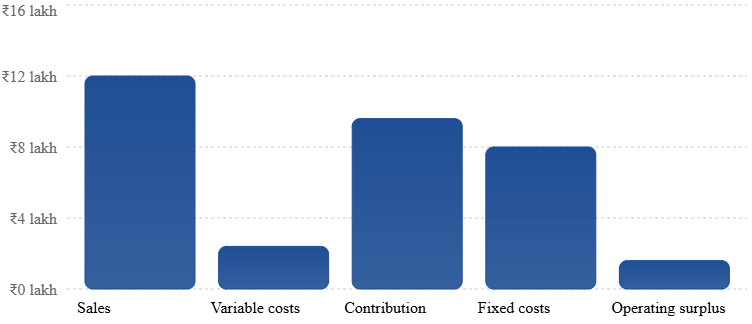
  • Expected monthly sales: ₹12 lakh from hot desks, dedicated desks, private cabins and meeting room bookings.
  • Variable costs and contribution margin: ₹2.4 lakh in variable operating costs, leaving a contribution of ₹9.6 lakh, or 80% of sales.
  • Fixed costs: ₹8 lakh per month, including office rent, staff salaries, internet, facility maintenance, utilities, marketing and administration.
  • Break-even sales: ₹10 lakh per month, calculated as ₹8 lakh in fixed costs divided by the 80% contribution margin.

Coworking Business: Break-Even Analysis

Coworking Business — Monthly Financial Snapshot

Illustrative monthly figures in ₹ lakh. Operating surplus is before financing costs, taxes and other excluded expenses.
Risk scenario: Suppose lower-than-expected occupancy and membership discounts reduce the contribution margin from 80% to 70%. Monthly break-even sales then increase to approximately ₹11.43 lakh.

Break-evensales=₹8lakh0.70=₹11.43lakh

At monthly sales of ₹12 lakh, the business would generate ₹8.4 lakh in contribution and retain ₹40,000 after the assumed fixed costs, before financing costs, taxes and other excluded expenses. This compares with ₹1.6 lakh remaining under the original assumptions.

Coworking Business — Break-Even Analysis

Illustrative monthly sales and total operating costs in ₹ lakh. Baseline assumes an 80% contribution margin; the risk scenario assumes 70%. The break-even point occurs where sales revenue meets total costs.
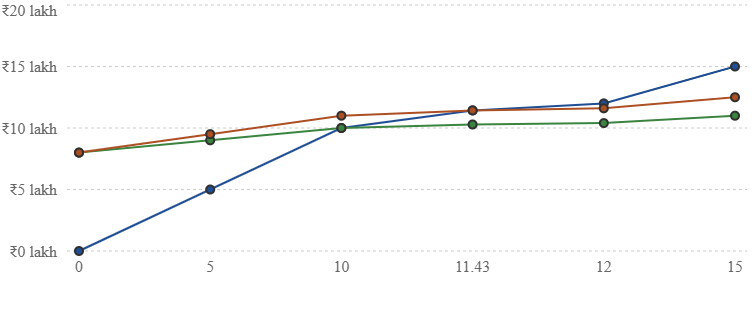
■ Sales revenue

■ Total costs — baseline

■ Total costs — risk scenario

Planning response

The business plan can recommend monitoring occupancy by workspace type, reviewing membership prices, tracking customer acquisition costs and controlling fit-out and facility expenses. It can also help management assess whether to add workstations, expand private cabins or invest in additional meeting rooms based on demonstrated demand.

These measures help the operator evaluate profitability, occupancy and cash-flow risks, but cannot guarantee a particular financial result.

Frequently Asked Questions

What is a co working space business plan?

A co working space business plan is a document that explains how a shared workspace will operate, attract members and manage costs. It covers the concept, location, services, pricing, property requirements, staffing, funding, financial projections and risks to support business decisions.

How much investment is needed to start a coworking space in India?

Investment depends on property size, location, lease deposit, interior work, furniture, connectivity, security systems, staffing and working capital. Prepare separate estimates for one-time setup expenses and recurring costs. Obtain local quotations before deciding the funding requirement.

How do you start a coworking space business in India?

Choose a target customer group, compare potential locations, assess rental terms and calculate usable capacity. Define membership packages, estimate fit-out and operating costs, check applicable compliance requirements and prepare a financial model. Finalise property commitments only after reviewing the plan and available funds.

What should a coworking space business plan template include?

A coworking space business plan template should cover the business profile, target members, location, service mix, pricing, property arrangements, operations and financial projections. A coworking space business plan template free may help organise information, but its assumptions need to match the proposed facility and local costs.

Which coworking business formats can an entrepreneur consider?

Options include shared desks, a private office rental business plan, an executive suite business plan, a hybrid workspace business plan or an incubator and coworking space business plan. Other concepts include a maker space business plan, event space rental business plan, coliving space business plan and virtual office services.

Can a coworking space business plan help secure a bank loan?

Yes, it can organise the project cost, promoter contribution, proposed use of funds, cash flow and repayment analysis for a lender's review. Banks apply their own eligibility criteria, due diligence and credit assessment. Preparing a plan does not guarantee loan approval.

Conclusion

A coworking space can serve different business needs, but its financial position depends on property costs, membership revenue and sustained utilisation. A carefully prepared co working space business plan helps founders assess these factors, explain their funding needs and make informed operating decisions. Aviaan can structure the plan around the proposed workspace and its intended purpose.

Contact Aviaan to discuss your coworking space business plan or email advisory@aviaanaccounting.com.

Talk to an Expert

Schedule a complimentary 30-minute discovery call to discuss your requirements.

By submitting, you agree to our Privacy Policy.

Table of Contents

Need Immediate Help?

Our advisory team is ready to assist you.

Let's Build Your Business Success Together

Our senior partners are available to evaluate your current financial structure and identify opportunities for optimization and risk reduction.

Sector Expertise

Our advisory assignments span a wide range of industries, including:

Healthcare
Hospitality
Restaurants & F&B
Retail
Technology & SaaS
Fintech
Real Estate
Manufacturing
Logistics
Education
Automotive
Consumer Products
Professional Services
Renewable Energy
E-commerce
Beauty & Wellness

Each sector requires different demand drivers, economics, competitive factors and valuation considerations. Our analysis is structured accordingly.

Industries We Serve

Tailored financial strategies for specialized sectors.

Real Estate

Healthcare

Manufacturing

Technology

Retail & E comm

Logistics

Services Offered by Aviaan

Feasibility Study

Independent verification of financial statements to ensure transparency and trust.

Business Plan

A comprehensive analysis to evaluate the commercial, technical, and financial viability of a proposed business or project before investment.

Business Valuation

An objective assessment of a company, asset, or investment to determine its fair market value for transactions, reporting, or strategic decisions.

Due Diligence

A detailed financial review to assess risks, validate performance, and ensure informed decision-making in transactions.

Accounting

End-to-end financial recording, reporting, and compliance services to maintain accurate books and support business decision-making.

Market Research

Launching a new venture, expanding into a new geography, raising capital, or entering a new segment, robust market research is critical.

Need Immediate Help?

Our advisory team is ready to assist you with your urgent financial queries.

Services Offered by Aviaan

Feasibility Study

Independent verification of financial statements to ensure transparency and trust.

LEARN MORE →

Business Plan

A comprehensive analysis to evaluate the commercial, technical, and financial viability of a proposed business or project before investment.

LEARN MORE →

Business Valuation

An objective assessment of a company, asset, or investment to determine its fair market value for transactions, reporting, or strategic decisions.

LEARN MORE →

Due Diligence

A detailed financial review to assess risks, validate performance, and ensure informed decision-making in transactions.

LEARN MORE →

Accounting

End-to-end financial recording, reporting, and compliance services to maintain accurate books and support business decision-making.

LEARN MORE →

Market Research

Launching a new venture, expanding into a new geography, raising capital, or entering a new segment, robust market research is critical.

LEARN MORE →

Ready to Speak with an Expert?

Partner with Aviaan Advisory today to unlock your business’s full potential. Our team of experts is here
to provide tailored solutions and guide you every step of the way.

