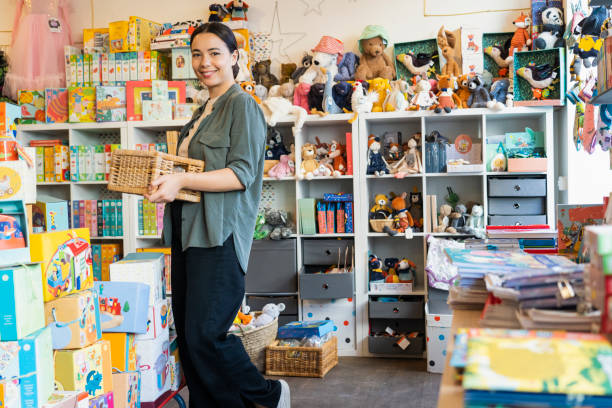
Launching a successful Toy Store business in India requires more than just passion; it demands a robust and well-researched business plan. India’s toy market is evolving rapidly, driven by rising disposable incomes and a growing emphasis on educational and branded toys. This detailed guide covers the essential elements of a winning business plan and explains how Aviaan can provide the expert guidance needed to turn your vision into a profitable reality.
November 12, 2025
15 min read
COMMERCIAL EXCELLENCE
Loading...
Strategic guidance and institutional-grade solutions customized for your enterprise objectives.
Talk to a Financial Expert
Schedule a complimentary 30-minute discovery call to discuss your enterprise’s financial trajectory.
By submitting, you agree to our Privacy Policy.
Table of Contents
Opening a toy store Business involves more than selecting attractive products and renting a retail space. Owners must understand customer preferences, manage inventory, choose reliable suppliers, and maintain sufficient working capital.
A well-prepared business plan helps entrepreneurs assess these requirements before committing funds. It also provides a clear direction for launching a new store, expanding an existing shop, or adding an online sales channel.
Banks, investors, landlords, and franchise brands may request a business plan to understand the proposed business model, funding requirements, operating costs, and repayment capacity. The plan should explain how the store will attract customers and manage commercial risks.
Aviaan supports entrepreneurs with structured business planning and financial expertise. Our team prepares tailored documents around the store concept, local customers, product categories, and funding objectives. Explore Aviaan's website to learn about our approach to business planning.
India's Toy Retail Market Overview and Business Potential
India's toy retail sector includes traditional toys, educational products, construction sets, dolls, puzzles, electronic toys, games, and online sales. Demand can vary by location, household budgets, age groups, school requirements, and gifting occasions.
The Government of India has reported changes in toy trade and stronger domestic manufacturing. Its published figures provide useful context, but they do not represent the total retail market or guarantee demand for an individual store.
Market size: A single official figure covering India's complete toy retail market is not available in the sources cited here. The Ministry of Commerce and Industry's toy trade update reports merchandise trade figures for selected toy-related categories. Retailers should assess their own catchment area rather than treat trade values as retail sales.
Market growth: The government reported that toy exports increased by 89.1% and imports declined by 37.5% between the stated comparison periods. These figures relate to international trade, not domestic shop sales. They indicate changes in the supply environment that retailers should consider when choosing suppliers.
Market forecasts: A verified official forecast for India's toy retail market has not been established here. A business plan should therefore develop sales scenarios from store capacity, expected customer visits, product prices, conversion rates, and repeat purchases rather than use unsupported market projections.
Product segmentation: Toy stores can stock educational toys, board games, puzzles, dolls, action figures, outdoor play products, building sets, and age-specific learning materials. The product mix should reflect local customer needs, supplier availability, safety compliance, and expected gross margins.
Geographic segmentation: Demand can differ between metropolitan areas, developing suburbs, smaller cities, and regional markets. Store location analysis should consider nearby schools, residential communities, shopping centres, public transport, parking, and competing retailers.
Consumer demographics: Parents, relatives, gift buyers, schools, and childcare providers may purchase toys for different purposes. A store should define its primary customer groups and organise product ranges around age suitability, learning needs, interests, and purchasing budgets.
Competitor benchmarking: Retailers should review nearby toy shops, department stores, supermarkets, online sellers, and specialist educational retailers. Compare their product assortment, price positioning, customer service, delivery options, and return policies to identify a clear market position.
Industry trends: Government initiatives support domestic toy manufacturing, indigenous designs, and learning through play. The official government update on the toy industry also describes quality monitoring and support for toy clusters. Retailers can assess whether locally made products suit their customers.
Consumer preferences: Parents may prioritise age suitability, product durability, learning value, safety, and price. Gift buyers may seek attractive packaging and convenient recommendations. Customer feedback and sales records can help the owner adjust the assortment.
Demand drivers: Birthdays, festivals, school activities, family gifting, educational needs, and children's interests can influence purchases. A business plan should distinguish recurring demand from seasonal peaks and avoid relying on a single sales occasion.
Government policies: The Toys (Quality Control) Order requires covered toys to meet applicable Indian Standards and bear the required BIS Standard Mark, subject to applicable exemptions. The government's explanation of toy safety requirements provides background. Retailers should verify that the products they sell comply with applicable requirements.
Distribution channels: A toy business may sell through a physical shop, its own online store, marketplaces, social commerce, or institutional supply arrangements. The plan should account for channel-specific commissions, delivery costs, returns, inventory allocation, and customer acquisition expenses.
Regional opportunities: Residential growth, family-oriented shopping areas, schools, and educational institutions may create suitable local catchments. The business plan should compare potential locations using rent, accessibility, nearby demand, competition, and expected operating costs.
Industry challenges: Inventory becoming outdated, product damage, price competition, seasonal fluctuations, supplier delays, and unsold stock can affect cash flow. Safety compliance and counterfeit products also require careful supplier selection and documentation.
International benchmarking: India's toy exports reached USD 384.7 million in the comparison reported by the Ministry of Commerce and Industry. This is an export figure, not a measure of domestic retail demand. Retailers can still review international product assortment and merchandising practices while prioritising local customer preferences.
Business feasibility indicators: Important indicators include expected daily transactions, average bill value, gross margin, rent as a share of sales, inventory turnover, supplier credit, and break-even sales. These measures should be calculated from the proposed store's actual assumptions and operating requirements.
Pune, Mumbai, Bengaluru, Hyderabad, Delhi, Jaipur, and other urban centres offer different retail conditions. A toy store business plan India should explain why the selected location fits the intended customer segment, budget, and product range.
Why You Need a Professional Toy Store Business Plan
First-time entrepreneurs, existing retailers, educational toy specialists, online sellers, and franchise applicants can all benefit from professional planning. A detailed toy shop business plan connects the business concept with realistic financial requirements and practical operating decisions.
Five reasons make professional support valuable:
Financing requirements: Banks and other lenders may require a structured plan showing the purpose of funding, projected cash flow, repayment capacity, and the owner's contribution. The document helps present the proposal clearly, but the lender decides whether to approve financing.
Brand and franchise applications: Entrepreneurs approaching a toy brand or franchise operator may need to explain their location, customer profile, retail experience, staffing, and financial capacity. The plan helps organise these details for review by the relevant brand.
Initial investment and working capital: A store may require a rental deposit, interior fit-out, shelving, point-of-sale equipment, opening inventory, licences, marketing, and cash reserves. A professional plan separates one-time setup expenses from recurring working capital needs.
Margins and cash flow: Different products may have different wholesale prices, retail margins, discounts, and stock turnover rates. Financial projections help the owner assess purchasing decisions, supplier payment terms, operating expenses, and the cash required during slower periods.
Industry-specific risks: Toys can have different demand patterns across age groups and occasions. A business plan considers slow-moving stock, safety compliance, damaged packaging, returns, online competition, and seasonal purchasing fluctuations.
Aviaan's toy store business plan writing services help owners organise these factors into a business-focused document.
Prepare a toy store business plan by defining the retail concept, understanding the target customers, assessing operating requirements, and connecting these decisions to financial projections.
Define the business concept and objectives: Decide whether the store will focus on general toys, educational products, premium brands, traditional toys, online retail, or a combination of formats.
Identify target customers: Define the age groups, parents, gift buyers, schools, and other customers the store intends to serve, based on its proposed location and price range.
Choose products and services: Select suitable toy categories, price bands, gift packaging, educational products, and any additional services the business can operate profitably.
Plan suppliers and operations: Identify authorised distributors, manufacturers, wholesalers, storage requirements, inventory systems, staffing needs, and delivery arrangements.
Review registrations and compliance: Identify the applicable business registration, tax, local trade permissions, consumer protection requirements, and toy safety obligations before opening.
Develop financial projections and funding needs: Estimate setup costs, stock purchases, rent, wages, marketing, monthly sales, gross margins, working capital, break-even sales, and funding requirements.
Write the executive summary last: Summarise the final business concept, customer segment, competitive position, funding requirement, and financial outlook after completing the supporting sections.
Each step should connect the store's commercial objectives with practical implementation. Aviaan can help prepare the plan and financial model around your proposed format.
How Aviaan Helps Toy Retailers Build a Stronger Business Plan
Aviaan combines business planning with financial expertise to help entrepreneurs present a clear, structured proposal. Each engagement is shaped around the store's concept, proposed location, target customers, funding objectives, and available business information.
Plans for different applications: We prepare business plans for bank financing, investor discussions, brand and franchise applications, relevant government schemes, business visa applications where appropriate, and internal decision-making.
Toy retail financial projections: We organise setup expenses, inventory investment, sales assumptions, supplier payments, staffing costs, operating expenses, cash flow, and break-even calculations around the proposed store.
Finance-led planning: Our approach links the retail strategy to financial assumptions so owners can assess funding needs, working capital, margins, and potential operating pressures.
Support across India: Entrepreneurs can discuss projects from different Indian cities, including Pune, Mumbai, Jaipur, Bengaluru, and other locations. Planning is tailored to the information and requirements relevant to each business.
Our Simple 5-Step Process
Initial consultation: We discuss the proposed toy store, its location, intended customers, business format, and the purpose of the plan.
Collection of business information: We gather available details about the owner's investment capacity, product categories, supplier arrangements, premises, staffing, and funding requirements.
Business plan and financial model preparation: We develop the business narrative, operating strategy, financial projections, and supporting assumptions based on the information provided.
Review and revisions: We review the draft with the owner, clarify assumptions, and make agreed revisions to improve accuracy and presentation.
Final business plan delivery: We provide the agreed deliverables for the intended application or internal planning purpose.
Explore our business plan services for more information about the planning support available. Add the verified country business plan hub link here when its URL is confirmed.
Our toy store business plan services cover the key commercial and financial sections required to assess the proposed retail business.
Executive summary: A concise overview of the store concept, target customers, product strategy, funding needs, and expected operating model.
Business profile and ownership: Details of the proposed business structure, ownership, objectives, management experience, and the reasons for entering toy retail.
Local demand and target customers: An assessment of the intended catchment area, family and school customers, shopping patterns, competitor presence, and product needs.
Products, services, and pricing: The planned assortment, including educational toys, puzzles, games, dolls, building sets, traditional toys, and other suitable categories, alongside pricing assumptions.
Supplier, dealership, franchise, or partner arrangements: An explanation of supplier selection, authorised distribution, purchase terms, minimum order requirements, and any proposed brand or franchise relationship.
Operations and staffing plan: Store layout, inventory management, procurement, customer service, staffing, opening procedures, online order fulfilment, and returns handling.
Sector-specific operating requirements: Stock storage, display, product labelling, age recommendations, product handling, inventory tracking, and customer service procedures appropriate to the store format.
Regulatory and compliance roadmap: Relevant business registrations, GST obligations where applicable, local permissions, consumer protection requirements, and applicable BIS toy safety requirements. The plan should distinguish retailer obligations from requirements applying to manufacturers and importers.
Financial projections: Project cost, funding sources, sales assumptions, gross margins, working capital, cash flow, profit and loss, balance sheet, break-even analysis, and repayment planning where relevant.
A children's toy store business plan should reflect the intended age groups and assortment. An educational toy store business plan may place more emphasis on learning products and school-related customers, while an online toy store business plan should address fulfilment, delivery, returns, platform charges, and digital customer acquisition.
For related retail planning, see the Battery Shop Business Plan in India. Add one or two additional verified sector-page links before publication.
Case Study — Toy Store Business Plan India: Planning a Retail Store in Jaipur
Drawn from Aviaan's Toy Store planning work. Client names and details changed to protect confidentiality.
Problem
A prospective retailer in Jaipur wants to open a toy shop serving families, gift buyers, and customers looking for educational products. The owner needs to decide which categories to stock, how much working capital to retain, and whether a physical store should also accept online orders.
The main planning challenges include estimating local demand, selecting reliable suppliers, budgeting for premises and inventory, and managing stock that may sell slowly.
Solution
The business planning work covers five areas:
Define the store's customer segments, location criteria, product categories, and retail positioning.
Prepare an opening inventory plan with purchasing assumptions and supplier payment terms.
Estimate rent, deposits, interiors, equipment, staff costs, utilities, marketing, and working capital.
The resulting planning document gives the owner a structured basis for evaluating the store concept, comparing location options, assessing funding requirements, and reviewing the proposed operating model. It does not establish guaranteed commercial results or promise financing approval.
Real-World Example — Planning a Toy Store in Pune
The following planning example uses assumed figures to demonstrate how a toy retailer can assess monthly operating performance. These figures are not verified market data or financial forecasts. Actual costs and sales will depend on the premises, assortment, suppliers, and customer demand.
Illustrative monthly sales: ₹5,00,000.
Variable costs and contribution margin: Assume variable costs equal 60% of sales, covering toy purchases and other sales-linked costs. The contribution margin is therefore 40%, or ₹2,00,000 on the assumed sales.
Fixed operating costs: Assume monthly rent of ₹45,000, staff costs of ₹55,000, utilities and administration of ₹15,000, and marketing and other fixed expenses of ₹15,000. Total fixed costs are ₹1,30,000.
Break-even sales: Using the contribution margin ratio of 40%, break-even sales are ₹1,30,000 ÷ 0.40 = ₹3,25,000 per month.
Break-even sales = Fixed Costs ÷ Contribution Margin Ratio
At the assumed monthly sales of ₹5,00,000, the contribution after variable costs would be ₹2,00,000. After fixed costs of ₹1,30,000, the remaining operating surplus would be ₹70,000 before interest, tax, depreciation, and any excluded expenses.
A change in product mix or seasonal demand could reduce the contribution margin. Discounts, damaged goods, unsold inventory, and supplier price increases may also affect the store's performance. If the contribution margin falls, the business would need higher sales to cover the same fixed costs.
A sector-specific business plan helps owners compare different pricing, stock purchasing, staffing, and marketing decisions. It also helps them test whether the store can meet its operating commitments under different sales conditions.
Frequently Asked Questions
1. What is a toy store business plan?
A toy store business plan is a document describing the retail concept, target customers, product range, suppliers, operations, marketing, and financial projections. It helps owners assess startup requirements, working capital, risks, and funding needs before committing resources.
2. How much investment is needed to start a toy store in India?
The investment depends on location, store size, rental deposit, interiors, inventory, equipment, staffing, and working capital. A small neighbourhood shop may have different requirements from a large branded outlet. Prepare a location-specific budget before investing.
3. How do you start a toy store in India?
Start by selecting a retail format, defining target customers, assessing locations, and identifying reliable suppliers. Prepare a business plan, estimate setup costs, check applicable registrations and toy safety requirements, arrange funding, and establish inventory and sales systems before opening.
4. What is included in toy store business plan services?
Toy store business plan services typically cover the business concept, customer segments, product assortment, supplier strategy, marketing, operating expenses, financial projections, funding requirements, cash flow, break-even analysis, and risk management. The final scope should reflect the owner's objectives and application requirements.
5. Which toy store business formats and ideas can I consider?
Suitable formats include a general toy shop, educational toy store, traditional toy retailer, premium toy outlet, online toy store, or a shop specialising in puzzles and games. Choose a format based on local demand, supplier access, available capital, and operating capability.
6. Can a toy store business plan help me get a bank loan?
Yes, a well-prepared business plan can support a loan application by explaining the business model, project cost, funding purpose, cash flow, and repayment assumptions. However, the bank evaluates creditworthiness, documentation, collateral where applicable, and other lending criteria before making its decision.
7. What registrations and compliance requirements apply to a toy store?
Requirements may include business constitution and registration, GST registration where applicable, local trade permissions, and consumer protection compliance. Covered toys must meet applicable BIS safety requirements. Additional obligations can apply to manufacturers, importers, and specific product categories.
8. How much does company charge for a toy store business plan?
Aviaan provides a fixed-fee quote after an initial consultation. The fee depends on the store format, project complexity, financial modelling requirements, available information, and intended use. Contact our team to discuss your requirements and receive a tailored proposal.
Conclusion
A well-planned toy retail business needs a suitable product mix, reliable suppliers, effective inventory management, and careful control of operating costs. A professional toy store business plan helps entrepreneurs assess their investment requirements, understand financial risks, and prepare for discussions with lenders, investors, or brand partners. Aviaan can help organise these decisions into a structured business plan tailored to the proposed store.
Partner with Aviaan Advisory today to unlock your business’s full potential. Our team of experts is here to provide tailored solutions and guide you every step of the way.