


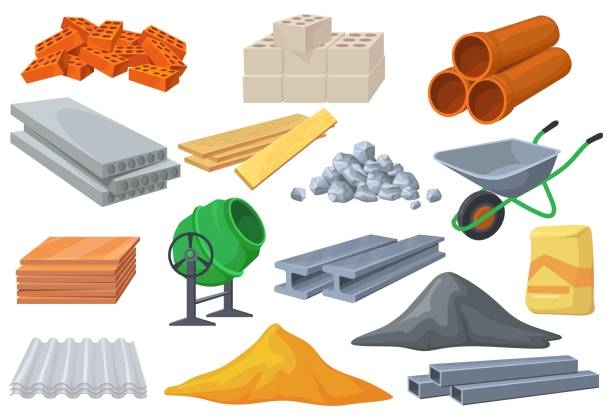
Construction projects depend on the timely availability of sand, gravel, crushed stone, aggregates and concrete. Suppliers that can deliver these materials to the correct specifications, quantities and schedules play an essential role in residential development, road construction and infrastructure projects.
However, establishing a profitable construction materials business requires more than purchasing bulk materials and arranging trucks. Entrepreneurs must evaluate local demand, verify legal sourcing, manage transportation costs, control material quality and collect payments from contractors.
A professional construction materials business plan connects these decisions with market research, operating procedures, investment requirements and financial projections.
Whether launching an aggregate dealership, establishing a sand distribution business or developing a ready-mix concrete plant, structured planning helps entrepreneurs assess commercial feasibility before committing capital.
India's construction materials supply chain serves housing developers, road contractors, infrastructure companies, commercial builders and government project contractors.
Demand is influenced by the location and timing of construction projects, regional material availability and transportation economics.
According to the India Brand Equity Foundation, India's cement production reached approximately 491.4 million metric tonnes in FY 2025–26, compared with 453 million tonnes in the preceding financial year.
Although cement production is not a direct measurement of aggregate demand, it provides useful context for the scale of India's construction industry.
| Material Category | Main Applications | Commercial Considerations |
| Natural sand | Mortar, plaster and concrete | Legal sourcing and grading |
| Manufactured sand | Concrete and construction | Processing and particle specifications |
| Crushed stone | Roads, foundations and concrete | Size, quality and transport |
| Gravel | Drainage and construction | Grading and availability |
| Coarse aggregates | Concrete and infrastructure | Testing and consistent supply |
| Ready-mix concrete | Residential and commercial construction | Production quality and delivery timing |
| Precast materials | Infrastructure and building projects | Manufacturing and handling |
Road development, housing construction, industrial facilities and commercial infrastructure create demand for construction aggregates and related materials.
However, demand varies by district and project pipeline. Freight costs can also limit how far bulk materials can be delivered economically.
A construction aggregate business plan should therefore prioritize regional customer demand and supply economics rather than broad national market estimates.
Construction materials businesses handle heavy products, transportation-intensive orders and frequently changing procurement costs.
A structured plan helps entrepreneurs:
A construction material supply business plan should connect expected sales volumes with realistic sourcing capacity, delivery schedules and payment terms.
| Business Model | Target Customers | Main Requirements |
| Sand and gravel supplier | Local contractors | Legal sourcing and delivery |
| Aggregate distributor | Builders and road contractors | Stockyard and logistics |
| Construction material dealership | Contractors and smaller builders | Supplier agreements |
| Stone supply business | Infrastructure contractors | Product grading and handling |
| Construction material warehouse | Commercial buyers | Storage and inventory control |
| Ready-mix concrete plant | Developers and contractors | Batching equipment and quality systems |
| Materials manufacturing | Dealers and project buyers | Production facilities and technical controls |
The appropriate business model depends on capital availability, product demand, regulatory requirements and the local construction market.
Evaluate housing projects, road works, industrial developments and infrastructure activity in the intended service area.
Identify the materials required by local contractors and competing suppliers.
Choose aggregate supply, sand trading, gravel distribution, dealership, manufacturing or ready-mix concrete production.
Compare investment requirements and operational complexity.
Segment buyers into contractors, developers, ready-mix plants, road construction companies and institutional procurement teams.
Select sand, gravel, crushed stone, aggregates or concrete products according to customer demand and supplier availability.
Evaluate authorized suppliers, quarry documentation, product specifications and applicable transport requirements.
Assess road connectivity, stockyard space, truck access, environmental restrictions and proximity to customers.
Determine requirements for loaders, weighing systems, trucks, storage areas and handling equipment.
Develop material inspection, documentation, testing, dust control and safety procedures.
Estimate procurement, machinery, transportation, staffing, fuel, maintenance and working capital.
Develop contractor relationships, quotation procedures, delivery commitments and payment controls.
Bulk construction materials require careful coordination between suppliers, stockyards and project sites.
Demand forecasting → Authorized sourcing → Material inspection → Stockyard receiving → Customer order → Loading and weighing → Delivery → Payment collection
| Operational Area | Planning Requirement |
| Procurement | Approved suppliers and documented sourcing |
| Quality control | Grading, specifications and testing |
| Stockyard | Material segregation and safe handling |
| Inventory | Quantity measurement and reconciliation |
| Transportation | Truck scheduling and route planning |
| Weighing | Accurate dispatch quantities |
| Customer service | Quotations and delivery updates |
| Receivables | Credit limits and collection procedures |
Transport expenses can substantially affect delivered material prices.
A construction material supply business plan in India should calculate freight according to distance, vehicle capacity, fuel consumption, loading time and return-trip availability.
Reliable delivery scheduling can help suppliers differentiate themselves from competitors.
A sand supply business plan should evaluate legally authorized sources, material specifications, customer demand and transport documentation.
Natural sand sourcing is subject to state-level minor mineral rules and applicable environmental requirements.
Gravel suppliers serve drainage, roadwork, landscaping and construction applications.
A gravel supply business plan should evaluate material grading, supplier capacity, loading costs and customer delivery requirements.
Crushed stone and graded aggregates serve foundations, concrete production and road construction.
A construction stone business plan should address particle size, testing, storage, handling and supply consistency.
An aggregate distribution operation may supply multiple grades to contractors and ready-mix concrete plants.
The business should define specifications, sourcing procedures, dispatch capacity and quality assurance.
A dealership can distribute materials sourced from established producers.
A construction material dealership business plan in India should evaluate supplier agreements, territory arrangements, pricing, customer relationships and working capital.
A materials warehouse or stockyard allows operators to consolidate supply and fulfill customer orders.
Planning should address land access, storage capacity, material segregation, handling equipment and environmental controls.
Manufacturing may involve aggregate processing, concrete products or other construction materials.
A construction materials manufacturing business plan requires technical analysis of machinery, raw materials, production capacity, energy consumption, quality control and applicable approvals.
Ready-mix concrete operations require batching equipment, mix-design controls, raw material testing and time-sensitive delivery.
A ready mix concrete business plan should evaluate plant location, customer proximity, production capacity, transit mixers and technical quality requirements.
The Bureau of Indian Standards provides process certification guidance for ready-mixed concrete under IS 4926.
Requirements depend on business activities, material sources, location and state regulations.
Entrepreneurs should evaluate:
Sand and other covered minor minerals are regulated through state-specific frameworks. Purchasing from a supplier does not remove the need to verify lawful sourcing and transport documentation.
Businesses should consult the relevant state mining department, pollution control board and qualified advisers.
Financial feasibility depends on procurement prices, freight, material quality, inventory movement and customer payment terms.
| Financial Component | Planning Consideration |
| Land or stockyard | Lease, purchase and preparation |
| Opening inventory | Sand, gravel, stone and aggregates |
| Equipment | Loaders, weighing and handling |
| Transportation | Trucks or third-party logistics |
| Labor | Drivers, operators and administration |
| Fuel | Delivery and equipment consumption |
| Maintenance | Vehicle and machinery servicing |
| Compliance | Applicable permissions and testing |
| Insurance | Vehicles, equipment and relevant risks |
| Working capital | Purchases and customer receivables |
Revenue may come from bulk material sales, dealership margins, contracted project supply and relevant delivery services.
Financial projections should calculate contribution by material type and delivery distance.
A project model should test procurement price changes, freight costs, sales volumes, equipment downtime and delayed payments.
Construction contractors may operate on credit terms, making receivables management especially important.
A construction materials business plan in India should include monthly cash flow forecasts and realistic working capital requirements.
A professional business plan should include:
A lender or investor proposal should explain market demand, sourcing arrangements, capital investment, delivery capability and expected cash flow.
Supporting documents may include supplier quotations, land information, equipment estimates, customer agreements and applicable permissions.
A construction materials business plan for a startup should prioritize manageable product categories and realistic sales assumptions.
Create accurate service pages describing supplied materials, available grades, service locations and bulk order procedures.
Provide clear answers about product specifications, minimum quantities, delivery coverage and quotation requirements.
Maintain consistent company details, verifiable product information and transparent sourcing documentation.
Develop relationships with contractors, infrastructure companies, ready-mix plants and construction procurement teams.
Prioritize dependable supply, correct quantities, consistent quality, transparent pricing and timely delivery.
Consider additional stockyards, vehicles, product categories or processing capacity only after validating demand and financial performance.
Illustrative consulting scenario; not a verified completed client engagement.
An entrepreneur planning a construction aggregate supply business near Hyderabad wanted to supply sand, gravel and crushed stone to contractors and ready-mix concrete operators.
The proposed business required a stockyard, supplier relationships, transport arrangements and sufficient working capital.
Before approaching lenders, the entrepreneur needed market research and a structured financial model.
The project required answers to several questions:
| Client Requirement | Aviaan's Approach | Proposed Deliverable |
| Market research | Contractor demand and competitor assessment | Market report |
| Business model | Product and customer strategy | Commercial plan |
| Procurement | Supplier evaluation framework | Sourcing strategy |
| Operations | Stockyard and transport planning | Operational plan |
| Financial modeling | Margin and cash flow analysis | Financial projections |
| Risk assessment | Compliance, logistics and credit risks | Risk framework |
Market research: Aviaan would evaluate local construction projects, contractor requirements, competing suppliers and aggregate demand.
Business model development: The team would assess dealership, trading and distribution models based on available investment.
Operational planning: Aviaan would organize sourcing, inventory controls, material inspection, dispatch and delivery procedures.
Financial modeling: The project model would assess procurement costs, freight, equipment, staffing, customer credit and alternative sales scenarios.
Marketing strategy: The plan would identify contractor outreach, institutional supply opportunities and relevant digital visibility.
The intended engagement would produce a market assessment, sourcing strategy, operating plan, financial model, risk analysis and implementation roadmap.
These documents would help the entrepreneur evaluate feasibility before making major investment commitments.
| KPI | Business Purpose |
| Gross margin per tonne | Evaluate material profitability |
| Freight cost per tonne | Monitor logistics efficiency |
| On-time delivery rate | Assess service reliability |
| Inventory variance | Identify stock measurement issues |
| Equipment utilization | Monitor asset productivity |
| Material rejection rate | Evaluate quality performance |
| Receivables aging | Manage customer credit |
| Operating cash flow | Assess financial sustainability |
Regular monitoring supports more reliable operations and stronger financial control.
Aviaan Accounting provides market research, feasibility studies, business planning and financial modeling services for entrepreneurs evaluating construction material supply ventures.
Aviaan can assess regional construction demand, customer requirements, competition and commercial opportunities.
The consulting team can evaluate aggregate supply, sand distribution, dealership, stockyard operations and manufacturing models.
Aviaan can help organize supplier strategy, inventory controls, logistics, staffing and service delivery processes.
Financial models can evaluate startup investment, procurement, freight, operating expenses, working capital and alternative scenarios.
Aviaan can help identify risks involving sourcing compliance, material quality, price volatility, transport costs and delayed payments.
Professional planning documents can support financing discussions and help entrepreneurs assess additional capacity or distribution locations.
Planning to launch an aggregate supply company, establish a construction material dealership or develop a ready-mix concrete operation?
Explore Aviaan's business plan services for customized market research, feasibility assessment and financial modeling.
Contact Aviaan to discuss your construction materials venture and business planning requirements.
Construction material suppliers support housing, infrastructure and commercial development through aggregate distribution, sand and gravel supply, dealerships and manufacturing.
However, sustainable operations depend on lawful sourcing, reliable transportation, product quality, customer demand and financial discipline.
A professional construction materials business plan connects these requirements into a practical commercial strategy.
Aviaan can support entrepreneurs with market research, operational planning and financial modeling, helping them evaluate opportunities before launching or expanding construction supply businesses.
A construction materials business plan outlines customer demand, material sourcing, stockyard operations, transportation, quality controls, pricing and financial projections for a construction supply venture.
Research local construction demand, select material categories, identify authorized suppliers, arrange storage and transportation, verify applicable permissions and prepare financial projections.
It should cover sand, gravel and crushed stone demand, sourcing, material specifications, stockyard requirements, transportation, pricing and financial feasibility.
Yes, subject to applicable state sourcing, transport, storage and business requirements. Entrepreneurs should verify supplier documentation and commercial demand.
It explains how a dealer will procure and distribute construction materials through supplier relationships, inventory management, customer sales and delivery operations.
It should include plant location, batching equipment, raw material supply, quality control, customer demand, transit mixers, operating expenses and financial projections.
Prepare a project report covering market research, supplier arrangements, investment costs, equipment, projected sales, working capital, cash flow and relevant supporting documentation.
Yes. Aviaan provides market research, feasibility analysis, business planning and financial modeling services for construction aggregate, material supply, dealership and related ventures.




