
Goodwill Impairment Services in Egypt

Goodwill impairment testing is a mandatory annual valuation exercise for companies in Egypt, driven by the volatile economic environment and the requirements of Egyptian Accounting Standard No. (31) and IFRS. This guide details the complex compliance landscape and highlights how Aviaan’s specialized services ensure robust and defensible financial reporting.
COMMERCIAL EXCELLENCE

Loading...

Strategic guidance and institutional-grade solutions customized for your enterprise objectives.

Talk to a Financial Expert

Schedule a complimentary 30-minute discovery call to discuss your enterprise’s financial trajectory.
By submitting, you agree to our Privacy Policy.

Table of Contents

The Egyptian market, characterized by its significant size, rapid development, and periodic macroeconomic volatility, presents a unique set of challenges and opportunities for businesses. Companies operating in Egypt, especially those with a history of mergers and acquisitions, must manage the substantial financial reporting obligation of Goodwill Impairment Testing. This is not merely an annual checkbox exercise; it is a complex, judgment-intensive valuation process required under Egyptian Accounting Standard No. (31) (EAS 31), which is largely converged with International Accounting Standard 36 (IAS 36). Given the dynamic regulatory and economic environment—marked by currency fluctuations, inflation, and shifting interest rates—securing expert, independent Goodwill Impairment Services in Egypt is essential for maintaining financial statement credibility.
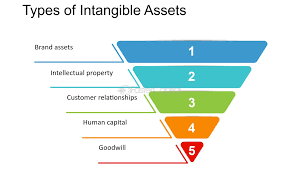
A graphic illustrating the key macroeconomic risk factors in Egypt that can act as triggers for goodwill impairment testing.

The Technical Imperative: Goodwill in the Egyptian Context

Goodwill is the premium paid over the fair value of identifiable net assets acquired in a business combination. It represents the value of synergistic benefits, brand strength, and market access that are not separately measurable. Under both EAS 31 and IAS 36, this non-amortized intangible asset must be tested for impairment at least annually, or more frequently if impairment indicators are present. The goal is to prevent the asset from being carried on the balance sheet at a value higher than its recoverable amount.

Egyptian Accounting Standard No. (31) and IAS 36

EAS 31 (Impairment of Assets) aligns closely with the principles of IAS 36. The testing procedure centers on the concept of the Cash-Generating Unit (CGU).

  • Cash-Generating Unit (CGU): This is the smallest identifiable group of assets that generates cash inflows that are largely independent of the cash inflows from other assets. In an acquisition scenario, the acquired business or a segment thereof is typically identified as the CGU to which the goodwill is allocated.
  • The Impairment Test: The test involves comparing the CGU’s carrying amount (including the allocated goodwill) with its recoverable amount.
  • Recoverable Amount: This is defined as the higher of the CGU's Fair Value Less Costs of Disposal (FVLCD) and its Value in Use (VIU).

If the carrying amount of the CGU exceeds its recoverable amount, an impairment loss is recognized. This loss is first applied to reduce the carrying amount of the goodwill allocated to that CGU.

Unique Challenges in the Egyptian Market

Conducting a robust impairment test in Egypt is complicated by several local economic factors that directly impact the valuation inputs:

  • Foreign Exchange Volatility: The Egyptian Pound (EGP) has experienced significant volatility. For multinational corporations with reporting currency outside of EGP, or for local businesses with hard currency debt or imported costs, this volatility heavily impacts future cash flow projections and the risk premium included in the discount rate.
  • High and Volatile Inflation: Sustained high inflation rates affect the real purchasing power of projected revenues and the stability of input costs, making reliable financial forecasting exceptionally challenging.
  • High Interest Rates: The Central Bank of Egypt's policy rates, often raised to combat inflation, translate into a higher risk-free rate and, consequently, a higher Weighted Average Cost of Capital (WACC). A higher WACC results in a lower present value of future cash flows, increasing the probability of goodwill impairment.
  • Geopolitical and Regulatory Uncertainty: Regional instability and changes in government policy or tax regimes can create specific, non-diversifiable risk factors that must be correctly quantified and incorporated into the discount rate.

The Process of Goodwill Impairment Testing

A technically sound Goodwill Impairment engagement requires a systematic approach focused on defensibility and accuracy.

1. Identifying Impairment Indicators and Defining CGUs

The process begins with management’s assessment of internal and external indicators, such as a sharp decline in market capitalization, unexpected technological obsolescence, or significant adverse changes in the Egyptian economic or legal environment. Aviaan works closely with management and auditors to clearly delineate the Cash-Generating Units that align with how the business is managed and monitored for internal reporting.

2. Developing Financial Forecasts

This is the most critical and judgmental step. The valuation relies heavily on long-term financial projections, typically a five-year explicit forecast plus a terminal value. In the Egyptian environment, projections must explicitly address the expected impact of key factors like EGP devaluation and sustained inflation on revenue, cost of goods sold, and operating expenses.

3. Determining the Discount Rate (WACC)

The Weighted Average Cost of Capital (WACC) is the rate used to discount the future cash flows to their present value. Aviaan’s expertise is crucial here, as they must develop a CGU-specific WACC that accounts for:

  • The Risk-Free Rate (reflective of the yield on Egyptian government bonds or an international proxy adjusted for Egypt's risk profile).
  • The Equity Risk Premium (a complex calculation in emerging markets like Egypt).
  • A specific Country Risk Premium (CRP) to reflect the additional systemic risk of operating in Egypt.
  • A beta that reflects the systematic risk of the industry segment in which the CGU operates.

4. Valuation Conclusion and Impairment Recognition

Aviaan calculates the Value in Use (VIU) using the discounted cash flow model and often supplements this with the Fair Value Less Costs of Disposal (FVLCD), typically derived from a market approach using comparable transaction data, appropriately adjusted for the specific characteristics of the CGU and the Egyptian market. The higher of the VIU and FVLCD is the recoverable amount. If this amount is less than the CGU's carrying amount, the impairment loss is calculated and recognized against goodwill.

How Aviaan Provides Expert Goodwill Impairment Services in Egypt

Aviaan is a trusted partner for companies in Egypt because of its blend of global technical valuation expertise and deep local market knowledge. Their specialized Goodwill Impairment Services are designed to deliver independent, accurate, and auditor-defensible results, ensuring compliance with both EAS 31 and IFRS.

Technical Rigor and IFRS/EAS Compliance

Aviaan's team of certified valuation analysts is proficient in the intricacies of IAS 36 and EAS 31. They ensure that:

  • Methodology Selection is Justified: They clearly document the choice of valuation methodologies (DCF/Income Approach and Market Approach) and ensure consistency with the requirements for determining Value in Use versus Fair Value Less Costs of Disposal.
  • Assumption Defensibility: All key assumptions, particularly future cash flows and the complex WACC calculation (including the Country Risk Premium for Egypt), are rigorously supported by independent economic data, industry analysis, and historical performance. This provides a robust defense against auditor challenge.
  • Documentation Excellence: Aviaan prepares comprehensive valuation reports that meet the stringent disclosure and documentation standards required by both the Egyptian Financial Regulatory Authority (FRA) and international audit firms operating in Egypt.

Navigating Egyptian Economic Volatility

The key value-add in Egypt is Aviaan’s ability to correctly model and quantify the impact of macroeconomic risk:

  • Forecasting in High-Inflation/Volatile Environments: Aviaan's models are built to handle high inflation and currency risk. They advise on whether to project cash flows in the local currency (EGP) and discount with a nominal rate, or use a stable functional currency (e.g., USD) and discount with a real rate, ensuring the chosen method accurately reflects the economic reality of the CGU in Egypt.
  • Discount Rate Customization: Aviaan employs sophisticated models to compute a precise, CGU-specific WACC that explicitly incorporates the volatility and political risk associated with the Egyptian market. This prevents over- or under-stating the discount rate, which is the single most sensitive input in the DCF model.
  • Sensitivity Analysis: They provide comprehensive sensitivity analysis around key variables (e.g., terminal growth rate, discount rate, revenue growth) to demonstrate to management and auditors the stability and robustness of the impairment conclusion under various plausible Egyptian economic scenarios.

Strategic Financial Insight

The impairment test provides a health check on past acquisitions. Aviaan uses the output to offer strategic insights:

  • Post-Acquisition Review: By analyzing why a CGU might be failing its impairment test, Aviaan helps management identify underperforming assets or flawed business models, enabling proactive restructuring or divestiture decisions, thereby moving beyond mere compliance to strategic management.
  • Capital Investment Guidance: The detailed valuation reveals which operational units are generating the highest present value of cash flows, guiding future capital allocation decisions in Egypt.

Case Study: Impairment of a Cairo-Based FMCG Subsidiary

A major regional holding company with its head office outside Egypt acquired a local Fast-Moving Consumer Goods (FMCG) manufacturing and distribution subsidiary in Cairo, resulting in EGP 200 million of recognized goodwill. The parent company reported under IFRS. Following a significant depreciation of the EGP and a subsequent spike in interest rates, the management identified a clear impairment indicator.

Aviaan's Solution

The holding company engaged Aviaan to perform the annual Goodwill Impairment test for the FMCG CGU in accordance with IAS 36.

  1. Defining the CGU: The entire Egyptian subsidiary was confirmed as the CGU.
  2. Addressing Economic Volatility: Aviaan’s team structured the DCF model to project cash flows in the functional currency (EGP) and then discounted them using an appropriate nominal WACC. Crucially, the WACC included a high-risk premium to reflect the local market volatility, resulting in a significantly elevated discount rate compared to regional averages.
  3. Valuation and Impairment: Aviaan calculated the Value in Use (VIU), which was determined to be the recoverable amount, to be EGP 850 million. The CGU’s carrying amount (including the goodwill) was EGP 950 million.
  4. Conclusion: Since the carrying amount exceeded the recoverable amount by EGP 100 million, an impairment loss was mandatory. This full EGP 100 million was charged against the goodwill balance. The final reported goodwill was reduced from EGP 200 million to EGP 100 million.

The detailed report and supporting economic analysis provided by Aviaan allowed the holding company to successfully navigate the scrutiny of its international auditors and demonstrate prudent financial reporting, despite the challenging Egyptian economic environment. This also provided management with an internal benchmark against which to measure the performance of the FMCG unit going forward.

Conclusion

In the demanding and high-stakes financial landscape of Egypt, Goodwill Impairment Testing remains a critical exercise in corporate governance and financial integrity. The complexity arising from the technical requirements of EAS 31 (IAS 36) combined with the volatile macroeconomic indicators—like the EGP exchange rate and high interest rates—requires specialist attention. Aviaan provides market-leading Goodwill Impairment Services in Egypt, offering independent valuation expertise, deep compliance knowledge, and strategic financial analysis. By partnering with Aviaan, businesses can ensure their financial statements are robust, their goodwill is accurately tested, and their decision-making is grounded in a clear understanding of asset value in the Egyptian market.

Related posts

Goodwill Impairment Services in Egypt

Goodwill Impairment Services in Angola

Goodwill Impairment Services in Kuwait

Goodwill Impairment Services in Ukraine

Goodwill Impairment Services in Kenya

Goodwill Impairment Services in Oman

Talk to an Expert

Schedule a complimentary 30-minute discovery call to discuss your requirements.

By submitting, you agree to our Privacy Policy.

Table of Contents

Need Immediate Help?

Our advisory team is ready to assist you.

Let's Build Your Business Success Together

Our senior partners are available to evaluate your current financial structure and identify opportunities for optimization and risk reduction.

Sector Expertise

Our advisory assignments span a wide range of industries, including:

Healthcare
Hospitality
Restaurants & F&B
Retail
Technology & SaaS
Fintech
Real Estate
Manufacturing
Logistics
Education
Automotive
Consumer Products
Professional Services
Renewable Energy
E-commerce
Beauty & Wellness

Each sector requires different demand drivers, economics, competitive factors and valuation considerations. Our analysis is structured accordingly.

Industries We Serve

Tailored financial strategies for specialized sectors.

Real Estate

Healthcare

Manufacturing

Technology

Retail & E comm

Logistics

Services Offered by Aviaan

Feasibility Study

Independent verification of financial statements to ensure transparency and trust.

Business Plan

A comprehensive analysis to evaluate the commercial, technical, and financial viability of a proposed business or project before investment.

Business Valuation

An objective assessment of a company, asset, or investment to determine its fair market value for transactions, reporting, or strategic decisions.

Due Diligence

A detailed financial review to assess risks, validate performance, and ensure informed decision-making in transactions.

Accounting

End-to-end financial recording, reporting, and compliance services to maintain accurate books and support business decision-making.

Market Research

Launching a new venture, expanding into a new geography, raising capital, or entering a new segment, robust market research is critical.

Need Immediate Help?

Our advisory team is ready to assist you with your urgent financial queries.

Services Offered by Aviaan

Feasibility Study

Independent verification of financial statements to ensure transparency and trust.

LEARN MORE →

Business Plan

A comprehensive analysis to evaluate the commercial, technical, and financial viability of a proposed business or project before investment.

LEARN MORE →

Business Valuation

An objective assessment of a company, asset, or investment to determine its fair market value for transactions, reporting, or strategic decisions.

LEARN MORE →

Due Diligence

A detailed financial review to assess risks, validate performance, and ensure informed decision-making in transactions.

LEARN MORE →

Accounting

End-to-end financial recording, reporting, and compliance services to maintain accurate books and support business decision-making.

LEARN MORE →

Market Research

Launching a new venture, expanding into a new geography, raising capital, or entering a new segment, robust market research is critical.

LEARN MORE →

Ready to Speak with an Expert?

Partner with Aviaan Advisory today to unlock your business’s full potential. Our team of experts is here
to provide tailored solutions and guide you every step of the way.

