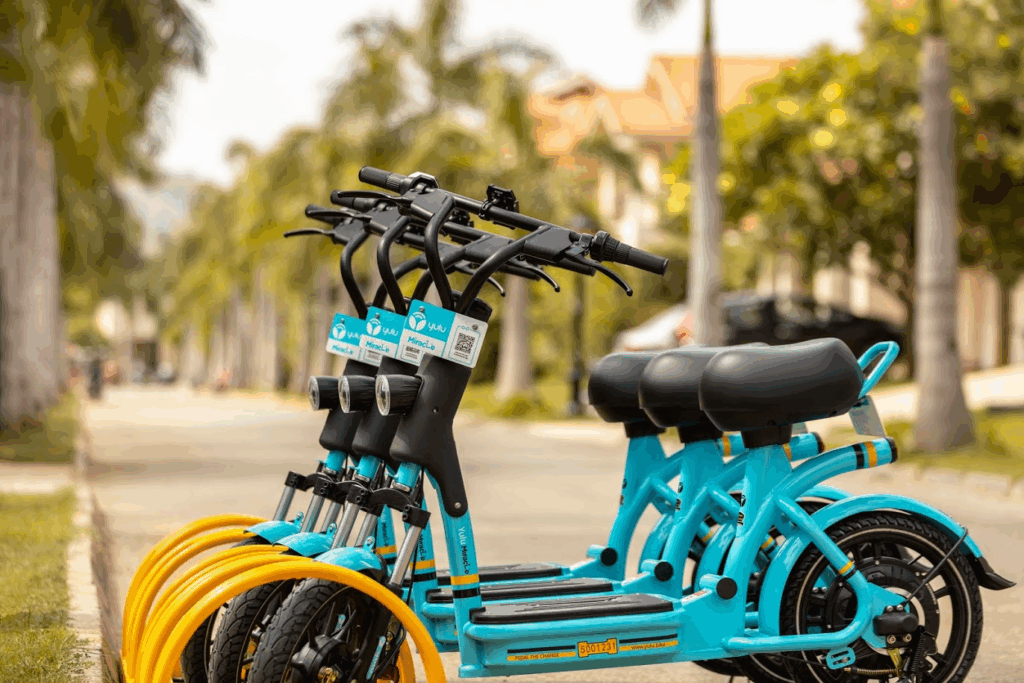
Market Research, Feasibility Study and Business Plan for Bike/scooter sharing in South Korea
Tap into South Korea’s rapidly growing micromobility sector. We detail the crucial steps: Market Research, Feasibility Study, and a strategic Business Plan for your Bike/scooter sharing venture in Seoul and beyond.
December 7, 2025
12 min read
COMMERCIAL EXCELLENCE
Loading...
Strategic guidance and institutional-grade solutions customized for your enterprise objectives.
Talk to a Financial Expert
Schedule a complimentary 30-minute discovery call to discuss your enterprise’s financial trajectory.
By submitting, you agree to our Privacy Policy.
Table of Contents
The Bike/scooter sharing market, a core component of micromobility in South Korea, is not merely a growing trend; it is a rapidly evolving sector with market size projected to reach billions of USD by 2035, driven by the intense demand for first- and last-mile connectivity in densely populated urban centers like Seoul, Busan, and Incheon. However, this market is characterized by fierce competition, constantly changing governmental regulations (especially concerning e-scooter regulations in South Korea), and the high operational complexity of fleet management and asset depreciation. Successful entry and sustained profitability in the South Korea micromobility market necessitate a rigorous, data-driven approach built upon three pillars: exhaustive Market Research, a realistic Feasibility Study, and an adaptable, technology-focused Business Plan. These elements are vital for transforming a shared mobility concept into a highly utilized, profitable operation.
The Crucial First Gear: Market Research for Bike/scooter sharing in South Korea
For a technology-driven, urban-centric business like Bike/scooter sharing, Market Research must delve deep into user behavior, regulatory constraints, and the competitive landscape to define a defensible operating model.
Demand Dynamics and Segmenting the Micromobility User
The South Korea micromobility market is heavily influenced by its world-class public transport system (subway and bus networks). The core value proposition of shared bikes and scooters is providing seamless integration:
First/Last-Mile Connectivity: Research must focus on high-traffic subway stations and bus hubs where usage is positively correlated with high employment and population density. Mapping these transportation hubs is critical to identifying optimal deployment zones.
Vehicle Preference: While the market for e-scooters has seen explosive growth, it is also the most heavily regulated. Research must determine the consumer preference for e-scooters versus e-bikes (often classified similarly to regular bicycles, offering regulatory relief, especially for Pedal Assist System—PAS—models).
Target User Profile: Identifying the primary user segments (e.g., young professionals, university students, delivery riders). The needs of a delivery rider (often requiring longer use and a franchise-like model) differ significantly from a casual commuter, allowing for distinct service offerings in the South Korea bike/scooter sharing space.
Pricing Sensitivity: Benchmarking the pricing models (per-minute, subscription, unlock fees) against major competitors like Swing, Gbike, and the public Seoul Bike Ttareungyi system. The analysis must determine the optimal fee structure that balances utilization rates with profitability.
Regulatory Landscape and Compliance Mapping
Regulatory risk is the single largest threat to a South Korea micromobility business. Market Research must detail:
Road Traffic Act Compliance: The revised rules in South Korea mandate a driver's license (or motorcycle license) and helmet use for e-scooters (Personal Mobility Devices), and they are often restricted from sidewalks. Understanding the impact of the newly piloted 20km/h speed limit reduction is vital.
Parking and Towing Policies: Local city governments (especially Seoul) have strict rules regarding illegal parking (e.g., on sidewalks, pedestrian ramps) and impose heavy fines and towing fees. Research must define the areas of high risk and inform the necessary geofencing and operational responses for the bike/scooter sharing service.
Vehicle Certification: Ensuring that the chosen e-scooters and e-bikes meet all required Korean safety and technical certification standards (e.g., related to batteries and electrical systems, sometimes referencing international standards like UL 2272 or UL 2849).
Technology and Operational Benchmarking
App Ecosystem: Investigating user interaction with existing sharing apps (e.g., simplicity of unlocking via QR code, integration with local payment systems).
Maintenance and Battery Swapping: Researching the logistics and cost efficiency of competing models (e.g., centralized charging vs. field battery swapping) to define the most cost-effective micromobility fleet maintenance strategy in South Korea.
The Financial Gatekeeper: Feasibility Study for Bike/scooter sharing
The Feasibility Study for a Bike/scooter sharing venture must address the hyper-aggressive financial metrics required to overcome the high CAPEX (vehicle purchase), high OPEX (labor, maintenance, battery charging), and significant depreciation/vandalism risks.
Operational and Technical Viability
Fleet Size and Deployment Strategy: Determining the optimal number of vehicles per square kilometer required to meet peak demand without incurring excessive rebalancing costs. The study must model the efficiency of a dockless system versus a mixed-use model (like Seoul’s Ttareungyi bike system).
Maintenance & Repair (M&R) Cost Modeling: This is a crucial area. The study must accurately project the total cost of ownership (TCO) for each vehicle, factoring in Korean labor costs for mechanics and the high replacement rate due to wear, tear, and vandalism/damage (a significant risk in shared mobility).
Technology Stack Assessment: Technical validation of the proposed software—from GPS tracking and geofencing capabilities (essential for regulatory compliance) to the efficiency of the battery management system (BMS) and its integration with the field operations team.
Financial Feasibility and Risk Analysis
The financial model must be built on conservative utilization rates and realistic cost assumptions:
Unit Economics: Calculating the Lifetime Value (LTV) of a single e-scooter/e-bike versus the Customer Acquisition Cost (CAC) and the Total Cost of Ownership (TCO). Profitability hinges on extending the vehicle lifespan through robust maintenance.
Risk Modeling for Fines and Losses: The model must allocate a significant reserve for fines and towing fees due to improper parking, and a projected rate of fleet loss/vandalism, which can be high in the initial phase of operation.
Break-Even Analysis (BEA): Determining the minimum daily trip rate required per vehicle (the Utilization Rate) to cover all operational and fixed costs. For successful micromobility operations in South Korea, this rate must be high to achieve profitability quickly against the backdrop of short lifespan and high initial investment.
Investment Structuring: Defining the capital requirement for a pilot launch (e.g., 2,000 units in a key metropolitan area) and mapping the subsequent funding rounds for regional expansion.
Legal and Insurance Feasibility
Confirming the ability to secure the necessary commercial liability and property insurance to cover accidents involving riders and pedestrians, a critical requirement given the high density and recent regulatory crackdowns in South Korea.
The Action Plan: Developing the Business Plan
The Business Plan synthesizes all validated data into a comprehensive strategy for growth, operations, and attracting capital in the highly competitive South Korea bike/scooter sharing market.
Executive Summary and Differentiation Strategy
The plan must clearly articulate the Unique Selling Proposition (USP). Given the dominance of local players and the public system, differentiation could focus on:
Specific Niche: Targeting a corporate or university campus, or focusing purely on e-bikes (less regulated).
Technology Edge: Highlighting superior AI-driven rebalancing or advanced anti-theft and anti-vandalism technology.
Compliance Focus: Positioning the service as the "safest and most compliant" option, working directly with local Gu offices on designated parking zones.
Operations and Maintenance Model
This section details the day-to-day logistics:
Rebalancing and Charging: The strategy for fleet rebalancing (moving vehicles from low-demand to high-demand zones) and the efficient battery swapping network to minimize vehicle downtime.
Franchise/Consignment Model: Exploring the viability of adopting a franchise or consignment operating model, as successfully implemented by some profitable Korean players, to reduce internal OPEX and capital risk.
Staffing: Outlining the field operations team structure (chargers, mechanics, rebalancers) and management hierarchy, emphasizing technological efficiency to keep the team lean.
Marketing and Growth Strategy
The plan must detail how the service will achieve rapid user adoption:
Partnerships: Strategizing on partnerships with major public transport operators or large corporations (e.g., for employee commuting) to ensure a high, captive initial user base.
Digital Integration: Leveraging local platforms like Kakao Mobility or Naver Maps for integrated service location and booking, crucial for seamless adoption in South Korea.
Promotional Bundles: Designing subscription models (like Neuron Passes or Ttareungyi passes) that encourage long-term commitment and increase customer loyalty.
Financial Projections and Key Performance Indicators (KPIs)
Providing a 3-5 year financial model with clear KPIs focused on average daily rides per vehicle (ADR), fleet utilization rate, and the Total Cost of Ownership (TCO) metric, which is paramount for profitability in this asset-heavy business.
How Aviaan Can Help Master the Bike/scooter sharing Market in South Korea
The Bike/scooter sharing market is a complex operational and regulatory minefield in South Korea. Aviaan provides the specialized expertise necessary to navigate compliance, optimize operational efficiency, and build a financially resilient model.
De-Risking Market Entry through Regulatory Compliance
Aviaan’s deep understanding of the South Korean regulatory environment is crucial for micromobility:
Regulatory Compliance Roadmap: We provide a definitive, up-to-date roadmap detailing all required licenses, permits, and vehicle certifications (e.g., for speed limiters, battery safety, and local registration) under the revised Road Traffic Act. This prevents costly delays and potential fines.
Geofencing Strategy and Towing Mitigation: We advise on the technical specifications and legal requirements for geofencing and no-parking zones in collaboration with local Gu offices and the Seoul Metropolitan Government. Our feasibility studies incorporate realistic models for fines and towing costs, providing an accurate, risk-adjusted financial projection.
Insurance and Liability Sourcing: We connect clients with specialized Korean insurance providers to secure the mandatory commercial liability policies that cover third-party damage and personal injury, which is essential for legal operation of a Bike/scooter sharing service.
Advanced Operational and Financial Modeling
Aviaan focuses on the critical drivers of profitability in shared mobility—asset utilization and TCO:
Total Cost of Ownership (TCO) Optimization: We conduct detailed TCO analysis, comparing various vehicle models, battery technologies, and maintenance strategies to identify the most cost-effective fleet for the specific South Korea market conditions (e.g., maximizing the lifecycle of the assets).
Unit Economics Stress-Testing: Our financial models rigorously stress-test the unit economics against low-utilization scenarios, high-vandalism rates, and labor cost inflation, ensuring the Business Plan is robust and bankable. We model the required ADR (Average Daily Rides) for profitability in specific high-density zones.
Rebalancing and Charging Logistics: We provide operational recommendations on establishing an efficient battery-swapping network and fleet rebalancing logistics tailored to the unique topography and traffic patterns of South Korean cities, minimizing operational downtime and maximizing ride availability.
Strategic Business Planning and Investor Pitching
Aviaan helps position the Bike/scooter sharing venture for successful local and international investment:
Local Partnership Facilitation: We leverage our network to facilitate critical discussions with local partners, including real estate developers, universities, and corporate campuses, to secure large, high-frequency user contracts that boost initial utilization rates.
Franchise/Consignment Viability: We conduct a detailed Feasibility Study on the viability of a franchise model in the client's target region, providing the operational blueprint and financial documentation necessary to pursue this capital-efficient expansion strategy, successfully employed by leading Korean operators like SWING Mobility.
Investor-Ready Documentation: Our Business Plan is structured to clearly present the regulatory compliance strategy and the robust unit economics model, addressing investor concerns about profitability and legal risk in the South Korea micromobility market.
Case Study: Launching an E-Bike Sharing Service in Daejeon Metropolitan City
Client: A European micromobility company specializing in dockless e-bikes (PAS system), seeking to enter the South Korea market by focusing on a secondary city with strong student and research institution demographics. Goal: Launch a 3,000-unit pilot in Daejeon (a science and technology hub) focusing on the less-regulated e-bike segment and achieving profitability within 24 months.
Aviaan’s Approach and Execution:
Market Research Validation: Aviaan’s research validated Daejeon as an ideal pilot site, noting high demand around KAIST and other research parks. Crucially, the research confirmed that the client's PAS e-bikes were classified under general bicycle rules, significantly mitigating the need for driver's licenses and helmet enforcement compared to e-scooters, thus lowering a major regulatory hurdle for the Bike/scooter sharing operation.
Feasibility Study for TCO and Operations:
TCO Optimization: The Feasibility Study identified that securing a local maintenance partnership with a major Korean bicycle company (rather than building in-house capacity initially) reduced the projected TCO for the fleet by 15% and allowed for faster repair turnaround.
Deployment Modeling: Aviaan modeled deployment strategies that focused 70% of the fleet near university dorms and public transport stops connecting to the science park, projecting an initial Average Daily Ride (ADR) rate of 5.5—significantly higher than the industry average needed for profitability.
Regulatory Framework: We confirmed the local Daejeon city government’s positive stance toward bicycle infrastructure, providing a stable operating environment for the e-bike sharing service.
Business Plan & Partnership Strategy: Aviaan developed a focused Business Plan emphasizing the service’s unique position as the "compliant, high-utilization mobility solution" for Daejeon's student and research communities. The marketing strategy was built around a direct partnership with KAIST for subsidized student passes. The financial plan clearly demonstrated the path to profitability based on the optimized TCO and high utilization rates.
Result: The client successfully launched the 3,000-unit fleet in Daejeon. The direct University partnership secured by Aviaan's advisory resulted in 65% of the initial enrollment coming from a high-frequency, reliable student base. By strictly following the TCO and operational model outlined in the Business Plan, the service achieved its profitability target ahead of schedule, validating the strategy of focusing on the less-regulated e-bike segment in a favorable secondary market in South Korea.
Conclusion: The Strategic Imperative for Shared Mobility Success
The Bike/scooter sharing sector in South Korea offers extraordinary growth potential, but only to those who meticulously plan for its distinct challenges: hyper-regulation, high operational costs, and intense competition. The journey from concept to profitable operation demands a complete cycle of detailed Market Research, a de-risked Feasibility Study focused on TCO and compliance, and a strategic, bankable Business Plan. Aviaan provides the critical expertise to navigate this complex environment, offering localized regulatory guidance, advanced financial modeling, and operational strategy. By partnering with Aviaan, investors and operators can transform the complexity of the South Korea micromobility market into a clear and highly profitable path to success.
Partner with Aviaan Advisory today to unlock your business’s full potential. Our team of experts is here to provide tailored solutions and guide you every step of the way.