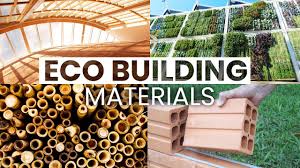
Green Building materials Business Feasibility Study, Market Research and Business Plan Services in USA
he Green Building materials sector in the USA is a high-growth market, driven by consumer demand, regulatory mandates, and tax incentives. Launching a successful business in this industry requires a precise Feasibility Study, rigorous Market Research, and an executable Business Plan. This guide outlines the path to market entry and details how Aviaan provides the critical, specialized support needed to secure investment and achieve scale.
December 10, 2025
14 min read
COMMERCIAL EXCELLENCE
Loading...
Strategic guidance and institutional-grade solutions customized for your enterprise objectives.
Talk to a Financial Expert
Schedule a complimentary 30-minute discovery call to discuss your enterprise’s financial trajectory.
By submitting, you agree to our Privacy Policy.
Table of Contents
The construction industry is at a pivotal inflection point, with a profound shift toward sustainability transforming global practices. In the United States, the market for Green Building materials is not just a niche; it is a burgeoning, mainstream industry expected to grow substantially, driven by a convergence of environmental awareness, corporate net-zero commitments, and stringent governmental regulations. Products like low-VOC paints, recycled steel, certified sustainable wood (e.g., FSC-certified), cross-laminated timber (CLT), and advanced insulations are becoming standard. However, entering this dynamic US market—which is fragmented and subject to varying state-level codes and multiple certification standards (e.g., LEED, Green Globes, WELL)—is a highly complex undertaking. For entrepreneurs, manufacturers, and international firms looking to establish a Green Building materials business in the USA, success hinges upon three foundational pillars: deep Market Research, a comprehensive Feasibility Study, and a robust Business Plan. This is where the specialized expertise of a strategic partner like Aviaan is essential.
The First Pillar: Market Research for Green Building Materials in the USA
Effective Market Research provides the intelligence needed to strategically position a new Green Building materials business in the competitive US landscape. It goes beyond simple statistics to uncover specific, actionable consumer and regulatory insights.
Analyzing the US Market Landscape and Demand Drivers
The US Green Building materials market is growing at a significant pace (CAGR projected around 10%), fueled by several key factors:
Regulatory Pressure: State-level codes (e.g., California’s Title 24) and city-level ordinances promoting energy efficiency and low-carbon construction.
Certification Standards: The dominance of the LEED rating system, which mandates the use of certified and sustainable materials to earn crucial credits.
Consumer Demand: A growing segment of homeowners and commercial developers are demanding healthier indoor environments, driving the need for materials with low Volatile Organic Compounds (VOCs).
Financial Incentives: The Federal government (through programs like the Inflation Reduction Act) and various states offer tax credits and rebates for using high-performance, Green Building materials and systems.
Pinpointing the Profitable Niche and Competition
The market for Green Building materials is vast, covering everything from structural components to finishes. Success requires identifying a defensible, high-demand niche. This research must answer:
Material Gaps: Is there an underserved demand for a specific material, such as hempcrete, mycelium insulation, or high-performance, low-embodied carbon concrete alternatives?
End-User Focus: Is the greatest opportunity in the residential segment (driven by consumer choice and energy savings) or the commercial/institutional segment (driven by corporate ESG goals and large-scale projects)?
Geographic Analysis: Which states offer the highest concentration of LEED projects or the most progressive building codes? California, New York, and Massachusetts are key target areas requiring specific focus.
Competitive Benchmarking: Detailed analysis of existing producers and suppliers—their pricing, distribution networks, certifications, and product Embodied Carbon data, which is becoming a major competitive differentiator.
The Second Pillar: The Green Building Materials Feasibility Study
A Feasibility Study translates market potential into financial reality. It rigorously assesses the technical, logistical, and economic viability of manufacturing, sourcing, or distributing Green Building materials in the US context, which often involves higher initial production costs compared to conventional materials.
Technical and Operational Feasibility
For a manufacturing or distribution business, this analysis is critical:
Supply Chain Assessment: For materials requiring specialized or recycled inputs (e.g., recycled metal, slag for cement alternatives), the reliability and cost of the US supply chain must be validated.
Manufacturing Scalability: Can the production process be scaled efficiently to meet projected US demand while maintaining the required green certifications (e.g., Cradle to Cradle, Green Seal)?
Logistics and Distribution: Determining the optimal location for a manufacturing or distribution center, considering factors like proximity to target markets, transportation costs, and access to rail or port infrastructure. This is key to minimizing the product's transportation-related carbon footprint.
Certifications Compliance: Establishing a clear plan to meet and maintain the myriad of required product certifications and Environmental Product Declarations (EPDs), which are mandatory for many high-value commercial projects.
Financial Viability and Cost-Benefit Analysis
The core of the feasibility study is the financial model, which must definitively demonstrate a positive long-term return despite potentially higher upfront costs.
Detailed CAPEX and OPEX Modeling: Accurately forecasting all startup costs, including equipment, regulatory compliance, initial inventory, and specialized labor. Modeling operational expenses, including raw material procurement, energy use, and waste management.
Pricing Strategy and Break-Even Analysis: Developing a competitive pricing structure that accounts for the life-cycle cost savings (e.g., reduced energy bills) offered by the green material, not just the initial purchase price. Calculating the break-even point to guide early-stage financial planning.
Funding Requirements: Determining the required capital structure—how much will be raised through equity, debt, or non-dilutive federal and state grants intended for sustainable manufacturing.
Risk Assessment: Identifying and quantifying key financial risks, such as raw material price volatility, changes in building codes, or delays in achieving necessary product certifications.
The Third Pillar: The Strategic Green Building Materials Business Plan
The Business Plan is the final, essential document that synthesizes the market research and financial feasibility into a compelling roadmap. It serves as the primary tool for attracting capital, guiding management decisions, and aligning all internal stakeholders.
A high-impact Green Building materials business plan for the USA must include:
Executive Summary: A concise, persuasive overview highlighting the product’s low-carbon advantage and the opportunity within the US market.
Company Overview: Articulating the company's mission, its commitment to sustainability, and its specific value proposition to builders, architects, and developers.
Products and Services: Detailed descriptions of the Green Building materials, their specific certifications, and their quantifiable benefits in terms of energy savings, embodied carbon reduction, and indoor air quality (IAQ) improvement.
Market Strategy: The targeted customer segments, the sales channels (direct sales, distribution network, e-commerce), and the branding strategy focused on transparency and verifiable sustainability claims (avoiding 'greenwashing').
Operations and Management Plan: The manufacturing/sourcing process, quality control protocols, key strategic partnerships (e.g., with design firms or national distributors), and the organizational structure.
Financial Projections: The complete financial model, including projected income statements, balance sheets, cash flow statements, and a clear presentation of funding asks and valuation metrics.
How Aviaan Provides Critical Support in the US Green Building Materials Market
Successfully navigating the Green Building materials sector in the USA requires a level of detail and specialization that often exceeds the capacity of an in-house team, particularly for new entrants. Aviaan, as a global leader in business advisory and feasibility studies, offers a targeted suite of services that are crucial for turning a sustainable concept into a market-ready and profitable enterprise.
1. Specializing in Deep, Certifiable Market Insights
Aviaan's approach to Market Research is designed to meet the rigorous, data-driven demands of the US sustainable construction sector. They focus not just on market size, but on the qualitative and regulatory nuances that define success.
LEED and WELL Certification Mandate Analysis: Aviaan's consultants specialize in dissecting the requirements of major green building standards. They identify which specific LEED credits (Materials and Resources, Indoor Environmental Quality) a client's material can contribute to, translating product features into quantifiable project value for developers. This is a crucial element for market adoption.
Embodied Carbon Benchmarking: In an increasingly carbon-conscious market, the Embodied Carbon of a material is a key differentiator. Aviaan conducts detailed benchmarking against existing US products, providing clients with the necessary data to position their material as a low-carbon leader and to help architects meet increasingly common carbon reduction targets.
Regulatory Forecasting and Compliance: The US regulatory landscape for construction materials is constantly shifting, especially concerning PFAS and other chemicals. Aviaan provides proactive regulatory forecasting, ensuring that the client's materials and manufacturing processes are compliant with current and anticipated EPA and state-specific regulations, mitigating the risk of future product obsolescence.
Pricing Strategy Based on Life-Cycle Costing: Unlike traditional consultants who focus only on simple comparative pricing, Aviaan develops a Value-Based Pricing Strategy by calculating the Life-Cycle Cost (LCC) savings a material offers (e.g., energy efficiency, reduced maintenance, health benefits). This allows the client to justify a potentially higher initial cost to commercial buyers by demonstrating superior long-term financial returns.
2. Developing Bankable and Technically Sound Feasibility Studies
Aviaan’s expertise transforms a theoretical sustainable product concept into a financially viable and technically executable plan, a requirement for securing green bond financing or private equity investment.
Techno-Economic Modeling for Sustainable Production: For manufacturing ventures, Aviaan builds detailed Techno-Economic Models that integrate manufacturing process costs, resource efficiency metrics, and potential for waste valorization (turning waste into revenue streams). They model the financial impact of utilizing advanced, low-energy production technologies, such as carbon-cured concrete or bio-based material processing.
Localized Supply Chain & Logistics Optimization: Recognizing that transportation contributes significantly to a material's Embodied Carbon, Aviaan performs logistics modeling to optimize plant or distribution center locations in the US. They factor in the sourcing of recycled content, proximity to target construction hubs, and the use of low-carbon logistics solutions to reduce the final product's carbon footprint and transport costs.
Incentive and Grant Identification: The US Federal and State governments offer numerous tax credits, grants, and loan programs for companies involved in sustainable manufacturing and innovation (e.g., through the Department of Energy or state-level clean energy funds). Aviaan’s financial advisory team specializes in identifying, quantifying, and integrating these non-dilutive funding sources directly into the feasibility study’s financial projections, significantly improving the project’s Internal Rate of Return (IRR).
Rigorous Risk Quantification: Aviaan quantifies risks specific to the Green Building materials industry, such as supply chain reliance on single-source recycled inputs, performance degradation risks compared to traditional materials, and market acceptance risks. They use advanced scenario analysis to stress-test the financial model against adverse conditions, providing investors with a comprehensive understanding of the risk-adjusted returns.
3. Crafting Investor-Ready, Strategic Business Plans
Aviaan excels at translating technical sustainability into a powerful business narrative that resonates with the US investment community.
Certifications and EPD Documentation Roadmap: The business plan includes a clear, phased roadmap for achieving all necessary product certifications and generating Environmental Product Declarations (EPDs). Aviaan works with third-party verifiers to ensure the data collection and reporting procedures are in place from day one, giving the business a competitive edge in procurement processes.
Go-to-Market Strategy for the A/E/C Channel: The firm develops a targeted Go-to-Market (GTM) strategy focused on the Architectural, Engineering, and Construction (A/E/C) community—the true decision-makers for material specification. This includes strategies for engaging with large architecture firms, providing Continuing Education (CE) units, and integrating the product into Building Information Modeling (BIM) software libraries, which is essential for mass adoption.
Measurable Impact Reporting: In line with ESG (Environmental, Social, and Governance) investing trends, Aviaan structures the business plan to prominently feature the measurable environmental and social impact of the materials. This includes quantifiable metrics such as tonnes of CO2 avoided, gallons of water saved, and percentage of recycled content used, making the business highly attractive to impact investors and green funds.
Exit and Scale Strategy: Aviaan helps define a clear path to scale, whether through licensing technology, expanding manufacturing capacity across key US regions, or positioning the company for acquisition by a large incumbent building materials company seeking to meet its own sustainability targets.
Aviaan's integrated service delivery ensures that every aspect of the venture, from the initial concept to the final financial forecast, is optimized for success in the demanding and rapidly evolving US Green Building materials market. Their deep industry knowledge, combined with rigorous financial modeling, provides the confidence required to secure funding and establish market leadership.
Conclusion
The US market for Green Building materials is a generational opportunity, driven by an irreversible global commitment to decarbonization and resilience. However, the path to market entry is demanding, requiring precise navigation of complex regulations, a clear definition of competitive advantage, and a convincing financial case. The synergy of expert Market Research, a robust Feasibility Study, and a strategic Business Plan is the prerequisite for success. By partnering with Aviaan, businesses gain a crucial strategic advantage, transforming sustainable innovation into verified commercial profitability in one of the world's most lucrative construction markets.
Case Study: Launching Recycled Aggregate Concrete Blocks in the Northeast USA
Client Profile:'EcoBlock Innovations' (EBI), a startup based in Massachusetts, aiming to commercialize a proprietary concrete block that replaces 50% of traditional aggregate with recycled construction and demolition (C&D) waste, reducing both material cost and Embodied Carbon.
The Challenge: EBI needed to prove that their product, while superior in sustainability, was cost-competitive with traditional concrete blocks when considering high labor and transportation costs in the US Northeast. They also required a strategy to navigate the highly conservative local building code approvals and secure a pilot project with a major commercial developer to validate their claims.
Aviaan’s Solution and Execution:
Feasibility Study and Financial Model: Aviaan built a localized techno-economic model that benchmarked EBI’s material costs against three key Northeast manufacturing hubs (Boston, NYC, and Philadelphia). The model quantified the financial benefits of the material:
Cost Advantage: Proving a 15% lower raw material cost due to the use of highly localized C&D waste, which also qualified EBI for a significant state-level recycling tax credit, which was integrated into the final pricing.
Performance Metrics: The study incorporated third-party lab results to confirm that the blocks met or exceeded ASTM structural strength standards, directly addressing performance risk for developers.
IRR Quantification: The final financial plan projected an Internal Rate of Return (IRR) of 22% over five years, largely due to operational efficiencies and the inclusion of identified government incentives.
Market Research and Code Approval Strategy: Aviaan’s research focused on commercial developers committed to LEED Gold or Passive House standards. They identified that EBI’s primary value proposition was the contribution of its high-recycled content toward key LEED Materials and Resources credits. The firm created a step-by-step regulatory roadmap, prioritizing local certification with the Massachusetts Board of Building Regulations and Standards (BBRS) first, using the successful preliminary test data as leverage.
Business Plan and Pilot Project Strategy: Aviaan worked with EBI to craft a business plan focused on de-risking the product for institutional buyers. This led to a strategy of targeting Adaptive Reuse projects in urban areas where material delivery and waste disposal were major cost factors. Aviaan leveraged their industry network to introduce EBI to a Boston-based developer specializing in commercial office retrofits. The business plan's financial strength and clear environmental benefits secured a pilot project for the developer's new low-carbon parking structure, which subsequently led to a long-term supply agreement and secured the company’s Series A funding round.
Case Outcome: EcoBlock Innovations successfully launched their product, secured $12 million in Series A funding, and is currently expanding its manufacturing capacity, demonstrating the critical value of Aviaan's precise market intelligence and bankable financial planning in overcoming the high barriers to entry in the US Green Building materials sector.
Partner with Aviaan Advisory today to unlock your business’s full potential. Our team of experts is here to provide tailored solutions and guide you every step of the way.