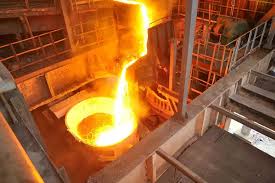
Metal Casting & Foundry Business Feasibility Study, Market Research and Business Plan Services in USA
The U.S. metal casting and foundry sector is experiencing a renaissance driven by reshoring, new material demands, and digitalization. Launching or expanding a foundry requires precise strategic planning. Discover how Aviaan’s specialized services in Market Research, Feasibility Studies, and Business Plan development can de-risk your investment and maximize profitability.
December 11, 2025
16 min read
COMMERCIAL EXCELLENCE
Loading...
Strategic guidance and institutional-grade solutions customized for your enterprise objectives.
Talk to a Financial Expert
Schedule a complimentary 30-minute discovery call to discuss your enterprise’s financial trajectory.
By submitting, you agree to our Privacy Policy.
Table of Contents
The metal casting and foundry industry in the United States is a cornerstone of the national economy, acting as the essential supplier for nearly all durable goods manufacturing, from automotive and aerospace to infrastructure and defense. In recent years, this sector has undergone a significant transformation, driven by geopolitical shifts, technological advancements, and a renewed emphasis on domestic supply chains through reshoring and onshoring initiatives. This environment presents substantial opportunities for new foundries and existing businesses seeking to expand or modernize. However, the inherent capital intensity, strict regulatory environment, and competitive pressures of the U.S. market necessitate an extremely rigorous approach to strategic planning, underpinned by specialized Market Research, a detailed Feasibility Study, and a robust Business Plan. Attempting to enter or scale in this complex industrial landscape without professional guidance is a high-risk proposition.
The Foundation: Market Research for the US Foundry Sector
Market research in the foundry business is not simply about identifying demand; it is about pinpointing niche demand, understanding the intricate supply chain dynamics, and assessing the influence of technology and regulation.
Macroeconomic and Industry Trend Analysis
The U.S. foundry market is currently shaped by several major trends that must be thoroughly analyzed:
Reshoring and Supply Chain Resilience: The movement to bring manufacturing back to the U.S. creates a direct, long-term demand for domestic casting suppliers, especially for high-value and defense-critical components. Market research must quantify this demand across target sectors (e.g., heavy machinery, electric vehicle components, or medical devices).
Lightweighting and Advanced Alloys: The automotive and aerospace sectors demand lightweight materials (aluminum, magnesium, and specific high-strength alloys) to meet efficiency and emission standards. Research must assess the growth rate and specific volumes required for these specialized castings.
Digitalization and Automation: Trends like Industry 4.0, including IoT sensors, real-time data analytics, and robotic automation, are revolutionizing foundry operations. Understanding competitor adoption and customer expectation for 'smart' manufacturing is crucial for a modern business plan.
Regulatory Environment: The U.S. Environmental Protection Agency (EPA) and Occupational Safety and Health Administration (OSHA) regulations regarding emissions, waste disposal, and worker safety are paramount. Research must cover compliance costs and the competitive advantage of 'green' or sustainable casting processes.
Competitive and Customer Segmentation Analysis
Identifying your core customers and direct competitors is key. A comprehensive market study must segment potential clients by:
End-Use Industry: e.g., Automotive (EV vs. traditional), Aerospace, Construction, Defense, and Industrial Machinery. Each segment has unique volume, quality, and lead-time requirements.
Casting Method Demand: Determining the demand split between sand casting (most common), die casting (high-volume aluminum/non-ferrous), investment casting (high-precision), and permanent mold casting.
Geographic Concentration: Identifying regional clusters of potential buyers to optimize logistics, plant location, and distribution networks.
De-Risking the Investment: The Foundry Feasibility Study
A feasibility study transforms the market opportunity identified in research into a quantifiable, go/no-go investment decision. For a capital-intensive business like a foundry, this step is mandatory for securing financing and mitigating enormous upfront risks.
Technical and Operational Feasibility
This phase assesses the practical ability to produce the desired castings in the U.S. market:
Process Selection and Design: Verifying the optimal casting process (e.g., green sand, no-bake, die cast) based on the target market's needs (material, volume, complexity). This includes assessing the technology and machinery required, from induction furnaces and molding lines to fettling and finishing equipment.
Site and Infrastructure Analysis: Evaluating potential sites in the U.S. based on proximity to raw materials (scrap metal, sand, ferroalloys), energy costs (a major operating expense for foundries), transportation infrastructure, and skilled labor pools. The study must assess power supply capacity, water management, and waste treatment systems.
Supply Chain Assessment: Mapping the entire inbound supply chain, including the reliability and cost of key inputs. This also includes an outbound logistics plan for distribution across the U.S.
Financial and Economic Feasibility
The financial section is the core of the feasibility study, translating all technical and operational details into projected financial performance:
Detailed Cost Modeling: Calculating all startup costs (land acquisition, building construction/renovation, equipment purchase and installation, permitting), and detailed operational costs (raw materials, energy, labor, maintenance, and environmental compliance).
Revenue Forecasting and Pricing Strategy: Using market data to project sales volumes and calculate a competitive, yet profitable, pricing model for various casting types (price per pound or per part).
Key Financial Metrics: Calculating essential indicators like Net Present Value (NPV), Internal Rate of Return (IRR), Payback Period, and the critical Break-Even Point. This determines the overall financial viability and return on investment (ROI).
The Strategic Blueprint: Developing the Business Plan
The Business Plan is the final, polished document that integrates all findings into a strategic narrative, serving as the blueprint for management and the central document for fundraising. It details the execution strategy, from sales and marketing to organizational structure and risk management.
Key Components of the Foundry Business Plan
Executive Summary: A high-impact overview that quickly communicates the opportunity, the solution, and the projected financial returns.
Organizational Structure and Human Resources: A foundry requires a specific mix of skilled labor, including metallurgists, patternmakers, furnace operators, and maintenance engineers. The plan must detail the recruitment, training, and retention strategy for a challenging U.S. labor market.
Sales and Marketing Strategy: The plan must outline how to penetrate the target markets, build relationships with OEMs, and demonstrate compliance with demanding quality standards (e.g., ISO certifications, AS9100 for aerospace).
The Critical Advantage: How Aviaan Can Help
Launching a modern metal casting or foundry business in the demanding U.S. market requires more than just capital; it demands specialized industrial, financial, and regulatory expertise. Aviaan provides a comprehensive, structured suite of services to navigate this complexity, effectively de-risking the entire venture. Our approach is holistic, moving seamlessly from data collection to strategic execution, ensuring that every recommendation is grounded in rigorous analysis and tailored to the unique landscape of the U.S. manufacturing sector.
A. Deep Dive Market Research: Uncovering the Latent Opportunities
Aviaan’s market research methodology for the US metal casting and foundry industry is purpose-built to go beyond superficial industry reports. We focus on granular data and actionable intelligence:
1. Primary Data Collection and Voice of the Customer (VoC)
We do not rely solely on secondary data. Our team conducts targeted primary research, essential in a B2B sector like casting:
Interviews with Key Decision Makers (KDM): Directly engaging with procurement managers, design engineers, and supply chain executives at major U.S. OEMs (Original Equipment Manufacturers) in the automotive, machinery, and aerospace industries. We assess their current pain points, reasons for sourcing domestically or internationally, and their willingness to onboard new domestic suppliers.
Quantitative Surveys: Deploying surveys to understand the exact demand profile: preferred metal type (ferrous, non-ferrous), volume requirements, specific tolerance needs (e.g., need for precision investment casting), and acceptable lead times.
Competitive Benchmarking: Aviaan profiles direct and indirect U.S. and international competitors, analyzing their plant capacity, technological maturity (e.g., use of simulation software, additive manufacturing for tooling), pricing structure, and regional dominance. This allows us to identify strategic gaps the new foundry can exploit. For example, locating a high-volume aluminum die casting facility near a cluster of new EV battery plant constructions in the Midwest, which is an identified growth region.
2. Regulatory and Environmental Landscape Mapping
Compliance risk is a major cost and barrier to entry. Aviaan's research includes a dedicated regulatory audit:
Permitting and Licensing: Identifying the specific state and local permits required for air emissions (Title V permits), water discharge, and solid/hazardous waste disposal under EPA regulations. We model the time and cost associated with obtaining these critical operational licenses.
Environmental Technology Assessment: Researching the most effective and compliant emissions control and sand-reclamation technologies. We provide a cost-benefit analysis for investing in 'green foundry' practices, which not only ensures compliance but can also be a significant competitive differentiator in an increasingly sustainability-conscious market.
B. Comprehensive Feasibility Study: The Blueprint for Viability
Aviaan elevates the feasibility study beyond simple financial projections into a detailed, three-dimensional model of the proposed business, which is non-negotiable for large industrial investments.
1. Technical and Process Optimization Modeling
Given the capital intensity of foundry equipment, accurate technical modeling is essential:
Capacity Planning and Equipment Selection: Based on the market's demand profile (e.g., 5,000 tons/year of gray iron castings for industrial machinery), Aviaan determines the precise capacity requirements. We model the optimal mix of machinery—from melting furnaces (induction, arc, cupola) and molding systems (e.g., automated high-pressure molding lines) to laboratory testing equipment (spectrometers, CMMs). We provide detailed capital expenditure (CAPEX) schedules, including procurement timelines.
Factory Layout and Workflow Analysis: Designing a preliminary factory layout (concept design) to maximize material flow efficiency, minimize non-value-added movement, and adhere to OSHA safety standards. This includes calculating the required footprint for the melt shop, mold/core area, sand preparation, fettling, heat treatment, and quality control departments.
Utility Consumption Modeling: Calculating the precise utility needs, particularly electricity and natural gas, which can account for a significant portion of operating costs. We use industrial benchmarks to project energy consumption per ton of metal poured, essential for negotiating utility rates and forecasting operating expenses (OPEX).
2. Detailed Financial Architecture and Stress Testing
Aviaan’s financial modeling for foundries is highly granular, providing investors with confidence through transparent and stress-tested projections:
Cost of Goods Sold (COGS) Breakdown: Creating a detailed unit economics model. This breaks down the cost of a single casting into its components: metal (including scrap costs and yield losses), sand, binders, energy, labor (direct and indirect), and overhead (depreciation, insurance). This level of detail allows for dynamic pricing and profit margin optimization.
Capital Expenditure (CAPEX) Schedule: A phased investment plan for land, building, machinery, and working capital. For large-scale projects, we include financing options and debt-to-equity ratio recommendations.
Sensitivity and Scenario Analysis: The foundry market is highly sensitive to commodity prices (metal, energy). Aviaan performs scenario testing:
Best-Case: Stronger-than-anticipated reshoring demand and stable commodity prices.
Worst-Case: Economic recession, high energy inflation, and increased import competition.
Targeted Stress Test: Modeling a 20% fluctuation in scrap metal prices to assess the impact on the break-even point and liquidity. This rigorous stress testing provides management and investors with a clear understanding of the project's resilience.
C. Business Plan Development: The Investor-Ready Document
The final business plan is not just a compilation of research; it is a persuasive document that showcases the competitive strategy and management capabilities, designed to meet the rigorous standards of U.S. financial institutions and private equity investors.
1. Strategic Positioning and Value Proposition
Aviaan helps articulate a compelling Value Proposition that differentiates the new foundry:
Niche Focus: Defining a clear niche based on the market research (e.g., "The leading US supplier of high-integrity stainless steel castings for the domestic oil and gas sector").
Technology and Quality Focus: Highlighting planned investments in advanced technologies like non-destructive testing (NDT), X-ray inspection, and simulation software (e.g., MAGMA or SolidCast) as a commitment to higher quality and reduced defect rates—a major selling point to U.S. buyers.
2. Organizational and Talent Strategy
Addressing the critical issue of the skilled labor shortage in the U.S. foundry industry (as noted by the search results) is paramount:
Workforce Planning: Detailed staffing charts, including roles, required certifications, and salary benchmarks for the U.S. region of operation.
Training and Retention Program: A strategic plan to partner with local vocational schools or community colleges to create an apprenticeship program. This plan, developed by Aviaan, shows investors a proactive strategy for securing and retaining skilled workers, mitigating one of the industry's biggest risks. The training cost and timeline are fully integrated into the financial projections.
In summary, Aviaan acts as an end-to-end strategic partner, translating a complex industrial idea into an investor-ready, operationally sound, and financially viable business. Our deep sector knowledge, rigorous analytical processes, and focus on practical execution transform a high-risk venture into a calculated, profitable industrial opportunity in the U.S. market. The total scope of services—from primary market discovery to detailed financial modeling and workforce planning—far exceeds a standard consultancy package, guaranteeing comprehensive de-risking for the high-CAPEX foundry sector.
Conclusion
The metal casting and foundry industry in the USA is poised for significant growth, underpinned by favorable macroeconomic trends like reshoring and increasing demand for specialized, high-performance alloys. However, the path to profitability is narrow, constrained by intense global competition, stringent environmental regulations, and a persistent skilled labor shortage. Success in this environment hinges on a flawless strategic foundation—a foundation only achievable through specialized Market Research, a meticulously detailed Feasibility Study, and a robust Business Plan. Partnering with a firm like Aviaan ensures that every decision, from initial site selection to final financial modeling, is based on accurate, industry-specific data, effectively de-risking the massive capital investment required for a modern foundry operation.
Case Study: De-Risking the Launch of a High-Tech Aluminum Die Casting Facility in the US Midwest
Client Profile: DeltaCast LLC, a newly formed entity backed by a mid-sized private equity firm, aiming to establish a state-of-the-art aluminum high-pressure die casting (HPDC) facility in the U.S. Midwest (Ohio/Michigan region) to supply the growing Electric Vehicle (EV) and industrial machinery sectors. The initial investment was projected to be $85 million.
The Challenge: The private equity firm needed to validate the $85 million investment by proving a clear, profitable market niche and developing a credible, high-return financial model. The primary risks were:
Market Risk: High competition from existing die-casters and imported components. The need was to justify a premium for a new domestic source.
Operational Risk: High energy costs and the severe scarcity of skilled die-casting technicians and engineers in the target region.
Financial Risk: Ensuring the facility could reach its break-even point quickly despite the high capital and start-up costs.
Aviaan’s Scope and Methodology: Aviaan was engaged to perform a full-scope service encompassing Market Research, Feasibility Study, and the final Business Plan development.
Phase 1: Market and Competitive Intelligence
Aviaan's team conducted a six-week, intensive market analysis:
Niche Identification: Instead of targeting generic automotive components, Aviaan's research found a specific, high-growth, high-margin gap: Large-format structural aluminum castings (e.g., battery trays, transmission housings) for domestic Tier 1 EV suppliers. The analysis revealed that existing U.S. capacity for these large, complex HPDC parts was constrained, leading to long lead times and a willingness among OEMs to pay a 12-15% premium for a reliable, domestic, technologically-advanced supplier.
Geographic Analysis: An analysis of freight costs, local utility rates, and regional talent pools narrowed the site selection to an industrial park in central Ohio. The team verified that the local power utility offered favorable large-industrial energy tariffs and that a nearby community college had an existing but underutilized manufacturing technology program, which could be leveraged.
Competitive Cost Benchmarking: Aviaan modeled the full unit cost of production for three major domestic competitors and the expected landed cost of comparable imported castings from Mexico and China, allowing DeltaCast to target a strategic price point that was competitive with imports but profitable enough to justify the CAPEX.
Phase 2: Technical and Operational Feasibility Modeling
This phase focused on designing a system that was cost-efficient and mitigated labor risk:
Technology Selection: Aviaan recommended investing in three 3,500-ton high-pressure die casting machines equipped with real-time process monitoring and robotic component extraction. This high level of automation was chosen specifically to reduce reliance on scarce manual labor and ensure high-repeatable quality.
Facility Layout and Logistics: Aviaan collaborated with an architectural engineering firm to design a layout optimized for continuous flow, minimizing hot metal transfer time and maximizing the efficiency of the central melting furnace. The layout included a dedicated, climate-controlled inspection and quality assurance lab with X-ray and 3D scanning equipment, a necessity for aerospace and critical EV parts.
Talent Mitigation Plan: Aviaan included a detailed Human Resources plan focused on attracting and retaining highly-skilled labor. Key recommendations included: a partnership with the local community college to co-develop a certified Die-Casting Technician program; an employee profit-sharing scheme tied to efficiency metrics; and a strategy to attract experienced engineers from overseas using specialized visa programs, fully costed within the financial model.
Phase 3: Financial Modeling and Business Plan Development
The final deliverable was a 150-page, investor-grade Business Plan:
Financial Projections: Aviaan developed a 7-year Pro Forma financial model, incorporating the identified demand niche and the operational efficiency gains from automation. The model forecast a 5.5-year payback period and an Internal Rate of Return (IRR) of 22.8%—significantly exceeding the private equity firm's 18% hurdle rate.
Funding Strategy: The Business Plan leveraged the detailed technical and market data to justify a blend of equity and industrial revenue bonds, supported by local government tax incentives identified during the location analysis.
Risk and Mitigation: The plan explicitly addressed the identified risks:
Mitigation for Metal Cost Volatility: Recommendation to hedge 60% of annual aluminum requirements via forward contracts.
Mitigation for Labor Scarcity: Full integration of the technician training and apprenticeship program costs.
Mitigation for Market Entry: Phased sales strategy targeting smaller Tier 2 suppliers first to build a reputation, then moving to Tier 1 OEM contracts.
The Outcome: Armed with Aviaan's comprehensive Feasibility Study and Business Plan, the private equity firm successfully closed its funding round. DeltaCast LLC commenced construction of its new facility and, due to the pre-planned operational and talent strategies, was able to secure its first major contract with a US-based EV manufacturer six months before the facility's commissioning. The strategic niche and operational efficiencies recommended by Aviaan positioned DeltaCast as a high-quality, high-reliability domestic supplier, validating the massive capital expenditure and setting the foundation for long-term growth and profitability.
Partner with Aviaan Advisory today to unlock your business’s full potential. Our team of experts is here to provide tailored solutions and guide you every step of the way.