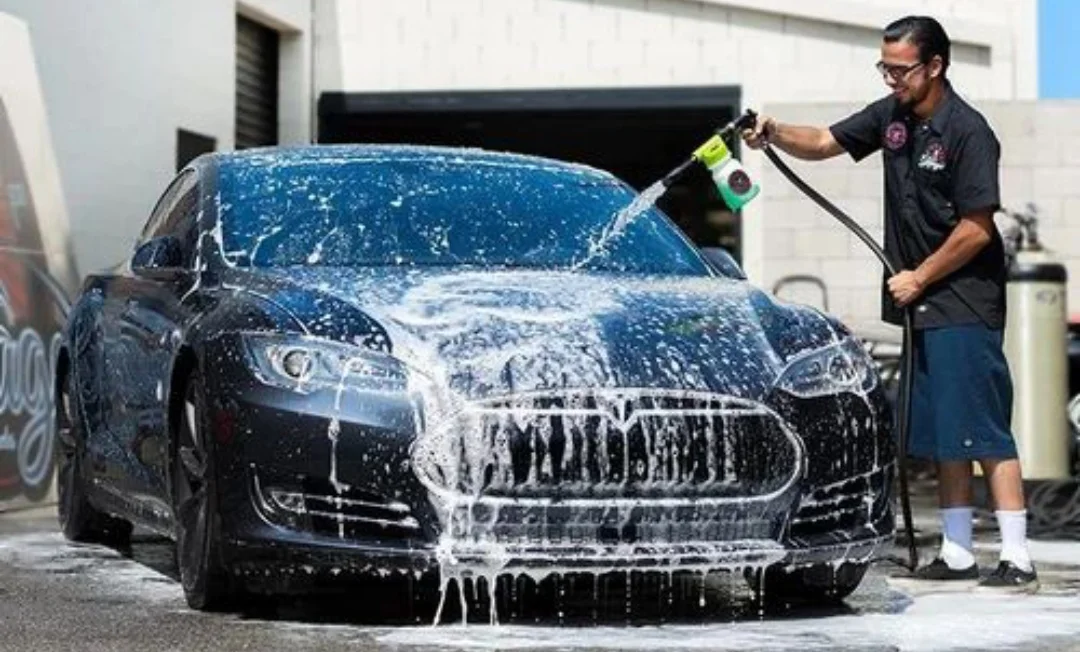
Launch a profitable car wash business in India with a strategic business plan. Explore costs, profits, licensing, and growth opportunities.
November 11, 2025
18 min read
COMMERCIAL EXCELLENCE
Loading...
Strategic guidance and institutional-grade solutions customized for your enterprise objectives.
Talk to a Financial Expert
Schedule a complimentary 30-minute discovery call to discuss your enterprise’s financial trajectory.
By submitting, you agree to our Privacy Policy.
Table of Contents
Millions of cars in Indian cities sit in apartment parking lots and on the street, and their owners rarely have time to take them to a car wash. A mobile car wash brings the service to the car: daily exterior cleaning on a monthly subscription, weekly foam washes and interior cleaning in the parking lot, and cleaning for taxi and rental fleets at their depots. It needs little upfront investment, but profits depend on how many cars each washer cleans in a day, how dense the routes are, how many subscribers stay, how the business manages water and how much residents trust the staff.
A professional mobile car wash business plan turns that idea into a clear operating and financial strategy. It covers the service model and areas, target customers, packages and pricing, staffing and supervision, products and equipment, technology, compliance, project cost and expected cash flow.
A well-prepared mobile auto wash business plan also helps when approaching banks, investors, housing society committees, fleet operators, car dealerships and franchise partners. Existing operators can use one to add societies, launch an app, take on fleet contracts, add detailing services or expand to a new city.
Aviaan Accounting prepares plans for doorstep car wash startups, subscription car cleaning companies, fleet cleaning contractors and car wash operators adding mobile services. Each plan ties washer productivity, subscribers and routes to a realistic financial model.
India's Mobile Car Wash Industry Overview: Customer Demand, Service Models and Business Potential
Mobile car wash businesses serve car owners in apartment complexes and gated communities, offices with large parking areas, taxi and car rental fleets, car dealerships and used-car sellers, and two-wheeler owners. Business depends on reliable daily service, trusted and verified staff, careful use of water, fair pricing and dense routes that let each washer clean many cars in a short time.
Rising car ownership, busy lifestyles, limited car wash access near homes and water constraints in many cities have made doorstep and subscription cleaning a growing market. A mobile car wash business plan in India should combine official vehicle data with clearly stated assumptions about subscribers, routes and washer productivity.
Market size: Size demand in your target areas. Count apartment complexes and gated communities, cars parked in each, offices with parking and fleets nearby, and estimate the share that would pay for regular cleaning.
Market growth: The VAHAN dashboard shows car and two-wheeler registrations by state and district. Use the trend to support assumptions about cars in your city.
Market forecasts: No official source predicts a single company's subscribers. Project subscribers by society, add-on washes, one-off jobs and fleet contracts month by month, with monsoon dips and festive peaks, and test cautious and optimistic cases.
Service segmentation: Services include daily exterior cleaning, weekly or fortnightly foam washes, interior vacuuming and cleaning, waterless and low-water washes, underbody and monsoon packages, polishing and basic detailing at the doorstep, two-wheeler cleaning and fleet cleaning.
Model segmentation: Options include society-based subscription services, app-based on-demand washes, fleet and dealership contracts, franchise models with local operators, and car wash centres adding mobile teams.
Customer demographics: Working professionals, families with more than one car, senior citizens, cab drivers, fleet operators and dealerships want different services and price points. The Census of India portal helps profile households in target areas.
Customer spending: Most residents pay a monthly subscription for daily cleaning, with extra charges for foam washes and interiors, while fleets pay per car per month. Car cleaning services generally carry 18% GST, and small operators below the registration threshold may not need GST registration.
Competitor benchmarking: Compare local car cleaners hired by residents, organised subscription services, app-based on-demand washes and nearby car wash centres. Look at prices, reliability, staff verification, water use, app features and reviews.
Industry trends: Waterless and low-water products, app-based booking and attendance, society partnerships, EV-friendly cleaning, fleet and dealership contracts, and add-on services such as interior sanitisation and polishing are reshaping the market.
Customer preferences: Customers want a clean car every morning, trustworthy and polite staff, no scratches, fair prices, easy online payment, quick complaint resolution and pauses when they travel. The plan should show how the business delivers these.
Demand drivers: New gated communities, rising car ownership, festivals and weddings, the end of the monsoon, dusty seasons, fleet growth and owners' lack of time drive demand.
Government policies: Many cities restrict using drinking water or groundwater for washing cars during shortages, housing societies set their own rules for outside staff, and labour laws apply to employed washers. Services below the turnover threshold may not need GST registration, and small service providers can consider the GST composition scheme. The Ministry of MSME handles Udyam registration. Check local rules before planning.
Distribution channels: Customers come through society committee tie-ups, notice boards and WhatsApp groups, referrals, your own app or website, listings on home-services platforms, and direct sales to fleet operators and dealerships.
Regional opportunities: Large gated-community belts in Bengaluru, Hyderabad, Pune, Navi Mumbai, Thane, Gurugram, Noida and Chennai, and fleet hubs near airports and business districts, offer dense, high-value routes.
Industry challenges: Subscriber churn, monsoon pauses, staff turnover and absenteeism, theft or damage complaints, society restrictions, water shortages, low prices from local cleaners and late payments from fleets can squeeze profits.
International benchmarking: Mobile car wash companies abroad offer ideas on waterless products, app scheduling and fleet contracts. Their prices and costs need adjusting for India.
Business feasibility indicators: Key measures include cars per washer per day, subscribers per society, average revenue per car, add-on uptake, monthly churn, consumables cost per car, supervisor ratios, fixed monthly costs and break-even subscribers.
A society subscription service in Navi Mumbai looks very different from a fleet cleaning contractor near Bengaluru airport or an app-based service in Hyderabad. A mobile vehicle cleaning business plan India lenders and societies trust should reflect the model, customers and routes from the start.
Why You Need a Professional Mobile Car Wash Business Plan
A professional car cleaning business plan helps first-time founders, local cleaning operators formalising their business, car wash centres adding mobile teams, franchisees and investors. Because the business runs on many low-priced subscriptions and a large team of washers, lenders and partners want to see that routes, staffing and churn add up to a steady profit.
Five mobile car wash-specific issues make expert planning worthwhile.
Funding for growth: Banks and investors want the cost of vans, scooters, equipment, products, technology and marketing, your contribution, and proof that subscriptions cover salaries and EMIs even in monsoon months.
Society and fleet partnerships: Housing societies, fleet operators and dealerships check staff verification, insurance, service quality and financial stability before letting a company work on their premises.
Washer productivity and route density: Profit depends on how many cars each washer cleans before residents leave for work. The plan sets route design, cars per washer, supervisor ratios and the minimum subscribers per society.
Churn, pricing and payments: Residents pause or cancel when they travel, in the monsoon or after a complaint. The plan sets pricing, prepaid plans, pause rules and collection methods that keep revenue steady.
Mobile car wash-specific risks: Water restrictions, staff absenteeism, theft or damage complaints, society bans, local competition and fleet payment delays can hit income. Scenario testing shows how much the business can absorb.
Aviaan builds each plan around your service model, areas, customers and funding structure.
How to Write a Mobile Car Wash Business Plan in India
A practical car wash startup plan comes together in seven steps: choose the service model and areas, profile customers, design packages and pricing, plan staff, routes and products, check rules and registrations, build the numbers and summarise. The same order works for a vehicle wash service business plan prepared by an existing car wash adding doorstep and fleet services.
Choose the service model and areas. Decide between society subscriptions, app-based on-demand washes, fleet and dealership contracts or a mix, and pick dense areas where many cars park close together.
Profile target customers. Describe residents, offices, fleet operators and dealerships in those areas, the cars they own, what they pay local cleaners today and how often they would want service.
Design packages and pricing. Set monthly plans for daily cleaning, foam wash and interior add-ons, one-off washes, fleet rates per car, prepaid discounts, pause rules for travel and payment methods.
Plan staff, routes and products. Work out cars per washer per morning, routes and timings, supervisors and quality checks, uniforms and ID cards, microfibre cloths, waterless sprays, shampoo, portable water tanks and vehicles.
Check rules and registrations. Confirm business registration, GST registration if turnover crosses the threshold, Shops and Establishments for your office, labour law compliance for washers, staff verification, insurance, water-use rules and each society's conditions.
Build the financial model. Estimate equipment, vehicles, products, salaries and incentives, app and marketing costs, subscribers and add-ons by month, churn, fleet billing and payment timing, and working capital.
Write the executive summary last. Once the numbers hold, sum up the model, areas, customers, investment, funding ask and expected returns.
How Aviaan Can Help You Launch and Secure Funding for Your Mobile Car Wash
Aviaan treats a mobile vehicle cleaning business plan as a model of routes, washers and subscribers. Whether you are starting in a few societies or running a city-wide service, we connect your model, areas and customers to projections a lender or partner can follow month by month.
Lender and partner-ready documents: Plans suited to bank loans, vehicle finance, investors, society and fleet contracts, dealership tie-ups and franchise partners.
Route-level projections: A mobile car wash company business plan that models subscriptions, add-ons, one-off washes and fleet contracts separately, with cars per washer, products per car and margin by society or client.
Staffing and cash planning: Washer and supervisor salaries, incentives and relievers, product and vehicle costs, churn and monsoon pauses, prepaid plans, fleet payment terms, GST position and repayment capacity.
Support across India: Plans for mobile car wash businesses in any city or state, reflecting local wages, water rules, car density and competition.
Our Simple 5-Step Process
Discovery call: We discuss your service model, areas, customers, team and how the plan will be used.
Information gathering: We collect details on ownership, current subscribers or pipeline, pricing, salaries, products, vehicles, technology and available funds.
Plan and model preparation: We write the plan and build projections with every assumption clearly stated.
Review and changes: We walk you through the draft and adjust packages, pricing, routes or costs as agreed.
Final delivery: You receive the finished plan and financial model in the format your lender, investor or partner needs.
Learn more about Aviaan's business plan services and how a tailored plan can support your mobile car wash.
What Aviaan's Mobile Car Wash Business Plan Includes
Whether it covers an on-demand car wash business plan built around an app or a subscription service inside housing societies, a strong plan shows how the business will win and keep subscribers, clean every car properly and on time, use water responsibly, keep washers productive and earn enough per car to cover salaries and supervision.
Aviaan adapts the following ten components to your business.
Executive summary: The service model, areas, customers, team, investment, funding ask and headline projections on one page.
Founder profile and ownership: Founders, legal structure, automotive, operations or service business experience and management roles.
Market and customer analysis: Societies, offices and fleets in target areas, cars per location, competing cleaners and services, and the gap your business fills.
Services, packages and pricing: Daily cleaning plans, foam wash and interior add-ons, waterless washes, one-off services, fleet rates, prepaid plans, pause rules and payment methods.
Society, fleet and partner arrangements: Housing society permissions, fleet and dealership contracts, product suppliers, app or platform partners and franchise operators.
Operations and staffing: Route planning, morning schedules, cars per washer, supervisors and quality checks, relievers, staff verification, uniforms and complaint handling.
Equipment, products and technology: Microfibre kits, waterless sprays and shampoos, portable tanks and pumps, vacuum cleaners, scooters or vans, and booking, attendance and payment apps.
Compliance roadmap: Business and GST registration where required, Shops and Establishments, labour law compliance for washers, staff verification, insurance, water-use rules and society conditions.
Financial projections: Project cost, funding sources, subscribers and add-ons by month, churn, fleet billing, salaries and incentives, products, vehicles and technology, profit and loss, cash flow, balance sheet, break-even and loan repayment. Monsoon months are modelled separately so seasonal dips are clear.
Risk and contingency planning: Subscriber churn, monsoon pauses, staff absenteeism, theft or damage complaints, society bans, water restrictions and fleet payment delays, each with a planned response.
The same framework supports a mobile car detailing business plan, a doorstep car wash business plan, a fleet car cleaning business plan, a waterless car wash business plan and a mobile automotive cleaning business plan. The emphasis shifts with service model, customers, areas and team size.
Case Study: Business Plan for a Mobile Car Wash Expansion in Hyderabad
Drawn from Aviaan's services sector planning work. Client names and details changed to protect confidentiality.
Problem
The founders of a doorstep car cleaning service in Hyderabad, providing daily cleaning to about 900 cars across 20 gated communities, wanted to launch an app for on-demand foam washes anywhere in the city and expand to Visakhapatnam. They asked their bank for a vehicle and working capital loan and were speaking to an investor, who wanted the existing subscriptions, the on-demand service and the new city shown separately. The draft combined everything and assumed on-demand washes would be as profitable as subscriptions, ignoring the travel time between scattered bookings and the marketing needed to win app customers. It used tap water in several societies that had restricted water for car washing, and it had not planned staff verification for new areas. It also had not registered for GST, assuming the business was still below the threshold, although combined turnover had already crossed it.
Solution
Aviaan reviewed a year of subscribers by society, washer routes and productivity, churn and complaints, and studied car density and competition in Visakhapatnam.
We built separate models for subscriptions, on-demand washes and the new city, with cars per washer, travel time, marketing cost per booking and margins for each.
We switched the model to waterless and low-water products for daily cleaning, costed portable equipment and set staff verification and ID routines for every society.
We set out GST registration and invoicing from the date turnover crossed the threshold, and added labour compliance, insurance and society agreements to the compliance roadmap.
We built five-year projections, including balance sheets and cash runway, in the format the bank and investor asked for.
Result
The founders received a complete mobile car wash business plan with one consistent financial model. The analysis led them to offer on-demand washes only within and around their existing societies to keep routes dense, enter Visakhapatnam through three anchor communities with at least 150 subscribed cars each, and sign two cab fleets for steady weekday work. They submitted a single, phased plan to the bank and investor.
Real-World Example: Planning a Mobile Car Wash in Navi Mumbai
Here is a worked doorstep car wash startup plan for founders running a subscription car cleaning service across housing societies in Kharghar and Panvel, Navi Mumbai, along with one cab fleet contract. These are sample numbers for an average month, not a forecast.
Revenue: about 1,200 cars on daily cleaning plans at ₹550 a month (₹6.6 lakh), 300 weekly foam wash add-ons at ₹1,000 a month (₹3 lakh), 250 one-off washes at ₹600 (₹1.5 lakh) and 150 fleet cars at ₹500 each (₹0.75 lakh), giving about ₹11.85 lakh
Variable costs: about 27 daily washers each cleaning around 45 cars a morning, a six-person foam wash team, products, fuel, water tanks and app and payment fees, totalling about ₹6.2 lakh and leaving a contribution of about ₹5.66 lakh
Fixed costs for supervisors, an operations manager and sales lead, a storeroom, society marketing, app hosting, insurance and a van EMI: about ₹3.2 lakh a month
Profit of about ₹2.46 lakh a month, with break-even at roughly 700 subscribed cars on a similar mix
Revenue is shown net of GST. With annual turnover of about ₹1.4 crore, the business is above the GST registration threshold and charges GST on its services, generally at 18%, which lets it claim input tax credit on products, vehicles and software.
Next, the plan stress-tests one risk. During the monsoon many residents pause their plans, and a theft complaint in one society leads it to cancel 150 cars. Subscribers fall to about 850, add-ons and one-off washes drop, and washers cannot be reduced quickly. Revenue falls to about ₹8.35 lakh and the business loses roughly ₹24,000 a month, along with damage to its reputation.
The plan shows the fix: use only police-verified, uniformed washers with photo IDs and gate attendance through the app, carry insurance for customer vehicles, sell quarterly prepaid plans at a small discount, offer monsoon underbody and interior packages, add two-wheeler cleaning, sign more fleet, rental and dealership contracts, and add more cars per tower to tighten routes. These lift revenue to about ₹14 lakh and profit to around ₹3 lakh a month. A fuller model should also account for tax, washer turnover, product price changes and seasonal pauses.
Frequently Asked Questions
1. What is a mobile car wash business plan?
It is a written plan, backed by a financial model, covering the service model and areas, target customers, packages and pricing, staffing and routes, products and equipment, technology, compliance, project cost and projected cash flow. It helps founders present the business to banks, investors, housing societies and fleet operators.
2. How much investment is needed to start a mobile car wash in India?
It is lower than for a fixed car wash centre. Main costs include cleaning kits, waterless and wash products, portable tanks and vacuum cleaners, scooters or a van, uniforms and ID cards, a booking and attendance app, society marketing, insurance and working capital to pay washers before subscription payments build up.
3. How do you start a doorstep car wash business in India?
Pick a few dense housing societies, get permission from their committees, and offer a simple monthly plan with a free trial week. Then hire and verify washers, set routes and timings, choose low-water products, set up digital payments and attendance tracking, register the business and prepare financial projections before expanding to more areas.
4. What should a mobile car wash business plan sample include?
A useful sample covers the model and areas, customers and competitors, packages and pricing, routes and staffing, products and equipment, technology, compliance and financial projections. It should also explain the assumptions behind cars per washer, subscribers per society, churn, monsoon dips and break-even.
5. How can a mobile car wash save water?
Daily cleaning can be done almost entirely with microfibre cloths and waterless sprays, while weekly foam washes can use pressure sprayers that need only a few litres per car. Using low-water methods helps meet society and city restrictions and reduces costs.
6. Can a mobile car wash business plan help with a bank loan?
Yes. It shows the project cost, owner contribution, loan or vehicle finance amount, subscribers and contracts, cash flow and repayment capacity. The bank still makes its own decision based on credit history, security and documents.
7. What registrations does a mobile car wash need in India?
Most operators need business registration, Shops and Establishments registration for an office or storeroom and GST registration once turnover crosses the threshold. They must follow labour laws for employed washers, verify staff, follow local water-use rules and society conditions, and should insure against damage to customers' vehicles. Rules vary by state and city.
8. How much does Aviaan charge for a mobile car wash business plan?
Aviaan gives a fixed-fee quote after a free initial consultation. The fee depends on the service model, number of areas and cities, fleet contracts, depth of financial modelling and how the plan will be used. Contact Aviaan for a tailored quote.
Conclusion
A mobile car wash succeeds when dense routes, productive and trusted washers, low-water methods, loyal subscribers and steady fleet work come together. A professional mobile car wash business plan shows what the business will cost to start, how many cars each washer and society must cover, what subscriptions, add-ons and fleet contracts earn after salaries, products and GST, and how the business stays profitable through monsoon pauses and staff turnover. Whether you are starting a society subscription service, an on-demand app, a fleet cleaning contractor or adding mobile teams to a car wash, Aviaan can prepare a plan built around your model, customers and funding goals.
Partner with Aviaan Advisory today to unlock your business’s full potential. Our team of experts is here to provide tailored solutions and guide you every step of the way.