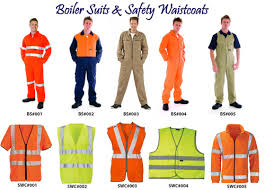
Apparels (non-fashion, e.g., uniforms, workwear) Business Feasibility Study, Market Research and Business Plan Services in USA
Launching a non-fashion apparel business in the USA—focused on uniforms and workwear—requires a meticulous and data-driven approach. This guide outlines the essential steps in market research, feasibility analysis, and business planning, detailing how Aviaan’s specialized advisory services can ensure your strategic success in this lucrative yet competitive sector.
November 20, 2025
13 min read
COMMERCIAL EXCELLENCE
Loading...
Strategic guidance and institutional-grade solutions customized for your enterprise objectives.
Talk to a Financial Expert
Schedule a complimentary 30-minute discovery call to discuss your enterprise’s financial trajectory.
By submitting, you agree to our Privacy Policy.
Table of Contents
The United States represents one of the largest and most complex markets globally for the non-fashion apparel sector, which encompasses essential items like uniforms, specialized workwear, and protective clothing. Far removed from the volatile trends of seasonal fashion, this industry is driven by stability, recurring demand, and, critically, stringent safety and regulatory compliance. With the US workwear market alone valued in the billions and projected to grow steadily, the opportunities for new or expanding businesses are substantial. However, success is predicated on a deep understanding of market needs, operational realities, and financial viability. This necessitates a rigorous Business Feasibility Study, comprehensive Market Research, and a well-articulated Business Plan. For companies seeking to navigate this complex landscape and mitigate risk, partnering with an expert advisory firm like Aviaan is a strategic imperative.
The Foundation: In-Depth Market Research for Non-Fashion Apparel in the USA
Market research is the critical first step, providing the data necessary to de-risk the venture and identify the most profitable market niches. The non-fashion apparel market in the USA is highly segmented, and a broad approach will dilute your focus.
Segmenting the US Non-Fashion Apparel Market
Your research must move beyond general apparel statistics to focus on specific user segments. Key areas of focus include:
Industrial Workwear: Targeting sectors like construction, manufacturing, and oil and gas, where protective and durable clothing (e.g., Flame-Resistant (FR) apparel, high-visibility vests) is mandated by organizations like the Occupational Safety and Health Administration (OSHA).
Healthcare Uniforms: Analyzing the demand for scrubs, lab coats, and patient gowns, driven by the size and growth of the US healthcare system. Comfort, durability, and anti-microbial features are key selling points here.
Corporate/Service Uniforms: Focusing on hospitality, retail, food service, and transportation, where the apparel serves as a key component of brand identity and employee professionalism. Demand is often for image-wear that balances professional aesthetics with comfort.
Public Sector Uniforms: Investigating opportunities within government agencies, police, fire, and postal services, which often involve large, multi-year, and specialized contracts.
Analyzing Demand Drivers and Trends
Successful non-fashion apparel businesses capitalize on underlying market trends rather than transient style shifts. The research must uncover:
Regulatory Compliance: The primary driver in many segments. Understanding current and anticipated OSHA, NFPA (National Fire Protection Association), and ANSI (American National Standards Institute) standards is non-negotiable for protective workwear.
Durability and Comfort: With labor shortages and high employee turnover in many US sectors, businesses are investing in higher-quality workwear that improves employee satisfaction and reduces replacement costs.
Sustainability and Ethical Sourcing: A growing, albeit nascent, trend. US buyers, particularly large corporations, are increasingly demanding apparel made with recycled materials, ethical labor practices, and transparent supply chains.
E-commerce and Direct-to-Consumer (DTC) Models: Researching the shift from traditional uniform rental and B2B distributor models to more agile online platforms that allow for easier customization, ordering, and management for corporate clients.
Vetting the Concept: The Non-Fashion Apparel Business Feasibility Study
A feasibility study objectively assesses whether the business idea can be successfully executed and is financially worthwhile. It translates the possibility identified in market research into probability of success.
Technical and Operational Feasibility
This phase scrutinizes the practical capacity to deliver the product. Key questions include:
Sourcing and Manufacturing: Given the focus on quality and compliance in the USA, what is the best strategy—nearshoring, reshoring, or an optimized overseas supply chain? Can the chosen manufacturing partners meet the rigorous quality standards required for specialized workwear like FR apparel?
Inventory and Logistics: Non-fashion apparel often involves customized branding, sizing, and stock-keeping units (SKUs). Is the proposed inventory management system robust enough to handle high volumes of complex orders? How will warehousing and distribution centers be strategically located to ensure timely nationwide delivery in the USA?
Technology Stack: Does the business require an enterprise resource planning (ERP) system to integrate sales, inventory, and production? Is the e-commerce platform capable of handling complex B2B ordering, embroidery/printing customization requests, and corporate accounts?
Financial Feasibility and Risk Analysis
The financial component is the ultimate arbiter of the project's viability. This involves building a detailed pro forma financial model:
Startup Costs and Capital Expenditure (CAPEX): Detailed analysis of initial investment, including sourcing costs, technology setup, working capital, and specialized equipment (e.g., commercial embroidery machines).
Cost of Goods Sold (COGS) and Pricing Strategy: Determining realistic unit costs based on volume, materials, and labor. Establishing a competitive yet profitable pricing model (e.g., bulk discounts, tiered pricing for rental vs. purchase).
Revenue Projections and Break-Even Analysis: Forecasting realistic sales volumes based on market segmentation and sales strategy. Identifying the precise point at which revenue covers total costs, a crucial metric for investors.
US Regulatory and Compliance Costs: Accounting for costs related to product certification, quality control testing, and adherence to US customs and import regulations.
The Action Plan: Developing the Strategic Business Plan
The business plan is the formal blueprint that synthesizes the market and feasibility findings into a persuasive narrative for stakeholders. For a non-fashion apparel company in the USA, this document must highlight scale, compliance, and long-term contract potential.
Essential Components of the USA Apparel Business Plan
Executive Summary: A concise, compelling overview focusing on the identified market opportunity (e.g., the need for sustainable, certified FR workwear in Texas) and the unique solution you offer.
Products and Services: Detailed description of the apparel line, focusing on specifications, compliance standards (e.g., NFPA 2112 certified), material technology (e.g., moisture-wicking fabrics), and value-added services like customization, managed inventory programs, and garment recycling.
Market Strategy: This must detail the B2B sales cycle. Will you use a direct sales force, GPOs (Group Purchasing Organizations) in healthcare, or participate in government tenders? What is the client acquisition cost for a major corporate account?
Operational Plan: Clear delineation of the supply chain, quality control protocols, and the capacity to fulfill large, recurring orders typical of the uniform industry.
Financial Plan: The culmination of the feasibility study, providing five-year projections, sensitivity analysis for material cost fluctuations, and a clear funding request for scalability.
Aviaan: Your Strategic Partner in the USA Non-Fashion Apparel Sector
Aviaan offers specialized advisory services that are perfectly aligned with the complex requirements of launching or expanding a non-fashion apparel business in the United States. With a global presence and deep domain expertise in financial and strategic planning, Aviaan’s consultants provide the critical support necessary to navigate regulatory hurdles, optimize supply chains, and secure funding.
Customized Market Research and Segmentation
Aviaan goes beyond generic data by performing hyper-local and industry-specific research. They can model demand curves for niche products, such as specialized fire-retardant uniforms for petrochemical plants in the Gulf Coast region, or high-end hospitality uniforms for luxury hotels in New York and Las Vegas. Their methodology includes:
Primary Data Collection: Conducting targeted interviews with US procurement managers, GPO executives, and safety officers to gather first-hand intelligence on purchasing criteria, budget cycles, and competitor weaknesses.
Compliance Mapping: Providing a comprehensive breakdown of relevant federal, state, and even municipal regulations that govern protective apparel, saving your business countless hours and potential legal pitfalls.
Competitive Benchmarking: Analyzing not just the prices of competitors like Aramark, Cintas, and Carhartt, but also their service level agreements, logistical footprints, and technology adoption, allowing you to position your USP effectively.
Robust and De-Risking Feasibility Studies
Aviaan’s core strength lies in its meticulous financial modeling and operational stress-testing, which is essential for a CAPEX-heavy industry like apparel supply. Their feasibility study service includes:
Scenario-Based Financial Modeling (The What-If Analysis): They build dynamic financial models that allow you to instantly see the impact of key variables, such as a 10% increase in cotton prices, a six-month delay in securing a major client contract, or a shift from overseas to nearshore manufacturing. This robust modeling provides investors with confidence in your risk management capabilities.
Supply Chain Optimization Consultancy: They assist in structuring a US-compliant supply chain, evaluating the cost/benefit of various sourcing strategies (e.g., utilizing CAFTA-DR countries vs. Asia) and ensuring all ethical sourcing and labor standards demanded by major US corporations are met.
Operational Blueprint Development: Aviaan helps design the optimal operational flow, from order intake through a B2B portal to final shipment, advising on software integration (e.g., integrating sales and inventory management systems) to achieve maximum efficiency and scalability.
Investor-Ready Business Plan Creation
A successful business plan for the US market must speak the language of US-based investors and financial institutions. Aviaan’s consultants are experts in crafting documents that:
Highlight Scalability and Recurring Revenue: Emphasizing the B2B contract model common in the uniform industry, which promises long-term, predictable revenue streams, often highly attractive to investors.
Detail Exit Strategies: Clearly articulating potential exit strategies, such as acquisition by a larger diversified industrial services company (e.g., a laundry/rental service) or a private equity firm roll-up, which is a crucial element for attracting early-stage capital.
Present a Clear Management and Team Structure: Helping you articulate the strengths of your team and identify key hires needed for US expansion, such as regional sales directors and compliance officers.
In total, the strategic assistance provided by Aviaan transcends simple document generation. It is a comprehensive partnership that provides the foresight, data-driven conviction, and structured planning necessary for a successful, compliant, and profitable launch of a non-fashion apparel business in the highly competitive United States market.
Conclusion
The US non-fashion apparel industry, driven by safety standards, corporate branding needs, and an increasing focus on employee well-being, offers a strong market opportunity. However, the path to market requires rigorous preparation. The combination of detailed Market Research to pinpoint the right niche, an objective Feasibility Study to validate the financial and operational model, and a persuasive Business Plan to secure resources is non-negotiable. By engaging Aviaan, businesses gain access to the specialized expertise and strategic planning required to navigate compliance, optimize a complex supply chain, and establish a scalable and defensible position within the vast and regulated American workwear and uniform sector.
Case Study: "SafetyWear Pro" - Launching FR Workwear in the US Energy Sector
Client Profile: SafetyWear Pro (SWP), a new entrant planning to manufacture and distribute specialized, NFPA-compliant Flame-Resistant (FR) workwear and Personal Protective Equipment (PPE) tailored for the US oil, gas, and utilities sectors, initially focusing on the Texas, Louisiana, and Oklahoma markets. The founders had deep technical knowledge of FR fabrics but limited experience with US B2B sales, compliance, and large-scale distribution logistics.
The Challenge: The US FR workwear market is highly consolidated, dominated by established brands with deep relationships with major energy corporations. SWP needed to prove not only product quality but also the financial and operational viability of challenging these incumbents while adhering to strict US safety standards (e.g., NFPA 2112, HRC ratings).
Aviaan’s Approach and Execution:
Phase 1: Market Validation and Compliance Due Diligence
Aviaan initiated a highly specialized market research study focusing on procurement within the US energy sector.
Niche Identification: The study revealed a growing preference among mid-tier energy service companies (not just the supermajors) for suppliers offering more flexible ordering, faster lead times, and a higher degree of customization than the market leaders. It also uncovered a gap in the availability of FR apparel that met high compliance standards while also being lightweight and breathable for hot climates.
Competitive Analysis: Aviaan mapped the competitive landscape, identifying competitor pricing, their existing master service agreements (MSAs), and their weaknesses in inventory management, particularly their inability to handle highly customized, low-volume orders efficiently.
Regulatory Deep Dive: Aviaan’s team worked with legal experts to develop a Compliance Matrix, detailing every required NFPA, OSHA, and ANSI certification. This saved SWP from costly production errors and ensured all proposed products would be immediately market-ready and insurable for liability.
Phase 2: Operational and Financial Feasibility Study
The feasibility study centered on creating a cost-effective, compliant, and scalable supply chain that could support a competitive pricing structure.
Supply Chain Model: SWP initially favored a purely domestic manufacturing model. Aviaan’s financial modeling demonstrated that while domestic assembly added significant value, the COGS were prohibitive. The recommended solution was a Hybrid Supply Chain Model: sourcing and pre-cutting the certified FR fabrics internationally (where material costs are lower) and then performing all value-added services—final assembly, embroidery, logo application, and quality control certification—in a strategically located facility in Houston, Texas. This model balanced cost, quality control, and the perception of a ‘Made in USA’ component.
Financial Projections: Aviaan developed a robust financial model, focusing heavily on Working Capital Requirements. Uniform and workwear clients often have 60-90 day payment cycles, requiring significant up-front investment in inventory and raw materials. The model calculated the necessary working capital buffer, which became the cornerstone of the funding request. The break-even analysis showed SWP would need to secure two medium-sized regional clients, not one major supermajor contract, to achieve profitability within 30 months.
Phase 3: Investor-Ready Business Plan and Funding Support
Aviaan synthesized all findings into a detailed and professionally articulated business plan.
Strategic Narrative: The plan positioned SWP as a "Compliance-First, Agile Supplier" filling a market void between high-cost incumbents and low-quality imports. It highlighted the hybrid supply chain as a core competitive advantage for speed and cost.
Marketing Strategy: The plan detailed a targeted B2B sales strategy:
Focus on Regional Safety/Procurement Officers: Instead of C-level executives, the plan advocated targeting the operational and safety teams responsible for day-to-day workwear acquisition.
Value Proposition: Shifting the focus from 'price' to 'Total Cost of Ownership' (TCO), demonstrating how SWP's durable, comfortable, and quickly-delivered uniforms reduced employee downtime and replacement frequency.
Outcome: Armed with Aviaan’s business plan and detailed financial model, SafetyWear Pro approached a specialized US industrial lending bank. The bank was impressed by the detailed risk mitigation strategies, the strong financial projections based on realistic client acquisition targets, and the clear compliance roadmap. SWP successfully secured a $3 million line of credit and a term loan to finance their Houston facility and initial working capital. SWP launched its service and successfully won its first two anchor clients within the first year, validating Aviaan’s recommended strategy.
Partner with Aviaan Advisory today to unlock your business’s full potential. Our team of experts is here to provide tailored solutions and guide you every step of the way.