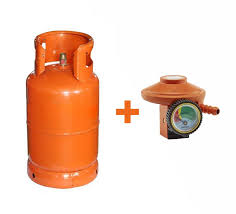
Gas Cylinders & Regulators Business Feasibility Study, Market Research and Business Plan Services in USA
The US market for gas cylinders and regulators is dynamic, driven by stringent safety regulations and high demand from industries like healthcare, energy transition, and semiconductors. Success in this sector hinges on navigating complex regulatory frameworks and identifying niche opportunities. This guide explores the essential planning steps and details how Aviaan provides the critical expertise for establishing a competitive and compliant business.
December 10, 2025
12 min read
COMMERCIAL EXCELLENCE
Loading...
Strategic guidance and institutional-grade solutions customized for your enterprise objectives.
Talk to a Financial Expert
Schedule a complimentary 30-minute discovery call to discuss your enterprise’s financial trajectory.
By submitting, you agree to our Privacy Policy.
Table of Contents
The Gas Cylinders and Regulators market in the United States is a cornerstone of the nation's industrial, healthcare, and emerging energy sectors. These components are more than just containers and control devices; they are critical safety-focused hardware essential for delivering precise, high-purity, and often volatile gases across a vast array of applications. The overall US industrial gas regulator market alone is valued in the billions of dollars and is projected to continue its steady growth, fueled by factors such as the expansion of the healthcare sector, the rapid uptake of green hydrogen and fuel cell technologies in the energy transition space, and the surging demand for ultra-high-purity regulators from the semiconductor industry. However, this market is highly specialized, intensely competitive, and governed by some of the most rigorous safety and compliance standards in the world (e.g., OSHA, DOT, CGA standards). Successfully launching or expanding a business in this domain—whether manufacturing composite cylinders, distributing high-pressure regulators, or providing specialized maintenance services—requires an impeccable foundation built on detailed market research, a robust feasibility study, and a strategic business plan. This is where the specialized, compliance-focused advisory services of a firm like Aviaan become invaluable.
Laying the Groundwork: Market Research for Gas Cylinders & Regulators in the USA
In the US, the market for gas containment and control is segmented not just by gas type but also by pressure range, material, and end-use industry. Effective market research must be forensic, identifying the highest-growth, most-profitable niches that align with your company's core capabilities.
Segmenting the Demand Landscape
The US market is fundamentally driven by specific industrial needs. Research must categorize demand precisely:
Gas Type: Are you targeting reactive gases (like Oxygen and Hydrogen) which dominate market share, or the fast-growing segment of specialty and calibration blends crucial for electronics? Each gas requires distinct cylinder materials (e.g., high-purity alloys for corrosive or ultra-clean gases) and regulator designs.
End-Use Industry: The highest-growth areas like Healthcare (medical oxygen, anesthesia gases), Electronics/Semiconductor (ultra-high purity regulators for cleanroom fabs in states like Arizona and New York), and Energy Transition (high-pressure regulators for hydrogen fueling stations in California and Texas) offer distinct opportunities but demand adherence to highly specific industry standards.
Product Type and Material: Analyzing the shift towards composite cylinders (carbon fiber/fiberglass) for their lightweight and safety benefits, particularly in portable or transportation applications, versus the sustained demand for traditional steel and brass products in bulk industrial use.
Navigating the Regulatory and Safety Framework
Perhaps the most critical aspect of US market research in this sector is the regulatory compliance environment. These are not merely guidelines; they are strict laws enforced by multiple federal and state agencies.
DOT (Department of Transportation): Governs the design, manufacture, testing, and periodic requalification (hydrostatic testing) of cylinders used for transportation. Non-compliance can lead to severe penalties and recalls.
CGA (Compressed Gas Association): Sets the industry standards for safe storage, handling, and connection systems (e.g., CGA fittings that prevent incompatible gases from being connected).
OSHA (Occupational Safety and Health Administration): Enforces workplace safety standards concerning the handling, storage, and use of cylinders and regulators. Market research must not only identify these rules but also assess the cost of compliance and the competitive advantage gained by exceeding minimum safety standards (e.g., offering IoT-enabled smart cylinders for remote pressure monitoring).
Validating the Model: The Feasibility Study
The feasibility study is where the market opportunity is tested against reality, ensuring the proposed business model is technically sound, operationally viable, and financially robust within the US regulatory framework.
Technical and Operational Assessment
Manufacturing & Sourcing: If manufacturing, what is the cost and complexity of obtaining DOT certification for the cylinders? If distributing, which suppliers meet the stringent quality assurance requirements (ISO certifications, traceability)? Where is the optimal location for warehousing and distribution given the high cost of freight for heavy cylinders?
Service Life and Recertification: Regulators have defined service lives (e.g., 10 years for non-corrosive, 3-4 years for corrosive gases). The study must detail the business model for maintenance, repair, and overhaul (MRO) services and the requalification (retesting) services for cylinders, which represent significant recurring revenue streams.
Supply Chain Resilience: Analyzing the risks associated with raw material volatility (e.g., nickel and copper prices impacting stainless steel and brass regulators) and developing a resilient supply chain strategy.
Financial Viability and Investment Analysis
The financial model must accurately capture the unique economics of this sector:
CAPEX for Certification & Equipment: Budgeting for the significant capital expenditure required for testing equipment, cleanroom facilities (if serving the semiconductor niche), and initial inventory (the cylinders themselves are major assets).
Total Cost of Ownership (TCO) Model: Developing a pricing strategy based on the customer’s TCO, not just the initial purchase price. This involves factoring in cylinder rental/lease fees, demurrage charges, gas costs, and the long-term MRO service costs.
Revenue Streams: Modeling revenue from diverse sources: product sales (cylinders/regulators), gas sales (if partnering with a gas producer), rental/lease income, and high-margin maintenance/requalification services.
Insurance and Liability: The high-risk nature of handling pressurized, sometimes volatile, gases necessitates robust insurance and liability coverage, which must be factored into the financial plan.
The Blueprint: Developing the Strategic Business Plan
The business plan consolidates the insights and financial projections into a roadmap for stakeholders—investors, banks, and management. For the Gas Cylinders & Regulators sector, the plan must emphasize safety, compliance, and technological differentiation.
Service/Product Offering: Clearly defining the product mix. Will the company focus on high-pressure or medium-pressure applications? Will it offer single-stage or more precise multi-stage regulators? The plan must justify these choices based on the research.
Sales and Distribution Strategy: Outlining the go-to-market strategy. Will the business use a direct sales force for large industrial accounts, or leverage the growing trend of e-commerce and retail for smaller enterprises (welding shops, artisanal food producers)?
Safety and Quality Assurance Chapter: A dedicated section detailing the commitment to ISO standards, adherence to CGA recommendations, and a plan for continuous employee training and equipment auditing, which is a key differentiator in a regulated market.
Exit Strategy: For investors, the plan must detail a viable exit, likely through acquisition by a major industrial gas conglomerate (e.g., Linde, Air Products) or a specialized hardware manufacturer.
How Aviaan Provides Critical Support in the US Gas Cylinders & Regulators Sector
The barrier to entry in the US Gas Cylinders & Regulators market is high, primarily due to the stringent regulatory hurdles and the complexity of developing a profitable model amidst mature competitors. Aviaan, with its robust global advisory framework, offers targeted expertise to de-risk and accelerate market entry.
1. Granular, Compliance-Driven Market Research
Aviaan recognizes that in this industry, compliance is the ultimate competitive advantage. Their market research goes beyond simple data aggregation to focus on the interplay of regulatory mandates and market opportunities.
Regulatory Mapping and Cost Modeling: Aviaan doesn't just list DOT and OSHA rules; they calculate the Capital Expenditure (CAPEX) and Operating Expenditure (OPEX) associated with achieving full compliance for specific product lines (e.g., the cost of a Type IV composite cylinder certification process versus a traditional steel cylinder). They provide a clear matrix of required CGA fittings and the target industries they unlock.
Niche Opportunity Identification: They use their deep domain knowledge to pinpoint high-growth, high-margin niches often missed by generalists. For example, quantifying the demand for 700-bar dual-stage regulators for hydrogen fueling stations in specific US metropolitan corridors (e.g., California's hydrogen hub strategy) or the emerging need for low-pressure regulators in the rapidly expanding Carbon Capture and Utilization (CCU) sector.
Competitive Benchmarking of Safety Features: Aviaan performs a detailed competitive analysis focusing on patented safety features, smart cylinder technology adoption (IoT), and after-sales MRO service capabilities, which are major customer decision factors in this safety-critical industry.
2. Developing Bankable Feasibility Studies
Aviaan’s feasibility studies are engineered to be financially robust and technically defensible to US banks and specialized industrial investors who prioritize safety and long-term asset integrity.
Multi-Scenario Financial Modeling: They build dynamic financial models that stress-test the business against key industry risks, such as sudden raw material price hikes (e.g., nickel) and changes in gas commodity prices. They provide a clear risk-adjusted valuation of the business based on recurring revenue from cylinder rentals and MRO contracts, which are viewed as more stable by lenders.
Operational Flow and Quality Control Assessment: Aviaan maps out the end-to-end operational flow, from raw material procurement to final hydrostatic testing and distribution. This includes providing Best Practice Standard Operating Procedures (SOPs) for handling toxic and corrosive gases, directly aligning the operational plan with stringent US safety mandates. They help design an efficient cylinder tracking system to minimize asset loss and maximize asset utilization.
Techno-Economic Analysis of Composite vs. Steel: For clients considering composite cylinders, Aviaan conducts a full Techno-Economic Analysis, comparing the higher initial cost of carbon fiber cylinders with the logistical savings from reduced weight and the premium pricing they command in the growing transportation and medical segments.
3. Creating Strategic, Execution-Focused Business Plans
Aviaan translates complex technical and regulatory findings into a clear, investor-centric business plan that articulates a superior strategy for market penetration and sustained growth.
US Market Entry Strategy: They define a phased entry strategy, recommending initial geographic targets (e.g., focusing on the Texas Gulf Coast for petrochemicals or the Northeast for life sciences) based on the highest concentration of target customers and the most favorable regulatory environments.
Investor Narrative and Valuation: The business plan narrative crafted by Aviaan focuses on the predictable, essential nature of the product (gas infrastructure hardware) and the high barriers to entry, making the investment case compelling. They assist in developing a credible valuation based on industry multiples and the projected EBITDA from long-term supply/MRO contracts.
Strategic Partnership Facilitation: Aviaan’s network and experience help identify and vet potential strategic partners in the US—such as large industrial gas distributors (Air Liquide, Linde), specialized logistics firms, or certification bodies—to rapidly build credibility and market access.
By leveraging Aviaan’s specialized advisory services, companies can transform the daunting complexities of the US Gas Cylinders & Regulators market into a structured, compliant, and highly profitable venture. The firm acts as a bridge between technical industrial complexity and sound financial strategy.
Conclusion
The Gas Cylinders and Regulators market in the USA is a critical infrastructure sector defined by high safety standards, continuous technological innovation (like smart cylinders), and steady demand from growing sectors. Success is dictated not merely by product quality but by impeccable regulatory compliance and a deeply informed, adaptable business strategy. From calculating the true cost of DOT certification to identifying niche market needs for high-purity alloys in the semiconductor industry, the planning required is immense. Engaging Aviaan provides the specialized market research, bankable financial modeling, and strategic blueprint necessary to secure funding, mitigate regulatory risks, and establish a dominant position in this essential American industry.
Case Study: Specialty Regulator Manufacturer Market Entry in the US
Client:PrecisionFlow Systems (PFS), a leading European manufacturer of specialty gas regulators known for their ultra-high purity components (contaminant levels below 1 ppb). PFS wanted to enter the US market, specifically targeting the booming semiconductor fabrication (fab) plants and the Life-Sciences/R&D sectors, which require ultra-precise gas control.
The Challenge: PFS's existing European regulatory compliance (PED/CE) was insufficient for the US market. They needed to understand the fragmented US distribution channels, the specific CGA compatibility standards, and the complex procurement processes of large US fab companies (located in states like Arizona and New York) which demand ultra-low lead times and local support.
Aviaan’s Solution
Hyper-Targeted Market Research: Aviaan conducted research focused exclusively on the US Specialty and Calibration Blends gas market segment. They quantified the surge in demand driven by the CHIPS and Science Act and mapped the precise locations of new and expanding fab plants. The research identified that while product quality was paramount, the biggest bottleneck was the lengthy certification cycles and the lack of readily available local MRO services for high-purity regulators.
Feasibility Study & Compliance Costing: Aviaan developed a detailed financial model that budgeted for the full cost of achieving ASME B31.3 and relevant CGA compliance. The model proved that establishing a localized US cleanroom assembly and testing facility near a major semiconductor hub, rather than importing finished goods, would reduce critical lead times by 60% and command a significant pricing premium, thereby achieving a Project IRR of 18% within five years.
Strategic Business Plan: The business plan positioned PFS not just as a product supplier, but as a Total Gas Control Partner. The plan emphasized a hybrid distribution model: direct sales to major Tier 1 fab operators for system integration, and a strategic partnership with a national industrial gas distributor to service smaller Tier 2 R&D laboratories. The plan's financial narrative successfully secured a $15 million investment package earmarked for the establishment of the localized assembly facility and certification testing, enabling PFS to overcome the US market’s high barriers to entry and position itself as a key supplier in the high-growth US semiconductor supply chain.
Partner with Aviaan Advisory today to unlock your business’s full potential. Our team of experts is here to provide tailored solutions and guide you every step of the way.