


Goodwill, often the largest and most complex intangible asset on a company's balance sheet, represents the premium paid in a business combination that cannot be attributed to other identifiable assets. In South Korea, where the economy is driven by significant Merger and Acquisition (M&A) activity and all listed companies adhere to Korean International Financial Reporting Standards (K-IFRS)—a direct translation of IFRS—the accounting for goodwill is non-negotiable and highly scrutinized. Unlike previous Korean GAAP, K-IFRS (specifically IFRS 3 and IAS 36) mandates an impairment-only approach; goodwill is not amortized but must be tested for impairment at least annually, or whenever there is an indication of impairment. Navigating the stringent requirements of IAS 36, especially the complex valuation methodologies for Cash Generating Units (CGUs), requires specialized Goodwill Impairment Services in South Korea. Missteps can lead to significant restatements, regulatory penalties, and a loss of investor confidence.
The Mandate of Goodwill Impairment Testing under K-IFRS
South Korea’s financial reporting environment is characterized by a commitment to international standards, primarily through K-IFRS. For companies with acquired goodwill, the annual impairment test is a pivotal year-end activity that determines the financial health and accuracy of the balance sheet.
Under IAS 36, goodwill cannot be tested for impairment individually. It must be allocated to one or more Cash-Generating Units (CGUs). A CGU is the smallest identifiable group of assets that generates cash inflows that are largely independent of the cash inflows from other assets or groups of assets. Determining the correct CGU structure is a highly judgmental area that requires a deep understanding of the company's operating structure, internal reporting, and management's monitoring of goodwill. An incorrect CGU identification can fundamentally flaw the entire impairment test.
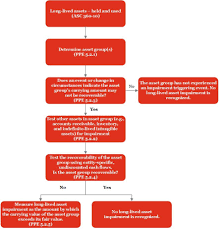
The goodwill impairment test under K-IFRS/IAS 36 is a single-step process:
The core of the impairment test lies in calculating the Recoverable Amount, which almost always involves complex valuation methodologies.
For both multinational corporations operating in Seoul and Busan, and domestic Korean Chaebols (conglomerates), the need for independent, defensible Goodwill Impairment Services is paramount. Aviaan's advisory team offers a comprehensive suite of services that ensure compliance with K-IFRS and provide strategic financial insights, transforming a complex accounting requirement into an informed management decision.
Aviaan starts by challenging and validating the client’s existing CGU structure. Our experts work with management to ensure the CGUs align precisely with the requirements of IAS 36 and reflect how the business is internally managed and monitored, mitigating the risk of incorrect impairment testing. We assist in the precise and defensible allocation of goodwill and corporate assets across the identified CGUs.
The Recoverable Amount calculation is the most complex and contentious part of the process. Aviaan's valuation specialists build rigorous, audit-ready valuation models:
A valuation is only as good as its documentation. Aviaan prepares a comprehensive, detailed, and transparent valuation report that not only presents the final conclusion but also thoroughly explains all assumptions, methodologies, and data sources. This audit-ready documentation is crucial for successfully defending the impairment conclusion against the scrutiny of external auditors and, if necessary, regulatory bodies like the Financial Supervisory Service (FSS) in South Korea. Our involvement significantly streamlines the audit process, saving management time and reducing the risk of material adjustments.
Impairment testing is not just an annual event. Aviaan provides ongoing advisory services to help clients monitor for impairment indicators throughout the year. This involves tracking key internal metrics (e.g., declining revenue, loss of key customers, unexpected operational delays) and external developments (e.g., sudden market volatility, adverse changes in the regulatory landscape, or a major competitor's failure). Timely identification of a triggering event prevents late and potentially damaging impairment charges.
A European technology firm, 'EuroTech,' acquired a smaller, high-growth South Korean software company, 'K-Soft,' recognizing substantial goodwill. Six months post-acquisition, K-Soft's main contract was unexpectedly terminated, raising a significant impairment indicator. The local finance team was under pressure to perform an urgent mid-year impairment test to comply with K-IFRS/IAS 36.
EuroTech engaged Aviaan for urgent Goodwill Impairment Services in South Korea.
1. CGU Assessment: Aviaan first confirmed that K-Soft represented a single, standalone CGU, as its cash flows were largely independent of EuroTech's other global operations. This established the correct unit of account for the test.
2. Value in Use (VIU) Recalculation: The contract termination necessitated a complete revision of K-Soft's financial forecasts. Aviaan collaborated with K-Soft management to develop a new, supportable five-year forecast, reflecting a shift in sales strategy and higher initial R&D costs. Crucially, Aviaan's valuation team recalculated the Korean-specific WACC. Due to increased market uncertainty following the contract loss, they justified an increase in the cost of equity component, which correctly lowered the VIU and presented a more prudent, audit-defensible valuation.
3. Impairment Conclusion and Documentation: The revised VIU calculation showed that the recoverable amount of the K-Soft CGU was indeed lower than its carrying amount, indicating an impairment. Aviaan calculated the precise amount of the impairment loss, ensured it was first fully allocated to the goodwill, and prepared a detailed, 100-page valuation report. This report explicitly documented the triggering event, the change in key assumptions (new sales forecasts and higher WACC), and the full compliance with IAS 36.
The Aviaan report was submitted to EuroTech's external auditors. Due to the rigor of the methodology, the conservative yet defensible assumptions, and the comprehensive K-IFRS-compliant documentation, the auditors accepted the full impairment charge without any significant queries or adjustments. This allowed EuroTech to report the impairment in the correct quarter, maintaining transparency and avoiding a material weakness in their financial reporting controls. Aviaan’s service allowed EuroTech to focus on fixing K-Soft’s operational issues rather than battling accounting and audit challenges.
For any entity operating in the South Korean market with a history of acquisitions, managing the goodwill on the balance sheet is a key financial and compliance risk. The K-IFRS mandate for annual, non-amortizing impairment testing under IAS 36 requires specialized, independent valuation expertise. Aviaan provides the critical Goodwill Impairment Services in South Korea that bridge the gap between complex international accounting standards and local market realities. By offering expert CGU analysis, rigorous valuation models, and a robust auditor defense package, Aviaan helps businesses achieve compliance, mitigate financial reporting risks, and ensure that their goodwill balances accurately reflect the current economic value of their Korean operations. Partnering with Aviaan transforms a regulatory burden into an opportunity for strategic clarity and stakeholder trust.
Related post
Goodwill Impairment Services in South Korea
Goodwill Impairment Services in Australia
Goodwill Impairment Services in Spain
Goodwill Impairment Services in Brazil
Goodwill Impairment Services in Mexico
Goodwill Impairment Services in Indonesia
Goodwill Impairment Services in Netherlands
Goodwill Impairment Services in Saudi Arabia
Goodwill Impairment Services in Turkey




