


Goodwill, often the largest intangible asset on a company's balance sheet following a merger or acquisition, represents the premium paid over the fair value of net identifiable assets. While it reflects potential future economic benefits, it is subject to mandatory annual review for impairment under US Generally Accepted Accounting Principles (US GAAP), specifically Accounting Standards Codification (ASC) 350, Intangibles—Goodwill and Other. This process, known as goodwill impairment testing, is a critical and complex undertaking that directly impacts a company’s financial statements, investor perception, and regulatory compliance. In the dynamic economic landscape of the United States, accurate and defensible impairment testing is paramount for all public and private entities reporting under US GAAP.
The Mandate of ASC 350: A Critical Annual Obligation
ASC 350 dictates that goodwill must be tested for impairment at least annually at the reporting unit level. A reporting unit is defined as an operating segment or one level below an operating segment. This testing must also be performed more frequently if an event occurs or circumstances change that would more likely than not reduce the fair value of a reporting unit below its carrying amount. These triggering events are common in today’s volatile market and can include:
The complexity lies not just in the annual requirement but in the need for continuous vigilance for these triggering events, making the impairment analysis a year-round concern.
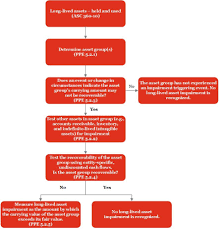
The goodwill impairment test under ASC 350 involves a multi-step approach, though simplified alternatives are often utilized, particularly for private companies.
The first step, often referred to as "Step 0," is an optional qualitative assessment. Companies can elect to first assess qualitative factors to determine whether it is more likely than not (i.e., a likelihood of greater than 50%) that the fair value of a reporting unit is less than its carrying amount. If the conclusion is that impairment is not more likely than not, no further quantitative testing is required. This assessment considers a variety of factors, including macroeconomic conditions, industry and market considerations, cost factors, overall financial performance, and company-specific events. A meticulous review of both internal and external factors is essential to justify skipping the more complex quantitative test.
If a company bypasses the qualitative assessment or concludes that impairment is more likely than not, it must proceed to the quantitative test.
Under the traditional two-step approach (still relevant for many public companies), the first step compares the fair value of the reporting unit with its carrying amount, including goodwill. If the carrying amount exceeds the fair value, the second step is performed to measure the impairment loss. The impairment loss is the excess of the reporting unit's carrying amount over its fair value, limited by the total amount of goodwill allocated to that reporting unit.
However, many companies, including all private entities under the Private Company Council (PCC) alternative, utilize a single-step (or simplified) goodwill impairment test. Under this approach, the impairment loss is simply the amount by which a reporting unit’s carrying amount exceeds its fair value, not to exceed the total amount of goodwill allocated to that reporting unit. This simplification requires a robust and highly defensible fair value determination for the reporting unit. The fair value is typically determined using a combination of recognized valuation methodologies: the Income Approach (Discounted Cash Flow or DCF analysis) and the Market Approach (using multiples from comparable public companies and comparable transactions).
The requirement to perform these complex valuations and analyses calls for specialized expertise. Aviaan provides comprehensive Goodwill Impairment Services in the United States, assisting companies with the technical, regulatory, and documentation challenges inherent in ASC 350 compliance. Their services ensure that companies not only meet their annual reporting obligations but also produce credible, well-supported valuations that can withstand the scrutiny of auditors and regulators (such as the SEC).
The foundation of accurate impairment testing is the correct identification of reporting units. Aviaan works closely with management to meticulously align operating segments, components, and their aggregation criteria with ASC 280 (Segment Reporting) and ASC 350 guidelines. Furthermore, they develop defensible methodologies for allocating goodwill and shared assets/liabilities to these identified reporting units, a process that is often subjective and highly scrutinized.
Aviaan assists companies in structuring and documenting their qualitative assessment (Step 0). They help management gather and analyze the necessary internal and external data points—from market interest rates and industry trends to internal financial forecasts—to confidently conclude whether a quantitative test is necessary. This rigorous documentation provides a clear audit trail and minimizes the risk of auditor pushback.
The core of the quantitative test is determining the fair value of the reporting unit. Aviaan’s valuation experts are skilled in applying multiple acceptable valuation methodologies, primarily the Income Approach (DCF) and the Market Approach, to determine a defensible fair value:
Goodwill impairment testing is a key focus area for auditors and the SEC. Aviaan's reports are designed for auditability and compliance. They provide comprehensive, detailed valuation reports that clearly articulate the methodologies, assumptions, and data sources used. Furthermore, Aviaan’s experts actively engage with the company’s independent auditors, addressing their questions, defending the valuation conclusions, and helping to navigate complex audit findings, thereby streamlining the year-end financial reporting process.
For private companies in the United States, Aviaan advises on and applies the optional simplifications available under the Private Company Council (PCC) alternative, including the amortization of goodwill and the less frequent, simplified impairment trigger model. This allows private businesses to balance compliance with a more cost-effective financial reporting framework.
Client Profile: TechCorp Inc., a mid-sized US-based public technology firm specializing in cloud-based logistics software, acquired a smaller competitor two years ago, resulting in a significant goodwill balance.
The Triggering Event: Following a sharp rise in the Federal Reserve's interest rates and a subsequent downturn in the US tech sector's stock performance, TechCorp’s market capitalization fell below its carrying value for two consecutive quarters. This constituted a clear triggering event requiring an interim quantitative goodwill impairment test outside of the annual cycle.
Aviaan’s Solution: TechCorp engaged Aviaan to perform the urgent quantitative impairment test on the acquired reporting unit.
Outcome: TechCorp Inc. was able to recognize the goodwill impairment charge in the correct quarter, maintaining compliance with ASC 350. The clean, defensible report generated by Aviaan ensured a smooth audit process and provided management with an objective assessment of the reporting unit's true economic performance.
Goodwill impairment testing is a non-negotiable compliance requirement for US companies under ASC 350, demanding expertise in financial accounting, corporate finance, and complex valuation methodologies. The process is fraught with technical difficulties, subjective judgments, and significant regulatory risk. Firms like Aviaan offer the necessary specialized expertise to navigate this terrain. By providing independent, defensible, and auditor-supported valuation and advisory services, Aviaan ensures compliance, minimizes audit risk, and provides management with the objective financial clarity needed to make informed strategic decisions in the volatile United States market.
Related posts
Goodwill Impairment Services in United States
Goodwill Impairment Services in China
Goodwill Impairment Services in Germany
Goodwill Impairment Services in Japan
Goodwill Impairment Services in India
Goodwill Impairment Services in United Kingdom
Goodwill Impairment Services in France
Goodwill Impairment Services in Italy
Goodwill Impairment Services in Russia
Goodwill Impairment Services in Canada




