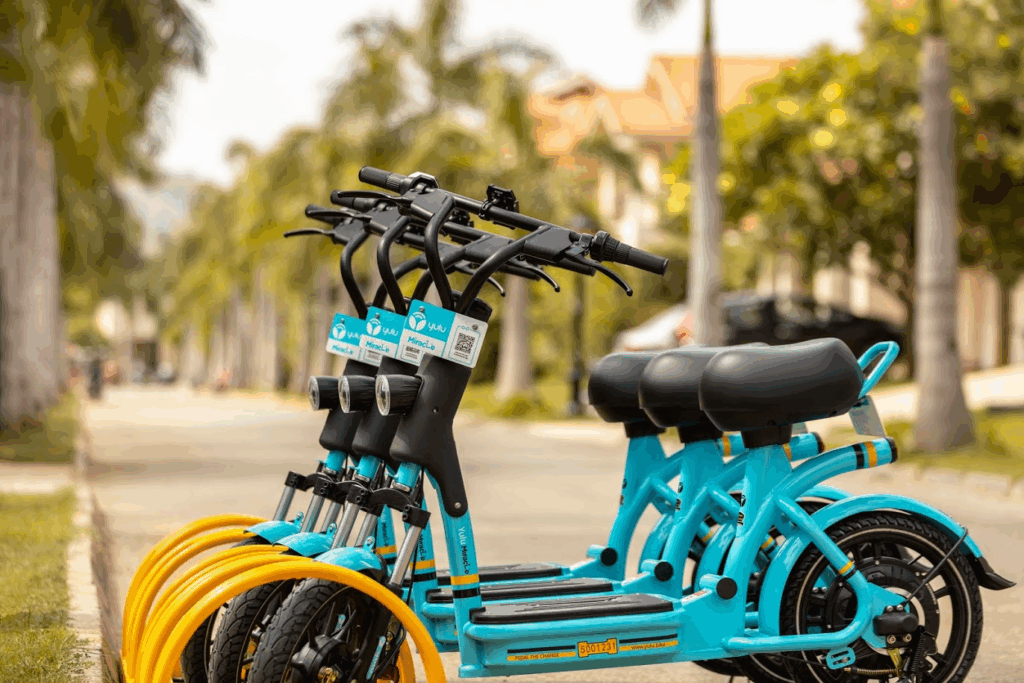
The micromobility USA market is booming. Learn the essential steps, from securing a micromobility permit to fleet management, and discover how Aviaan provides the strategic expertise for a successful launch.
October 23, 2025
10 min read
COMMERCIAL EXCELLENCE
Loading...
Strategic guidance and institutional-grade solutions customized for your enterprise objectives.
Talk to a Financial Expert
Schedule a complimentary 30-minute discovery call to discuss your enterprise’s financial trajectory.
By submitting, you agree to our Privacy Policy.
Table of Contents
The micromobility USA market is undergoing a transformative period. What began as a series of dockless bicycle and e-scooter pilot programs in major urban centers has matured into a multi-billion-dollar industry poised to reshape urban commuting. For visionary entrepreneurs, the opportunity to launch a successful bike/scooter sharing business in the USA is compelling, but the landscape is complex, marked by fierce competition, evolving regulations, and the critical need for a sustainable operational model.
This comprehensive guide delves into the crucial steps for a successful launch, highlighting the major challenges and, most importantly, demonstrating how a specialized consultancy like Aviaan provides the essential strategic and analytical framework needed to navigate this dynamic sector and achieve true profitability in the micromobility space.
The Landscape of Micromobility in the USA
The sheer potential of the US market is staggering. With a significant percentage of urban car trips being under five miles—a distance perfectly suited for bikes and scooters—the demand for a convenient, eco-friendly, and cost-effective last-mile transport solution is immense. Projections indicate the US shared micromobility market could reach several hundred billion dollars by 2030, driven by urbanization, technological advancements (like superior e-bike and e-scooter battery life), and a growing focus on sustainability.
However, success is not guaranteed. Early ventures, fueled by venture capital, often scaled rapidly without a focus on long-term unit economics. Today, the market demands efficiency, regulatory compliance, and a deeply localized strategy. A new entrant must master the nuances of dockless scooter startup operations, including fleet maintenance, rebalancing, charging logistics, and municipal negotiations.
The Essential Steps to Launch Your Bike/Scooter Sharing Business
Starting any transportation business requires meticulous planning, but a micromobility venture, which operates in the public right-of-way, introduces a unique set of regulatory and logistical challenges.
1. Strategic Market Research and Feasibility Assessment
This is the non-negotiable first step for any aspiring micromobility entrepreneur. Launching in the wrong city or with the wrong vehicle type is a common, and often fatal, mistake.
Demand Analysis: Identify high-density urban corridors, university campuses, or tourist hubs with poor existing last-mile transport options. The goal is to pinpoint areas with a high percentage of short-distance trips (under 5 miles) that are currently reliant on cars or taxis.
Regulatory Environment: US cities vary drastically. Some operate via a Request for Proposal (RFP) system, limiting the number of operators and capping fleet sizes (e.g., San Francisco). Others require only a basic micromobility permit. Understanding specific local laws—such as mandatory geofencing, no-ride zones, parking corrals, and speed limits—is paramount.
Competitive Landscape: Analyze existing operators (Lime, Bird, etc.). What are their pricing models (unlock fee + per-minute rate vs. subscription)? What is their fleet composition (e-bike vs. e-scooter)? Identifying a niche, such as a focus on high-capacity e-bikes for hilly areas or a service dedicated to corporate campuses, is essential for differentiation.
Initial Financial Modeling: Determine the required starting fleet size, estimated vehicle acquisition costs (scooters generally range from $400-$700, e-bikes higher), operational costs (charging, maintenance, personnel), and projected revenue per ride to establish a preliminary break-even point.
2. Developing a Robust, Investor-Ready Business Plan
A compelling business plan is the foundation for securing funding and municipal approval. It must clearly articulate the path to profitability in a high-cost operational environment.
Operational Strategy: Detail your rebalancing and maintenance strategy. Will you hire full-time employees (W-2) for maintenance and charging, or use a gig-worker model for battery swapping? The choice significantly impacts labor costs and service quality.
Technology & Software: Your mobile app (for user interface, unlocking, and payment) and backend fleet management system (for GPS tracking, telematics, geofencing, and predictive maintenance) are the heart of the business. Choosing a white-label software provider or developing proprietary tech needs careful cost/benefit analysis.
Financial Projections: Include detailed 3- to 5-year financial statements. Investors demand a clear path to profitability, focusing on vehicle lifespan, utilization rates, and customer acquisition costs (CAC). Modeling key metrics like Trips Per Vehicle Per Day (TPVPD) and Customer Lifetime Value (CLV) is critical.
Risk Mitigation: The plan must address high-risk factors like theft, vandalism, and the specific liability insurance requirements mandated by US cities (which can be as high as $5 million in General Liability).
3. Fleet Acquisition and Technology Deployment
Selecting the right vehicle is a balance between durability, cost, and user experience. Commercial-grade e-scooters and e-bikes must withstand heavy daily use and adverse weather. Crucially, the fleet must be fully integrated with a telematics system that supports real-time GPS tracking and remote control for geofencing compliance and anti-theft measures.
4. Permitting and Regulatory Compliance
Operating without a proper micromobility permit in the US can result in immediate seizure of the fleet and crippling fines. This phase involves:
Permit Application: Submitting a detailed application, often including a safety plan, an equity plan (how you will serve low-income or underserved areas), and proof of insurance.
City Negotiations: Cities often use pilot programs to test a company's reliability before granting long-term licenses. Successfully navigating this often requires deep engagement with city departments of transportation.
Geofencing and Safety Implementation: Deploying and testing the geofencing technology to ensure automatic speed reductions in designated slow zones and automatic shutdowns in no-ride zones.
How Aviaan Can Help You Master the Micromobility Market
Launching a complex, capital-intensive venture like a bike/scooter sharing business in USA without expert guidance is a recipe for error. Aviaan, a global consulting firm with deep expertise in the micromobility and shared economy sectors, offers a suite of services designed to de-risk the startup process and maximize the chances of achieving early profitability.
1. Dedicated Micromobility Market Research and Feasibility Study
Aviaan doesn't offer off-the-shelf reports. We conduct granular, city-specific micromobility market research to find your optimal launch point.
Hyper-Local Demand Mapping: We use GIS mapping and demographic data to overlay potential user density with existing transportation networks. This identifies true last-mile transport gaps and ideal deployment zones, minimizing initial fleet misallocation, a major driver of early operating losses.
Regulatory Deep Dive: Our team provides a comprehensive analysis of the specific micromobility permit requirements, insurance minimums, and regulatory history of your target US cities (e.g., comparing Atlanta's nighttime restrictions with Los Angeles's stringent liability requirements). This ensures your application is compliant from day one.
Competitive Unit Economics Analysis: We go beyond observing competitors. Aviaan's analysts model the inferred unit economics of established players in the target market to benchmark achievable Trips Per Vehicle Per Day (TPVPD) and optimize your proposed pricing strategy. This is crucial for creating a truly profitable e-scooter business model.
2. Creation of a Bankable Business Plan and Financial Model
The e-scooter business plan developed by Aviaan is designed to secure funding and municipal licenses. It transforms a concept into a financially sound, actionable blueprint.
360-Degree Financial Model: We build a dynamic financial model that incorporates the unique variables of the micromobility industry: vehicle depreciation over a defined lifespan, dynamic operational costs (e.g., battery swapping labor costs, theft/vandalism rates), and high-low utilization scenarios based on seasonality (a major factor in the US market). This is the key document for investor due diligence.
Optimized Operational Strategy: Aviaan advises on the most cost-effective and scalable operational setup, including the optimal mix of W-2 vs. contract workers for fleet maintenance and charging, minimizing the most volatile costs associated with dockless scooter startup operations.
Equity and Regulatory Compliance Narratives: We assist in drafting the required policy narratives for municipal permit applications, demonstrating a commitment to safety, equitable access, and infrastructure collaboration, which are increasingly critical factors in securing a micromobility permit in any major US city.
3. Business Valuation and Funding Strategy
Securing initial seed capital or series funding requires a credible business valuation.
Fair Valuation: Aviaan applies industry-specific valuation methodologies, such as Discounted Cash Flow (DCF) for capital-intensive startups, adjusted for the high growth potential and regulatory risks specific to micromobility. We provide a fair, defensible business valuation that can withstand investor scrutiny.
Pitch Deck and Investor Outreach: We help distill the comprehensive business plan and market research into a compelling investor pitch deck, highlighting the opportunity for high returns in the micromobility USA market and aligning your growth projections with demonstrable data.
4. Technological and Operational Advisory
Aviaan provides guidance on selecting and integrating the core technology stack.
Software Vendor Selection: We advise on the pros and cons of proprietary vs. white-label micromobility software solutions, ensuring the chosen platform meets scalability requirements, supports mandated city regulations (like API data sharing), and offers robust telematics for proactive fleet health monitoring.
Fleet Sourcing and Negotiation: Leveraging our industry network, we connect you with reliable, high-durability e-scooter and e-bike manufacturers, often negotiating better terms and warranties that significantly reduce the long-term maintenance costs and improve vehicle lifespan, a vital factor for profitability.
Case Study: Launching 'MetroMove Micromobility' in a Tier 2 US City
Challenge: A new entrepreneurial team approached Aviaan with the goal of launching a dockless scooter startup in 'City X'—a mid-sized US city (population 500,000) with a burgeoning tech sector and a recently expired pilot program from a major, unprofitable competitor. The city council was hesitant to approve new permits due to past issues with sidewalk clutter and high vehicle vandalism. The startup had a capital commitment of $1.5 million.
Aviaan’s Solution:
Market Research & Feasibility: Aviaan conducted a deep-dive micromobility market research study, identifying that the competitor failed due to high vandalism in one zone and neglecting the city's three large university campuses. Our research confirmed a high TPVD potential if the focus shifted to e-bikes (which had a higher perceived value and lower vandalism rate in similar markets) and primarily served the university-to-downtown routes. The financial model established a profitable path with a fleet mix of 70% e-bikes and 30% e-scooters.
Regulatory Strategy & Business Plan: Aviaan helped draft the permit application, emphasizing a commitment to the city’s equity goals. The business plan included a groundbreaking 'Community Ambassador' program, where locally-hired, full-time staff (not gig workers) would be responsible for rebalancing and maintenance, directly addressing the council's concerns about sidewalk clutter and poor vehicle upkeep. The plan also detailed a 24-hour geofencing and anti-theft monitoring system.
Outcome: The detailed, evidence-based business plan and proactive regulatory compliance strategy secured the exclusive micromobility permit from City X, overriding the council's initial reluctance. MetroMove was able to secure an additional $1 million in a seed round due to the rigor of the Aviaan-developed business valuation and financial model, which clearly demonstrated a path to profitability within 18 months—a rare feat in the current micromobility landscape. The use of a dedicated local team significantly reduced operational costs associated with theft and damage, leading to a successful and sustainable launch.
Conclusion
The opportunity to build a successful bike/scooter sharing business in USA is more exciting and more challenging than ever before. The market has moved beyond the "deploy and pray" tactics of the early days. Success in today's micromobility sector hinges on strategic market research, meticulous operational planning, and a compliant, capital-efficient e-scooter business plan.
By partnering with Aviaan, you gain access to the specialized expertise required to navigate complex US regulations, secure competitive micromobility permits, optimize your unit economics, and develop a sustainable, bankable business plan. Don't let the complexity of the micromobility USA market derail your vision. Leverage Aviaan’s strategic consulting services to transform your dockless scooter startup into a profitable, industry-leading enterprise.
Partner with Aviaan Advisory today to unlock your business’s full potential. Our team of experts is here to provide tailored solutions and guide you every step of the way.