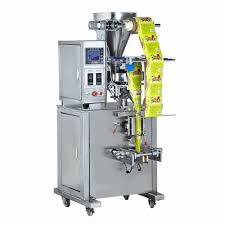
Packaging Machinery Business Feasibility Study, Market Research and Business Plan Services in USA
The USA packaging machinery market is a multi-billion dollar industry driven by e-commerce, automation, and sustainability. To succeed, a new or expanding business requires meticulous Market Research, a thorough Feasibility Study, and an investor-ready Business Plan. Discover how Aviaan’s specialized services provide the strategic foundation needed for success in this complex and high-growth sector.
December 11, 2025
14 min read
COMMERCIAL EXCELLENCE
Loading...
Strategic guidance and institutional-grade solutions customized for your enterprise objectives.
Talk to a Financial Expert
Schedule a complimentary 30-minute discovery call to discuss your enterprise’s financial trajectory.
By submitting, you agree to our Privacy Policy.
Table of Contents
The United States packaging machinery market is a powerhouse of innovation and investment, projected to be a multi-billion-dollar sector experiencing consistent growth, driven by an expanding manufacturing base, the exponential growth of e-commerce, and an accelerating focus on automation and sustainable practices. With a market size reaching significant figures, and a CAGR indicating sustained expansion, the opportunities for manufacturers, distributors, or service providers in this space are immense. However, entering or expanding within this sophisticated market, which serves diverse high-value sectors like food and beverage, pharmaceuticals, and consumer goods, demands more than just a great product. It requires a disciplined, data-driven approach built on three pillars: meticulous Market Research, a rigorous Feasibility Study, and a compelling, strategic Business Plan.
The Strategic Necessity of Market Research in the USA Packaging Machinery Industry
Market research forms the absolute bedrock for any successful venture in the USA packaging machinery sector. This phase is not merely about collecting statistics; it is about gathering actionable intelligence that defines your competitive space, validates your technology, and pinpoints your ideal customer segments.
Analyzing Market Size, Growth, and Key Drivers
The packaging machinery market is segmented by machine type (Filling, Form-Fill-Seal (FFS), Cartoning, Labeling, Palletizing), technology (General, Modified Atmosphere, Vacuum Packaging), and end-use industries (Food, Beverage, Pharmaceutical, Personal Care). Market research must precisely dissect these segments:
Market Size and Forecast: Quantify the current market value (e.g., $13.6 Billion in 2024, projected to grow to $17.0 Billion by 2033) and forecast growth rates for your specific machine type, such as FFS or Palletizing systems. This data grounds your financial projections in reality.
Technological Trends: Identify the adoption rates of critical technologies. The shift towards fully automatic and robotics-integrated systems is a major driver, with these systems capturing over half the market share and growing at a high CAGR. Sustainability is another key trend, demanding machinery that supports reduced material usage and energy efficiency.
End-User Demand: The food and beverage sector is the largest consumer, but the pharmaceutical industry is projected to grow rapidly due to aging demographics and vaccine production. Understanding the unique compliance and quality requirements of these sectors (e.g., wash-down capabilities, lengthy IQ/OQ validation cycles) is crucial.
Competitive Landscape and Strategic Positioning
The USA market is home to established global giants and specialized local players. Effective market research involves:
Competitor Mapping: Identify key domestic and international players (e.g., Krones, Syntegon, MULTIVAC, Combi Packaging Systems). Analyze their product portfolios, pricing strategies, distribution networks, and after-sales support models.
Identifying Gaps and Opportunities: Are there underserved regions or niche product categories? For instance, a focus on automated small-batch, variable-format machinery for craft food producers or specialized machinery for sustainable packaging materials (e.g., paper-based films) could represent a significant opportunity.
Supply Chain Assessment: Evaluate the availability and cost of critical components like stainless steel, which can significantly impact the capital cost of high-hygiene machinery. This informs your sourcing strategy and pricing model.
The Rigor of a Feasibility Study for Packaging Machinery
A feasibility study takes the macro-insights from market research and tests the micro-viability of your specific business idea. It determines whether the venture is technically, operationally, and financially sound before significant capital is committed.
Technical and Operational Feasibility
This component assesses the practical ability to manufacture, distribute, and service the equipment within the USA.
Product/Service Scope: Define the specific machinery you will focus on (e.g., high-speed rotary fillers, robotic palletizers). Is the proposed technology proprietary, licensed, or commonly available? Can you manufacture or assemble it in compliance with US standards (OSHA, FDA/USDA where applicable)?
Site and Location Analysis: The location of your manufacturing or assembly facility is critical. The study must analyze factors like proximity to key end-user markets, labor pool availability (especially skilled technicians and robotics programmers), infrastructure (power, transport links), and state/local tax incentives.
Supply Chain and Logistics: Detail the sourcing of parts (both domestic and international), inventory management systems, and the logistics of delivering and installing large, complex machinery. This includes a robust plan for after-sales service, spare parts, and preventative maintenance, which is a major revenue stream.
Financial Feasibility and Risk Assessment
The financial study translates your technical and operational plans into a hard, quantitative business case.
Capital Expenditure (CAPEX): Precisely estimate the initial investment required for factory setup, machine tooling, R&D, and purchasing high-cost components. This is a critical metric for manufacturing ventures.
Revenue and Cost Projections: Build detailed 5-year financial models. Revenue streams typically include equipment sales, parts sales, maintenance contracts, and service fees. Cost analysis must include fixed costs (rent, utilities), variable costs (raw materials, direct labor), and the cost of capital.
Profitability Metrics: Calculate key financial indicators such as Net Present Value (NPV), Internal Rate of Return (IRR), Return on Investment (ROI), and the Break-Even Point. For a high-CAPEX business, demonstrating a clear, defensible path to margin expansion and a robust ROI is paramount for securing funding.
Risk Analysis: Identify core risks: high stainless-steel prices, skilled labor shortages, lengthy sales cycles in the pharmaceutical sector, and the risk of obsolescence due to rapid technology advancement (e.g., AI/robotics integration). A sensitivity analysis must show how fluctuations in these variables impact the break-even point.
The Power of the Business Plan: Securing Capital and Guiding Execution
The business plan synthesizes all findings into a single, cohesive, and persuasive document. For a packaging machinery business, this plan is the primary tool for attracting the significant investment required for manufacturing infrastructure and R&D.
Manufacturing Edge and Unit Economics: Clearly articulate your competitive advantage. Is it superior automation, a patented technology, or a highly efficient, low-cost assembly process? The plan must detail the unit economics—the cost to manufacture a single machine versus its selling price—showing defensible margins.
Sales and Marketing Strategy: Outline your go-to-market approach. Will you use direct sales, distributors, or system integrators? The plan must detail the marketing channels (trade shows, specialized industrial publications, digital marketing) and the sales cycle, which can be long and consultative in this B2B sector.
Implementation and Management Team: Present a clear organizational structure and highlight the expertise of the core management team in engineering, manufacturing operations, and B2B sales. Investors fund people as much as ideas.
Investor-Ready Financials: The final plan must contain the rigorously tested financial models, a clear funding request (the "Ask"), and a direct link showing how the requested capital expenditure (CAPEX) will directly result in quantifiable returns, such as increased production capacity or reduced operational costs.
Aviaan’s End-to-End Strategic Support
Aviaan is a leading advisory firm specializing in providing strategic market research, rigorous feasibility studies, and investor-winning business plans for complex, capital-intensive industrial and manufacturing ventures, particularly in the competitive USA market. Our value proposition is centered on translating technical brilliance into financial viability and operational excellence.
Deeper Market Research with Aviaan
Aviaan goes beyond generic market reports to provide hyper-specific, actionable data for the packaging machinery sector. Our approach is uniquely granular:
Segment-Specific Demand Forecasting: We don't just estimate general growth; we forecast demand for specific machine types (e.g., high-speed rotary fillers for beverage canning in the Midwest) and automation levels (e.g., fully automatic case packers vs. semi-automatic bundlers). We leverage our proprietary database and primary research methodologies, including interviews with purchasing managers at major US CPG (Consumer Packaged Goods) and pharmaceutical firms, to generate highly accurate demand curves.
Competitive Technology Benchmarking: Aviaan’s analysts are specialists in industrial technology. We conduct a deep dive into competitors' patents, machine OEE (Overall Equipment Effectiveness) scores, and proprietary features, allowing you to position your product based on provable technical advantages—be it speed, smaller footprint, or reduced energy consumption. We identify the why behind successful machine adoption.
Regulatory Compliance Roadmapping: Navigating US regulations (FDA, USDA, various state-level mandates) for food and pharma machinery can be a major hurdle. Aviaan provides a clear, detailed roadmap of the compliance, validation (IQ/OQ/PQ), and certification requirements for your specific machine type, de-risking the project from a legal and operational standpoint. This includes assessing the impact of new regulations, such as those related to sustainable packaging materials, on machinery design requirements.
Rigorous Feasibility Studies and Financial Modeling
Aviaan’s strength lies in its meticulous financial and operational modeling, transforming a factory concept into a bankable project. This is especially vital for a packaging machinery business where initial CAPEX is substantial.
Advanced CAPEX Modeling: We construct detailed, line-item Capital Expenditure budgets that go far beyond simple estimates. Our models account for import duties, installation, commissioning, software integration, and the cost of critical spare parts inventory. We provide a phased investment plan, linking each tranche of capital directly to an increase in production capacity, a feature highly valued by institutional investors.
Scenario and Sensitivity Analysis: The packaging machinery market is subject to global supply chain volatility (e.g., stainless steel prices) and economic cycles. Aviaan’s feasibility studies include robust sensitivity analysis, modeling how a 10% change in raw material costs, a 15% delay in sales, or a shift in the skilled labor wage rate will impact the project’s IRR and break-even timeline. This provides investors with a clear understanding of the risk and resilience of the venture.
Optimizing Location and Operational Structure: We advise on the optimal location within the US, balancing proximity to customers (lower service costs) with access to skilled labor and logistics hubs. We help design an optimal operational structure, including staffing requirements, outsourcing strategies for non-core functions, and implementing lean manufacturing principles to ensure maximum operational efficiency and a defensible cost structure. This includes analyzing the Make-or-Buy decision for key machine components, a crucial factor in margin control.
Developing an Investor-Winning Business Plan
The final business plan is not just a summary of research; it is a persuasive document designed to secure funding and align stakeholders. Aviaan ensures the plan is structured to meet the rigorous demands of US-based private equity firms, venture capitalists, and commercial banks.
Strategic Narrative and Value Proposition: We help you craft a compelling narrative that clearly articulates your Manufacturing Edge. For example, positioning a new FFS machine not just as "faster," but as a solution that increases OEE by $X$ percent and reduces material waste by $Y$ percent, directly addressing the key pain points of a CPG client.
Financial Documentation and Ask Justification: The funding request ("The Ask") is meticulously linked to the financial models. Aviaan’s plan details how $10 million in capital will be deployed—e.g., $4M for robotics and tooling, $3M for R&D on sustainable materials, $2M for inventory, and $1M for the first 12 months of operational overhead—and shows the projected ROI for each dollar spent. This level of detail builds investor confidence.
Exit Strategy Planning: Aviaan works with clients from day one to plan for the eventual sale or IPO. The business plan includes a discussion of potential strategic acquirers (e.g., major global players looking to expand their US footprint or acquire a niche technology) and the valuation multiples used in the industry, making the investment highly attractive.
In summary, Aviaan acts as the critical bridge between a great engineering idea and a profitable, scalable, and fundable business entity in the competitive USA packaging machinery market. Our services provide the deep market insights, robust financial validation, and professional documentation that de-risks the investment and accelerates the path to market leadership. Our dedication to a comprehensive, data-driven approach is what truly sets our clients up for long-term success.
Conclusion
Establishing or expanding a packaging machinery business in the USA is a capital-intensive and strategically challenging endeavor. The industry's growth, driven by automation, e-commerce, and a focus on sustainability, presents significant opportunities, but success is contingent upon meticulous planning. Market Research must illuminate the specific trends and competitive landscape. The Feasibility Study must validate the technical, operational, and financial viability of the business model. Finally, a strategic Business Plan must synthesize these findings into a clear, investor-ready roadmap. Aviaan provides the critical, specialized advisory services—from granular demand forecasting and rigorous financial modeling to the creation of a powerful business plan—enabling entrepreneurs and corporations to secure funding, mitigate risks, and achieve market leadership in this dynamic US industrial sector.
Case Study: Launching a Specialized Robotic Palletizing System Manufacturer
Client Profile: AutoPallet Dynamics (APD), a startup founded by three former industrial robotics engineers in Detroit, Michigan.
Business Concept: Design, manufacture, and sell a line of modular, low-footprint, and easy-to-reprogram robotic palletizing cells specifically targeting mid-sized US food and beverage manufacturers, who traditionally rely on manual or outdated, fixed automation.
The Challenge
APD had a proven prototype but faced several major hurdles:
Market Validation: They had a strong technical product but lacked concrete data on the market size for their specific niche (mid-sized manufacturers) and a clear understanding of the price points those customers would accept.
Financial Structuring: They needed $15 million in capital for a new assembly facility, inventory of long-lead-time robotic arms, and working capital. Their internal financial model was overly simplistic and lacked the rigor required by commercial lenders.
Go-to-Market Strategy: They were unsure whether to use direct sales, partner with packaging distributors, or integrate with larger system integrators.
Aviaan’s Solution and Execution
APD engaged Aviaan for a full-suite service encompassing Market Research, Feasibility Study, and Business Plan development.
Market Research & Strategic Positioning
Aviaan's team initiated a deep-dive market research project focused on the US Midwest and South, identifying over 500 mid-sized food and beverage plants (revenue $50M–$250M) with sub-optimal end-of-line packaging.
Primary Research: Conducted structured interviews with 80 plant managers and 30 packaging line engineers. Findings revealed that the primary pain point was the high cost and inflexibility of large-scale robotic cells, not a lack of labor. This validated APD's focus on modular, flexible systems.
Competitive Analysis: Aviaan benchmarked APD's system against leading robotic suppliers. They determined that APD's unique selling proposition was its Tool-Free, 15-Minute Recipe Changeover feature, which drastically reduced downtime. This became the core of their marketing message.
Pricing Strategy: Based on competitor pricing and customer willingness-to-pay, Aviaan recommended a premium pricing model that justified the higher initial cost with a proven ROI derived from reduced changeover time and labor savings, establishing a target price point of $350,000 per cell.
Feasibility Study & Financial Modeling
The feasibility study was the most critical phase, designed to de-risk the $15 million investment.
CAPEX and Operational Cost Analysis: Aviaan developed a detailed CAPEX plan, allocating funds for acquiring a brownfield site in Ohio, machinery for metal fabrication, and inventory. The model accounted for a 3-month lead time for specialized robotic arms. The study identified that the highest operational risk was the cost of specialized software engineers for system integration and maintenance.
Sales Forecasting: Using the validated market data, Aviaan created a five-year sales forecast projecting unit sales of 12 units in Year 1, growing to 40 units by Year 5. Revenue models included a recurring revenue stream of $15,000 per year for software updates and preventative maintenance contracts (Service Revenue, projected to be 15% of total revenue by Year 5).
Profitability Analysis: The model calculated a break-even point at 18 units sold and an IRR of 28% over five years. A sensitivity analysis showed that even a 10% increase in component costs would still result in a 22% IRR, demonstrating the project's financial resilience.
Business Plan and Funding Advisory
Aviaan leveraged the deep data and compelling financial model to construct a high-impact, investor-ready business plan and pitch deck.
Strategic Go-to-Market: Aviaan recommended a hybrid strategy: a small, specialized direct sales team for key accounts and a strategic partnership with a national packaging distributor to gain immediate broad access to the mid-market.
Investor Pitch: The plan focused heavily on the $1.2 million estimated annual savings for a typical customer due to reduced downtime and labor. The funding 'Ask' of $15M was justified with a clear roadmap showing how this capital would lead to a tangible, scalable production ramp-up.
Outcome
Armed with Aviaan's comprehensive business plan and pitch deck, AutoPallet Dynamics successfully secured $16.5 million in a Series A funding round from a specialized industrial private equity firm and a regional commercial bank. The oversubscribed round was largely attributed to the plan's rigorous financial modeling, the highly specific market validation, and the clear operational strategy. Within 18 months of launch, APD exceeded its Year 1 sales targets and secured three major recurring service contracts, validating Aviaan's strategic blueprint and positioning the company as a key innovator in modular robotic packaging machinery in the USA.
Talk to an Expert
Schedule a complimentary 30-minute discovery call to discuss your requirements.
Partner with Aviaan Advisory today to unlock your business’s full potential. Our team of experts is here to provide tailored solutions and guide you every step of the way.