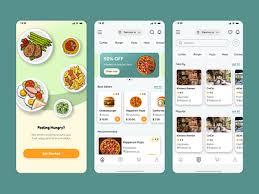
Local Restaurant Menu Discovery App Business Feasibility Study, Market Research and Business Plan Services in USA
Launching a local restaurant menu discovery app in the USA requires a meticulously planned strategy, starting with a comprehensive feasibility study and in-depth market research. This guide details the essential steps for success and illustrates how Aviaan provides expert consulting to navigate the food tech landscape.
December 13, 2025
13 min read
COMMERCIAL EXCELLENCE
Loading...
Strategic guidance and institutional-grade solutions customized for your enterprise objectives.
Talk to a Financial Expert
Schedule a complimentary 30-minute discovery call to discuss your enterprise’s financial trajectory.
By submitting, you agree to our Privacy Policy.
Table of Contents
The United States represents one of the largest and most competitive markets globally for food technology and mobile applications. The "restaurant discovery" and "foodtech" sectors are booming, driven by high smartphone penetration, a culture of convenience, and consumers constantly seeking personalized dining experiences. A Local Restaurant Menu Discovery App, which focuses on providing detailed, up-to-date, and visually appealing menus from independent, neighborhood eateries, addresses a significant gap left by large, delivery-focused aggregators. However, turning this concept into a successful venture requires rigorous validation and strategic planning. This process hinges on three pillars: a thorough Market Research, a comprehensive Feasibility Study, and a robust Business Plan. Partnering with a specialized advisory firm like Aviaan is not just beneficial, but often critical to navigate the regulatory landscape, fierce competition, and technological complexities of the US market.
Market Research: Understanding the US Food Tech Ecosystem
The initial phase is to conduct in-depth market research to understand the landscape into which your app will launch. In the US, this landscape is fragmented by geography, demographics, and the presence of dominant national players like Yelp, TripAdvisor, OpenTable, and the major delivery platforms (DoorDash, Uber Eats, etc.).
Consumer Behavior and Demand Analysis
The core of your research must be the user. You need to understand the American diner's habits. Key questions to answer include:
Discovery Methods: How do users currently find new local restaurants and their menus? Is it social media, Google, Yelp, or word-of-mouth?
Pain Points: What frustrations do users have with existing platforms? Common issues include outdated menus, confusing interfaces, lack of specific dietary filters, and the focus on delivery over dine-in or takeout. Your app’s Unique Selling Proposition (USP) must address these directly.
Geographic Specificity: The market differs vastly between a dense urban area like New York City, a sprawling metroplex like Dallas, and a smaller, localized city. Research must focus on the initial target launch markets, analyzing local eating habits and the density of independent restaurants versus chains.
Features Prioritization: Which features are most valued? High-quality photos, detailed nutritional information, robust search filters (e.g., "gluten-free options," "dog-friendly patio"), and real-time menu updates are key differentiators for success in the competitive US market.
Competitive Analysis and Market Gap Identification
The competitive landscape is fierce. Your app is not just competing with other discovery apps, but also with search engines and social media. A detailed competitive analysis must assess:
Direct Competitors: Platforms primarily focused on restaurant discovery and reviews (Yelp, Google Maps, local food blogs).
Indirect Competitors: Delivery aggregators (DoorDash, Uber Eats) which also provide menu information, and reservation apps (OpenTable).
Monetization Models: How do competitors generate revenue? (Advertising, subscription fees, reservation commissions, or a percentage of online orders).
Market Gaps: Crucially, where is the white space? Many large platforms struggle to provide granular, up-to-date menu data for independent, local restaurants. A hyper-local, menu-first approach could be the necessary differentiator.
Feasibility Study: Validating the Model's Viability
Market demand must be matched by operational and financial viability. The feasibility study transforms your app concept from an idea into a quantifiable business model.
Technical Feasibility
Development Requirements: What is the cost and timeline for developing the minimum viable product (MVP)? This includes front-end design, back-end infrastructure (scalable cloud services to handle high traffic), and API development for potential integration with POS systems.
Data Acquisition Strategy: The single most challenging technical hurdle is acquiring and maintaining accurate, real-time menu data from thousands of local restaurants. Your study must validate the cost and complexity of a proprietary data aggregation system, direct integration with restaurant POS/menu management systems, or a dedicated data entry team.
Scalability: The US market demands rapid scaling. Your technology stack must be able to expand quickly from one city to ten without significant re-engineering or performance degradation.
Operational Feasibility
Restaurant Onboarding: What is the strategy for convincing local, independent restaurants to join the platform? This involves demonstrating clear value (increased visibility, better customer data) and minimizing their effort.
Sales and Support: You will need a hyper-local sales and support team. The feasibility study must budget for local sales executives to secure restaurant partnerships and a dedicated customer support structure for both users and restaurants.
Legal and Regulatory Compliance: The US has varied state and local regulations regarding digital commerce, consumer data privacy (CCPA, etc.), and food safety information disclosure. The study must assess the legal costs and compliance mechanisms required.
Financial Feasibility
This is the make-or-break section for any startup seeking investment in the US.
Cost Structure: Detailed estimation of startup costs (app development, server infrastructure, initial marketing), operating costs (staff salaries, data maintenance, rent), and Customer Acquisition Cost (CAC) for both users and restaurants.
Revenue Model: A detailed model projecting revenue from various streams: restaurant subscription fees (Tier 1: Basic listing, Tier 2: Enhanced listing, Tier 3: Premium data insights), advertising/promotional slots, and potential referral commissions for reservations or direct-to-restaurant online orders.
Funding Requirement: Based on the detailed cost structure and projected revenue, the study determines the total capital required, identifying funding milestones for Pre-Seed, Seed, and Series A rounds. It establishes the critical break-even point and calculates key metrics like Customer Lifetime Value (CLV).
The Strategic Business Plan: Attracting Investment and Guiding Growth
The business plan synthesizes the market research and feasibility study into an actionable document. It is the definitive guide for management and the primary tool for securing funding.
Executive Summary: A powerful one-page pitch outlining the problem, the solution, the market size, your model, and the team.
Products and Services: Detailing the app's features, focusing on the unique menu discovery experience, personalized recommendations, and local focus.
Marketing and Sales Strategy: A hyper-local, digital-first strategy for customer acquisition (SEO, geo-targeted ads, influencer marketing) and a direct, value-driven B2B sales strategy for restaurant onboarding.
Financial Projections: Three-to-five-year financial statements (P&L, Balance Sheet, Cash Flow), including sensitivity analysis to show performance under various market conditions (e.g., lower restaurant sign-up rates or higher CAC).
How Aviaan Can Help Your Local Restaurant Menu Discovery App Succeed in the USA
Launching a sophisticated food technology venture in a market as demanding and complex as the USA requires more than just an idea; it requires institutional knowledge, robust financial modeling, and a proven strategic process. Aviaan is uniquely positioned to provide the comprehensive business advisory services that transition a high-potential startup from concept to funding and scale. Aviaan’s commitment goes beyond simple document creation, offering a partnership that de-risks the venture and positions it for long-term growth.
Navigating the Competitive US Market with Specialized Research
Aviaan's core strength lies in its specialized Market Research capabilities, tailored for the US food-tech sector. The Aviaan team understands the nuances of the local restaurant scene and consumer digital consumption habits better than generic market research firms.
Hyper-Local Competitive Mapping: Unlike generic reports, Aviaan delivers granular competitive intelligence. They will analyze competitor saturation not just nationally, but city-by-city, identifying specific neighborhoods where the market is underserved by existing menu discovery tools. This enables the app to focus its initial launch on high-opportunity zones with less friction.
Proprietary Consumer Sentiment Analysis: Aviaan conducts primary research in target US cities—surveys, focus groups, and A/B testing of potential app features—to extract actionable insights directly from end-users. This qualitative data is crucial for defining the app’s final feature set and its optimal user experience (UX) design, ensuring the product resonates with the American user base, which demands seamless technology.
In-Depth Regulatory Vetting: Operating a platform that interacts with food businesses and collects user data in the US is legally complex. Aviaan's legal and compliance team provides a critical analysis of federal laws (like COPPA, if relevant) and state-level data privacy acts, integrating necessary compliance features directly into the business model and operational plan, minimizing future legal risks and fines.
De-Risking the Venture with Rigorous Feasibility Studies
The Feasibility Study created by Aviaan is the venture's financial and operational backbone, built to withstand the scrutiny of demanding US Venture Capital (VC) investors.
Best-in-Class Financial Modeling: Aviaan develops sophisticated, dynamic financial models that go beyond simple spreadsheets. These models include detailed unit economics calculations, which are critical for food tech:
Customer Lifetime Value (CLV): Accurate projection of how much revenue a user will generate over their app lifetime, which is essential for justifying marketing spend.
Customer Acquisition Cost (CAC): Granular breakdown of the cost to acquire both a user and a restaurant partner, segmented by acquisition channel.
Burn Rate and Runway Analysis: Precise monthly financial planning to show investors exactly when the company will run out of cash and what metrics must be hit to secure the next funding round.
Operational Blueprint for Scaling: Aviaan translates the technical and operational complexities into a clear, scalable roadmap. This includes:
Data Aggregation Strategy: Providing vetted solutions for efficiently onboarding and maintaining thousands of restaurant menus, whether through partnerships with POS providers or a proprietary data collection methodology.
Staffing Plan for Scale: Detailing the necessary hiring timeline for sales, development, and support teams across various expansion cities, ensuring that the human capital can support rapid growth.
Developing an Investor-Ready Business Plan and Pitch Deck
The final, polished Business Plan is the firm's magnum opus, positioning the app as a high-growth, high-return investment opportunity in the US market.
Investment Story and Narrative: Aviaan helps craft a compelling, investor-focused narrative that clearly articulates the app's market opportunity, its competitive advantage against giants like Yelp and DoorDash, and the clear path to profitability. They ensure the language, format, and structure align with the expectations of US-based VC firms.
Strategic Go-to-Market Plan: The plan includes a phased approach for launching in the US, starting with a targeted metropolitan area (e.g., Austin or Miami) to prove the model’s unit economics, followed by a multi-city expansion strategy, all backed by data-driven milestones provided by the feasibility study.
Valuation and Exit Strategy: Aviaan assists in the business valuation process and articulates a clear, attractive exit strategy (e.g., acquisition by a major foodtech player or a successful IPO), which is paramount for securing large US investment rounds.
By engaging Aviaan, the founders of a Local Restaurant Menu Discovery App gain not only documentation but a strategic advantage: a thoroughly validated concept, a professional financial structure, and an investor-ready business plan that significantly increases the probability of securing funding and achieving success in the demanding US food tech industry.
Conclusion
The market for a Local Restaurant Menu Discovery App in the USA is ripe with opportunity, but only for those who approach it with diligence and strategy. The crowded nature of the food tech landscape demands a unique value proposition, validated by comprehensive market research, proven to be financially sound through a meticulous feasibility study, and codified in a professional business plan. Aviaan provides the critical expertise to execute all three, ensuring that your app is not just a great idea, but a well-researched, financially viable, and strategically positioned venture ready for success and investment in the highly competitive American technology sector.
Case Study: "The DishFinder App" - Hyper-Local Menu Intelligence in the US Midwest
Client Background: The DishFinder App was a Chicago-based startup founded by two former tech executives. Their vision was to create a platform that indexed not just restaurant listings, but every single dish on the menu of independent eateries across the US Midwest, allowing users to search by specific ingredients, dietary needs (e.g., "pesto pasta with pine nuts, no cream"), and visual appeal, offering a more granular discovery experience than generic platforms. They had a strong MVP prototype but needed a complete business validation and a fundraising strategy for their seed round.
The Challenge: The primary challenge was proving financial viability. The cost of manual data entry to index thousands of dish-level menus was immense. Furthermore, the Midwest region's restaurant tech adoption was lower than on the coasts, making POS integration complex. The founders needed to prove to investors that their high operational cost could be offset by a premium subscription model for restaurants, and that they could achieve a scalable, defensible data acquisition strategy.
Aviaan’s Approach and Solution:
Strategic Market Research for the Midwest: Aviaan conducted a deep dive into three initial target cities (Chicago, Indianapolis, and Milwaukee).
Competitive Deep Dive: They discovered that while Yelp and DoorDash dominated, they consistently failed to provide updated, dish-specific metadata, leaving a clear information gap.
Restaurant Owner Interviews: Primary research revealed that local restaurant owners would pay a premium not just for listing visibility, but for the detailed customer preference data (which dishes were searched most, and which filters were used) that DishFinder could provide. This insight fundamentally shifted the monetization strategy.
Feasibility Study with Hybrid Operational Model:
Data Strategy Innovation: Aviaan proposed a hybrid data acquisition model: initially, a centralized manual data team to build the core asset, followed immediately by an aggressive push for an "Owner Portal" integration. This portal would gamify the data maintenance process for restaurant managers by showing them real-time search demand, making the app a valuable operational tool, not just a marketing cost. This reduced the long-term human capital expenditure by 60% in the third year.
Financial Modeling: The financial model was restructured to have two primary revenue streams: a Premium Data Insights Subscription for restaurants (higher-margin) and a basic User Display Ad Revenue model (volume-driven). Aviaan's model projected the break-even point 18 months earlier than the founder's initial estimate by prioritizing the high-value restaurant subscription model. The model also included a sensitivity analysis showing viability even if restaurant acquisition costs doubled.
Investor-Ready Business Plan: Aviaan helped craft a comprehensive business plan that emphasized the defensibility of their dish-level data as a unique, high-barrier-to-entry asset. The plan’s narrative was pivoted to present DishFinder not just as a consumer app, but as a Restaurant Business Intelligence (BI) tool powered by consumer demand. The plan detailed a three-year expansion strategy targeting 12 major Midwest cities, highlighting achievable milestones for each funding tranche.
Outcome: Armed with Aviaan's rigorous feasibility study and professional business plan, the founders successfully closed a $4 million seed funding round from a leading Silicon Valley-based food tech venture fund. The investors specifically cited the robustness of the financial model and the strategic pivot toward a data-driven subscription model (as proposed by Aviaan) as the deciding factor. DishFinder used the capital to implement the hybrid data model, launched successfully in their initial three target cities, and began aggressively scaling their restaurant subscription base, solidifying their position in the hyper-local US Midwest food tech market.
Partner with Aviaan Advisory today to unlock your business’s full potential. Our team of experts is here to provide tailored solutions and guide you every step of the way.